
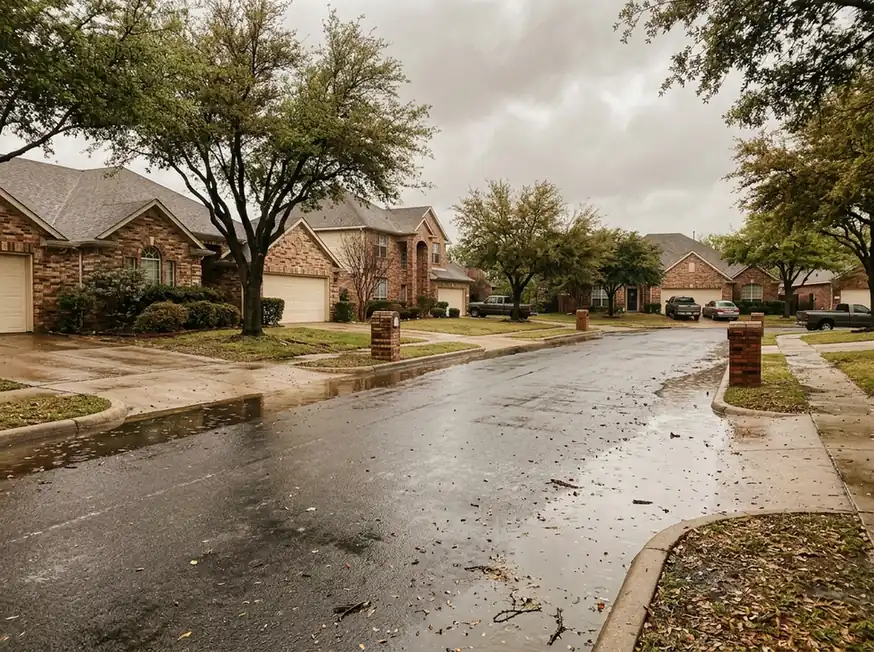
Flood and Storm Water Damage Restoration in Plano, TX
Rain pushed in under the door, a creek came up into the yard, or hail opened the roof and water is coming through the ceiling? Get help now to reach a local restoration company. That company removes the water, cleans what the floodwater touched, dries the house and records the damage for your insurer.
Get help now. The line answers 24/7. After a big storm, ask the company for an honest arrival time.
Plano Water Damage Restoration is a referral service. When you call, we connect you with an independent local restoration company. We don’t do the work ourselves.
Is it safe to stay in a flooded home?
Often not, at least until the power is off and the water is gone. Water from outside carries germs and debris, and water near live outlets can shock you.
- Stay out of standing water if outlets, cords or appliances are in it. Turn off power at the breaker only if you can reach the panel without stepping in water. Otherwise, leave it to an electrician.
- Unplug appliances once it’s safe, so they don’t shock anyone when power comes back (CDC).
- Wear rubber boots and gloves for any cleanup. Wash your hands with soap and water afterward (CDC).
- Take photos and video of every room, the water line on the walls and damaged belongings, before anything is moved.
- Get help now. Tell the company where the water came in, how deep it got and how long it sat.
If floodwater reached living areas, plan to stay somewhere else while the house is cleaned and dried.
Why floodwater is treated differently
Floodwater from outside is Category 3 water, the dirtiest class in the restoration standard (ANSI/IICRC S500). That includes rising creek water and surface runoff. It needs cleaning and disinfecting, not just drying.
Clean water from a pipe can also turn into Category 3 if it sits or runs through dirty spaces. A roof leak can pick up contaminants from shingles and debris on the way in. That’s why a good restoration company tests and looks before deciding what to save.
On a Category 3 job, the crew wears protective gear and may seal off the work area. Air scrubbers with HEPA filters can keep dust and germs from spreading to dry rooms.
What do I throw away after a flood?
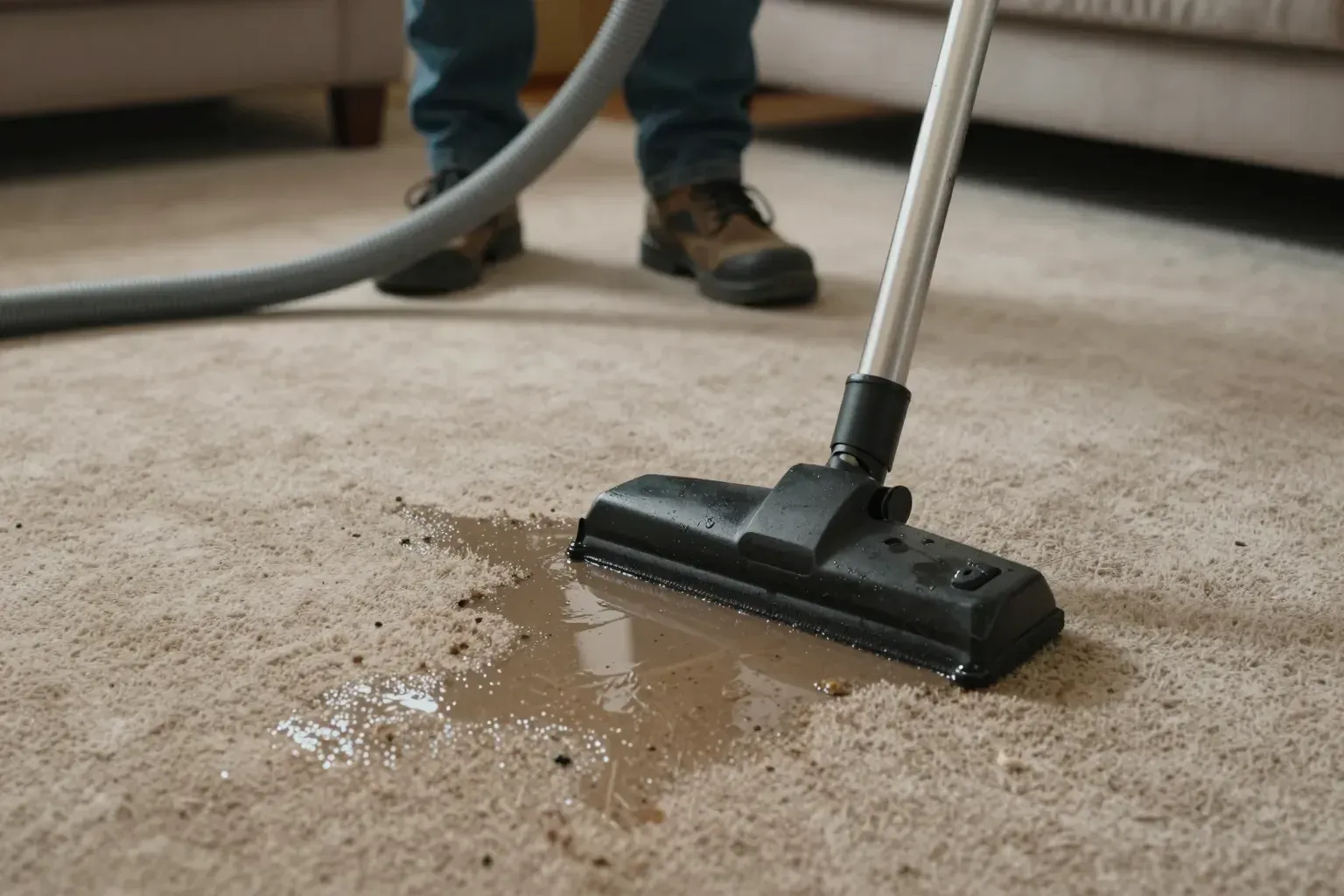
Throw away anything soaked by floodwater that can’t be cleaned and disinfected. The CDC lists wall coverings, cloth, rugs and drywall in that group.
In practice, that usually means:
- Carpet pad. Pad soaked by Category 3 water is thrown out, and so is the carpet in most cases.
- Drywall and insulation below the water line, plus a margin above it. The crew cuts the wall a set height above the wet line (a “flood cut”) so the cavity can dry.
- Mattresses, pillows and upholstered furniture that took on floodwater.
- Food that the water touched. Follow the CDC’s food safety guidance after a disaster.
Hard surfaces such as tile, sealed concrete and many hard floors can usually be cleaned. The CDC suggests soap and water, then a mix of 1 cup of bleach to 1 gallon of water.
Photograph items before they go to the curb, and keep a list. Your adjuster may want samples, such as a piece of carpet. Things with real value, like photos or heirlooms, can sometimes be saved by a contents specialist. Ask before you throw them out.
Not sure what to keep? Get help now. Ask the company to walk the house with you and photograph everything it removes.
Flood damage vs water damage: which does insurance cover?
The source of the water decides which policy pays. Water from inside the house, like a burst pipe or a failed water heater, is usually a homeowners claim. Rising water from outside is flood, and standard home policies exclude it (Texas Department of Insurance).
FEMA defines a flood as water covering 2 or more acres of normally dry land, or 2 or more properties, at least one of them yours. Creek overflow and heavy-rain runoff across a street usually fit that definition.
How flood insurance works
- Flood coverage is a separate policy. It comes from the National Flood Insurance Program (NFIP) or a private flood insurer (TDI).
- You don’t need to live in a flood zone to buy it (TDI).
- There’s usually a 30-day wait. NFIP coverage generally starts 30 days after purchase (FEMA). Coverage bought when you take out or refinance a mortgage is an exception. Don’t wait for a storm forecast to buy it.
- NFIP covers rising water from outside, not plumbing leaks inside (TDI).
- Deadlines are short. TDI’s claim tip sheet notes a 60-day window for NFIP flood claims. Report the loss right away.
Roof leaks after hail or wind
Water that comes through a roof opened by hail or wind is usually a homeowners claim, not a flood claim. A roof that was already leaking before the storm can be denied. A roofer fixes the roof. The restoration company dries the attic, ceiling and rooms below. Your adjuster may want to see both.
On March 23, 2016, hail of 1.5 to 2 inches fell across parts of Collin, Dallas and Denton counties. CoreLogic estimated about $36 million in losses from that storm alone (Insurance Journal, 2016). Hail and severe storms come back most springs.
The Texas Attorney General warns about contractors who show up after hail storms promising to get around your deductible. Texas law bars that (Business & Commerce Code §27.02).
What your adjuster looks for
Adjusters trace where the water came from and whether the damage was sudden. Then they compare that to your policy. Your adjuster decides what’s covered. Ask the restoration company for dated photos, moisture readings and a list of what was removed and why. It shouldn’t negotiate your claim. Texas law bars a contractor from acting as a public adjuster on a job it works on (Insurance Code §4102.163).
If you end up in a dispute over a weather claim, Texas law requires written notice to your insurer at least 61 days before a lawsuit (Insurance Code §542A.003). Talk to an attorney or a licensed public adjuster about that, not your contractor.

Plano flood risk is not just the flood zone
About 30% of flood claims happen outside the mapped high-risk flood zone, the Special Flood Hazard Area or SFHA. The City of Plano’s Engineering Department says not all flood-prone areas or poor-drainage spots have been mapped (City of Plano, 2025).
A few Plano examples:
- Spring Creek near Collin Creek mall: in 2025 the City found errors in the FEMA flood model for Spring Creek. The corrected model shows culverts south of 15th Street overtopping in a 100-year flood. Council approved a $659,101 drainage study on June 9, 2025 (Community Impact, 2025-06-26).
- Rowlett Creek: on May 29, 2015, the creek left its banks and flooded Oak Point and Bob Woodruff parks and the backyards of nearby East Plano homes (NBC DFW).
- Willow Bend North: in June 2017, more than an inch of rain in an hour flooded streets in this West Plano neighborhood (FOX 4).
Flood help from the City of Plano
The City’s Engineering Department offers flood-zone determinations, historical flood information by neighborhood, site visits for drainage problems and copies of Elevation Certificates. You can get these at Engineering, 1520 K Avenue, Suite 250, or at Haggard Library, 2501 Coit Road (City of Plano Floodplain Information). Ask about fees when you call. That paperwork helps when you shop for flood insurance or file a claim.
When do Plano floods happen?
May and October are the wettest months at DFW, with average rainfall of 4.78 and 4.37 inches (National Weather Service, 1991–2020 normals). Spring is also hail and severe storm season.
Heavy rain can hit in other months too. On August 21–22, 2022, DFW got 9.19 inches of rain in 24 hours, the second-highest total on record there (Axios, citing NWS).
Spring 2024 storms led to a federal disaster declaration, FEMA DR-4781, covering storms from April 26 to June 5. Collin County was approved for FEMA Individual Assistance. FEMA opened a Disaster Recovery Center at Collin College in Plano on June 17, 2024 (FEMA). If you’re uninsured after a declared disaster, check DisasterAssistance.gov.
How long does it take to dry a house after flooding?
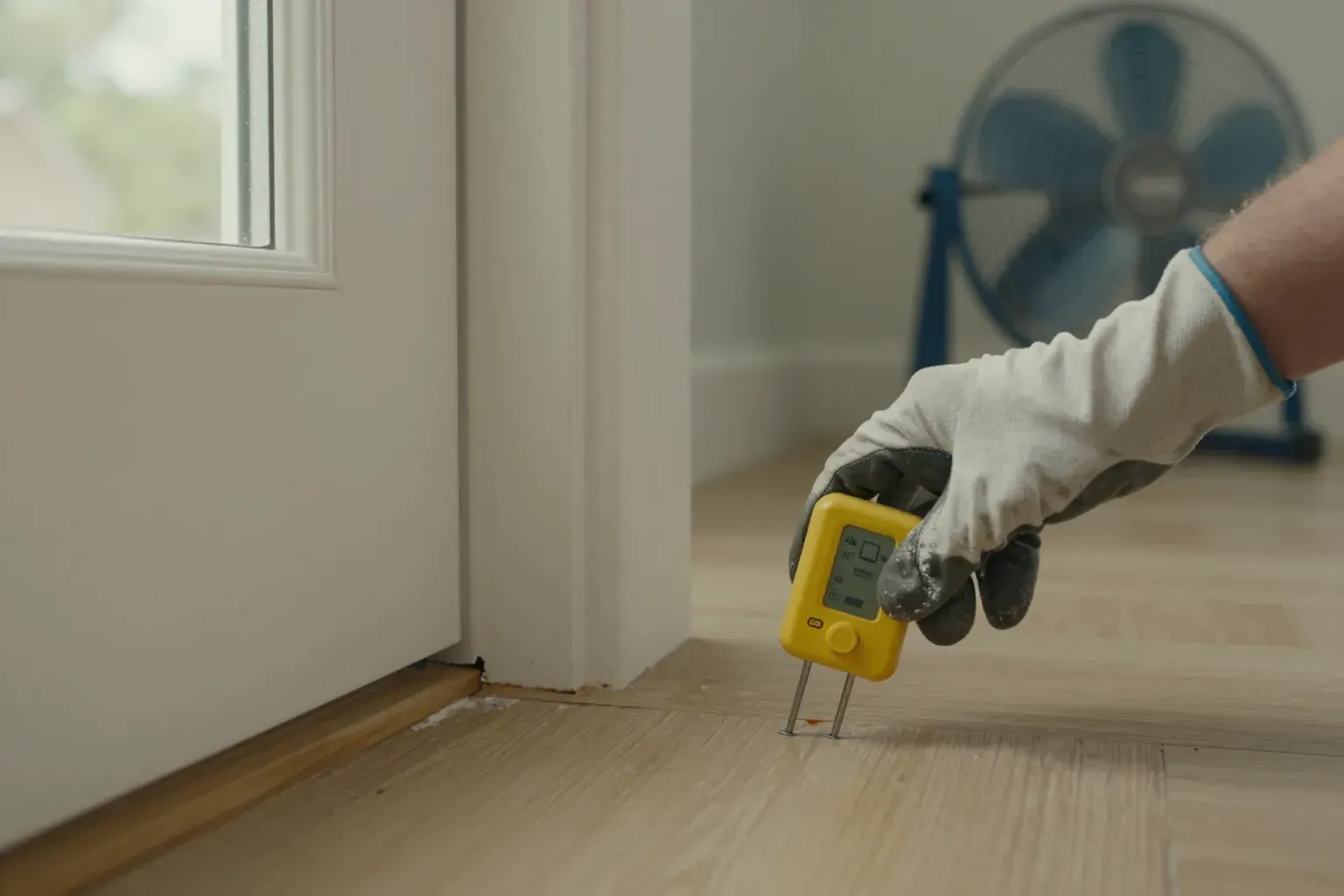
Many homes dry in about 3 to 5 days after the water is out and the wet materials are removed. Concrete slabs, hardwood and cabinets can take longer. Daily moisture readings, not the calendar, decide when the job is done.
Speed matters because the EPA advises drying wet materials within 24 to 48 hours to prevent mold growth. Opening windows rarely helps in warm months. DFW’s average summer dew point is around 70°F (National Weather Service), so the outside air is already damp. Our extraction and drying page explains the equipment.
Can I do flood cleanup myself?
A little rainwater on a bare concrete garage floor, caught right away, you can usually handle. Rising floodwater in finished rooms is Category 3 and needs cleaning, disinfecting and moisture readings. Drywall, pad and insulation hide water you can’t see.
Category 3 work costs more than clean-water drying. Cost guides put water extraction for Category 3 water at about $7 to $7.50 per square foot, compared with $3.75 to $4.25 for clean water (Fixr, 2025). See water damage restoration cost for the full breakdown.
What a proper flood job includes
- Check safety: power, gas smell, sagging ceilings and how deep the water is.
- Pump out and extract standing water.
- Remove and photograph soaked pad, drywall and insulation.
- Clean and disinfect the hard surfaces floodwater touched.
- Dry the structure with dehumidifiers and fans (air movers), with readings every day.
Step by step, including billing: how we work. Who does the work: about us.
Storm or flood water in your Plano home? Get help now
Stay out of water near power, take photos, then call. The line answers 24/7. Busy storm week? Ask the company for an honest arrival time and what to do until it gets there.
Get help now