
Emergency Water Extraction and Structural Drying in Plano
Water on the floor, soaked carpet or a wall that feels damp? Get help now to reach a local restoration company that pulls the water out, finds where it spread and dries your home with measured, daily checks. Ask them to share every reading with you and your adjuster.
Get help now. The line answers 24/7.
Plano Water Damage Restoration is a referral service. When you call, we connect you with an independent local restoration company. We don’t do the work ourselves.
Before help gets there: 4 steps
- Shut off the water. Close your main shutoff valve. If the leak is at the meter or the street, call the City of Plano at (972) 769-4160 during business hours or (972) 727-1623 after hours.
- Keep clear of electricity. Don’t walk through standing water near outlets, cords or appliances.
- Take photos, and keep the broken part. Shoot wide shots of each room and close-ups of the source. Save the failed hose, fitting or pipe section if you can. Your adjuster may want to see it.
- Move what you can. Lift valuables, papers and small furniture off wet floors and into a dry room. The Texas Department of Insurance says your insurer may deny a claim if you don’t take reasonable steps to protect your property.
Then call us. Tell the company the source, how long it ran and which rooms got wet.
What happens when the crew arrives
The first visit has two jobs: get the water out, and find out exactly how far it went.
Removing the water
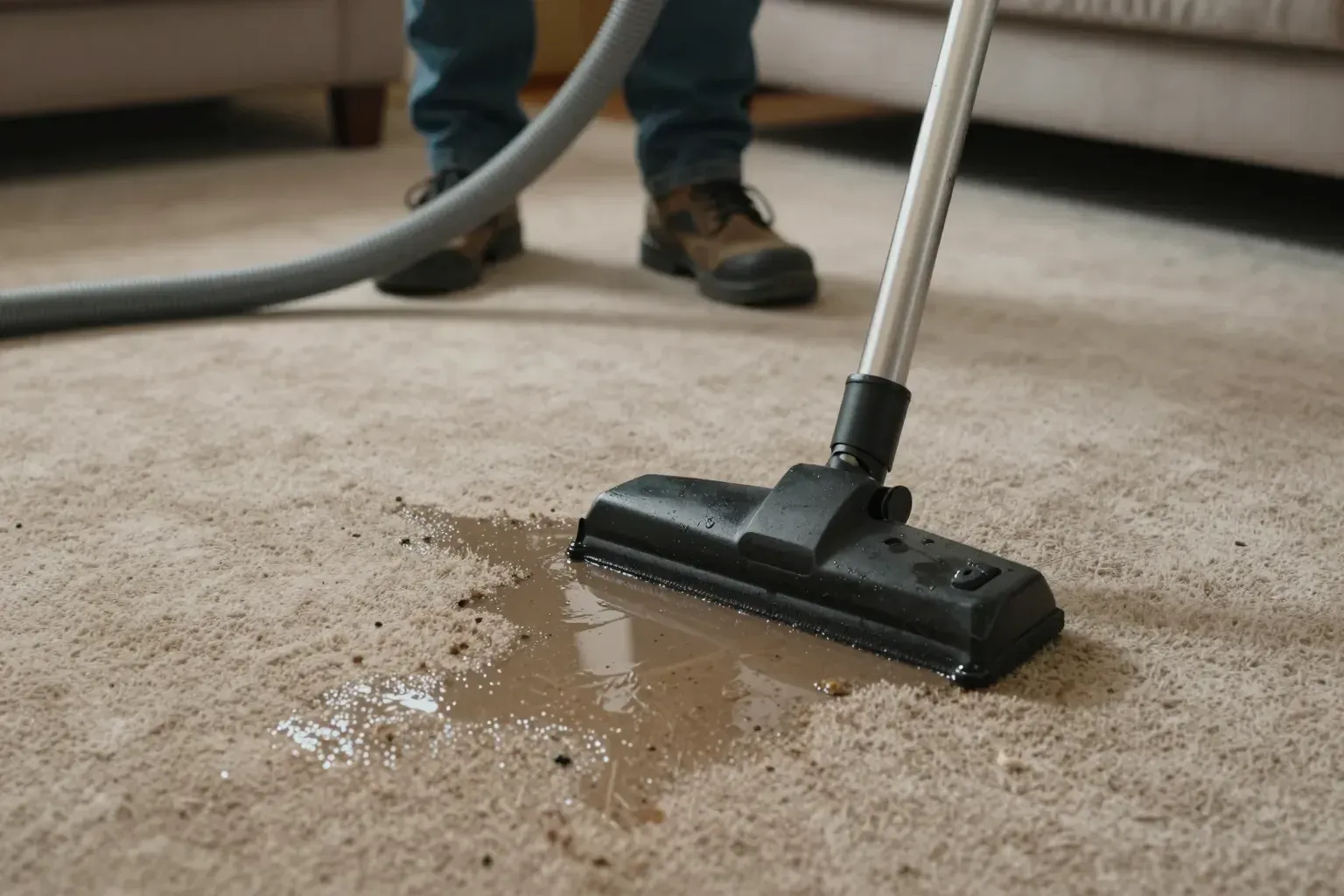
Standing water comes out first. Crews use a truck-mounted extractor or portable extractors to pull water from carpet, pad and hard floors. Fast extraction shortens drying. It also limits secondary damage, like swelling, warping and mold.
Mapping the moisture
Water runs under baseboards, into wall cavities and across the subfloor. The wet area is almost always bigger than the puddle you can see. So the technician does moisture mapping: checking walls, floors and cabinets with a moisture meter and marking where readings are high.
A thermal imaging camera helps find cool, damp spots behind walls and under flooring. It doesn’t see water directly. A meter reading confirms each spot before anything gets cut or left alone.
Setting up the drying equipment
After extraction, the crew sets up dehumidifiers and fans. The industry calls them LGR (low grain refrigerant) dehumidifiers and air movers. Restoration crews often use commercial units from makers such as Dri-Eaz. The fans push air across wet surfaces so water evaporates. The dehumidifiers pull that water out of the air.
Opening windows won’t do the same job in Plano. The DFW summer dew point averages about 70°F (National Weather Service), so outside air is already damp for much of the year. Drying works by closing up the space and controlling the air inside it.
A few rules for the drying days:
- Leave the equipment running, including at night. Turning it off slows drying and can add days.
- Keep doors and windows closed unless the technician says otherwise.
- Don’t change the thermostat without asking. Temperature is part of the drying setup.
When does the equipment come off?
Equipment comes off when the readings say the materials are dry, not after a set number of days. Many homes dry in about 3 to 5 days (ServiceMaster Restore water damage FAQ). Hardwood, slab floors and cabinets can take longer.
The current restoration standard, ANSI/IICRC S500-2021, sets the drying goal by condition, not by a fixed number. Materials are dried to a level that stops mold growth, or to the flooring maker’s moisture spec. In practice, that means comparing wet areas against dry, unaffected areas of the same material in your home.
The technician checks every wet area each day and writes the readings down. Each day, the log should show numbers falling toward the drying goal. When an area reaches the goal, its equipment can be removed. When every area is dry, the job is done.
Equipment is usually billed per unit, per day. Insurers and restoration companies price it in the same software, Xactimate, which lists electricity as its own line. That’s why daily readings matter to your bill. They show why each unit stayed, or why it came off. More on pricing: water damage restoration cost in Plano.
Water still coming in? Shut off the main, then call us.
Can the carpet and pad be saved?
It depends on the water category. Clean water caught fast often means the carpet can be dried in place. Dirty water or sewage usually means the pad, and sometimes the carpet, has to go.
The restoration standard (IICRC S500) sorts water into three categories, and the save-or-replace call follows them:
- Category 1 (clean water, like a burst supply line or a water heater tank): carpet treated within 24 to 48 hours can often be dried in place. Soaked pad holds a lot of water, so pad replacement is common even then.
- Category 2 (gray water, like a washer or dishwasher overflow): the carpet may be cleaned and saved, but the pad is usually replaced.
- Category 3 (black water, like sewage or flood water from outside): carpet and pad are both removed and thrown out.
Clean water doesn’t stay clean. Water that sits, or runs through dirty spaces, can become Category 2 or 3. Area rugs follow the same logic. A rug wet with clean water can often be cleaned and dried. One soaked with sewage usually can’t.
Ask to see the readings and the category before anything gets pulled.
Can hardwood floors be saved?
Often, yes, if drying starts within 24 to 48 hours. Mild cupping (edges higher than the centers) can flatten as the wood dries.
Hardwood holds water deep in the boards, so it dries slowly. Readings are taken in the boards and compared against dry boards elsewhere in the house.
Don’t sand or refinish cupped boards while they’re still wet. Wait until readings show the moisture is back to normal.
Severely buckled or warped boards, or wood soaked by Category 2 or 3 water, are more likely to be replaced. In West Plano homes with wide-plank or engineered wood, good records help the adjuster price a match.
Why vinyl, laminate and some tile come up
Laminate, vinyl plank (LVP) and sheet vinyl don’t let water pass through. That’s good when water sits on top. It’s bad when water gets underneath, because the floor traps it against the subfloor and stops it from drying.
In Category 2 or 3 losses, the S500 standard calls for removing finished floors that sit over a wood subfloor. That includes laminate, vinyl and engineered wood. The subfloor can then be cleaned and dried. With clean water, the technician checks readings under the floor first, including tile over a plywood or OSB subfloor.
What gets cut out, and what gets dried
Most clean-water leaks can be dried without tearing out much. Contaminated water, trapped water and materials that won’t dry are the reasons to cut.
Usually dried in place (clean water):
- drywall that reads wet but is still firm
- baseboards, which may be pulled off so the wall behind can dry
- concrete slab floors
- cabinets, sometimes with the toe kicks removed to get air underneath
Usually cut out or removed:
- drywall soaked by Category 2 or 3 water
- wet insulation inside the wall
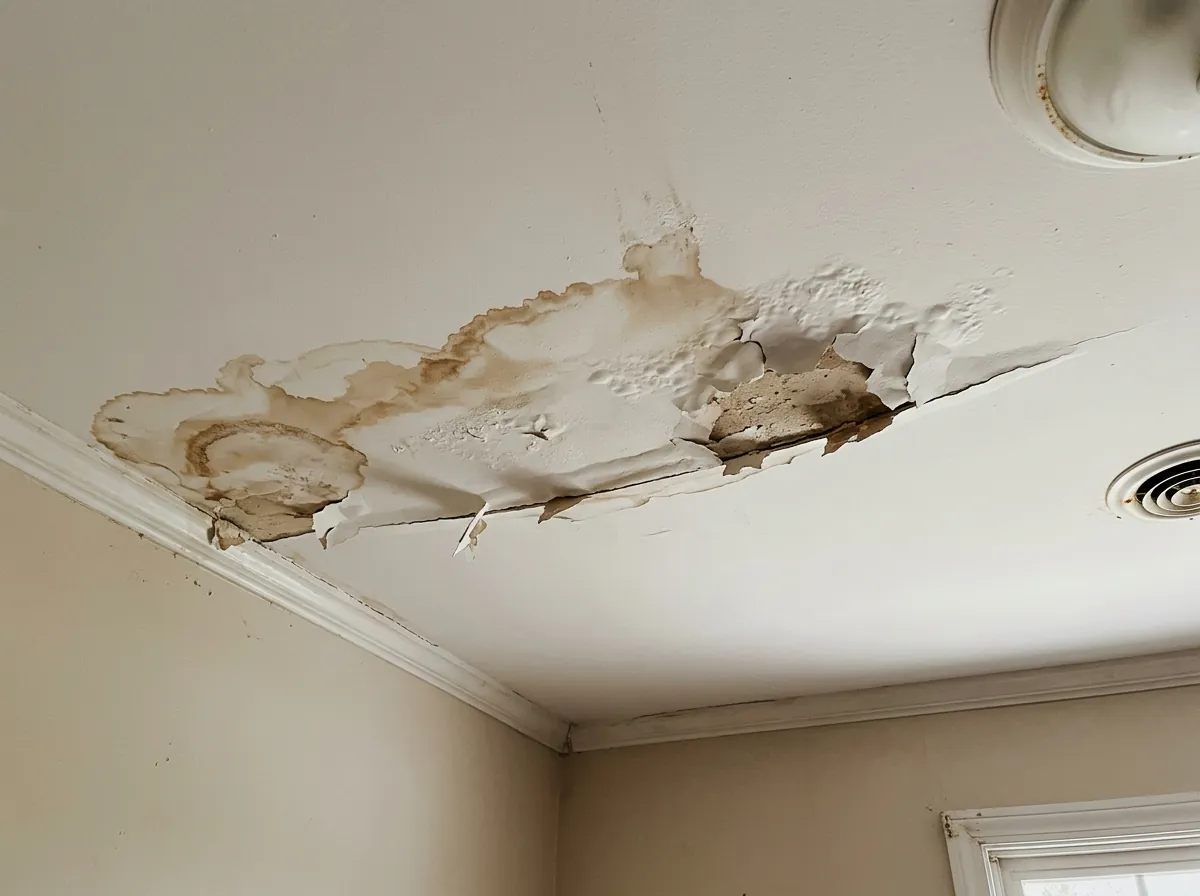
- drywall that is soft, crumbling or has visible mold
- swollen cabinets or baseboards made of particleboard
A flood cut means cutting the wall in a straight line above the highest wet reading. It removes the wet bottom section and opens the cavity so it can dry and be cleaned. It’s common after sewage or flood water. It isn’t needed for every leak.
Rebuild is a separate step after drying, priced on its own. How we work explains the handoff.
What you and your adjuster should get
Ask for dated photos, the moisture map, a daily reading log and a list of what was removed and why. The adjuster should see the same records you do.
These records help in three ways:
- They show the damage was sudden. Insurers usually cover sudden and accidental water damage. They usually don’t cover slow leaks that went on for weeks (Texas Department of Insurance).
- They justify each equipment day. The log shows why each unit stayed until its area was dry.
- They explain each removal. If pad or drywall came out, the photos and readings show why.
Before work starts, you’ll be asked to sign a work authorization. That’s normal. It lets the company begin drying. It isn’t the same as handing over your insurance benefits, so read it first.
Your adjuster decides what’s covered. A restoration company isn’t a public adjuster, and Texas law doesn’t let a contractor act as one on a home it works on (Insurance Code §4102.163). The company should document the loss and work with your adjuster. It shouldn’t negotiate your claim.
Want to know what the paperwork looks like? Get help now, and ask the company to walk you through it before you sign anything.
What about your furniture and belongings?
Small items move to a dry room. Large furniture is lifted onto blocks so the carpet underneath can dry. Many items can be cleaned and dried after clean-water leaks. Mattresses and soft furniture soaked by flood water usually have to be thrown out, because they can’t be cleaned and disinfected (CDC flood cleanup guidance). Photograph anything before it’s thrown away, so it can go on your claim.
When can you dry it yourself?
A small spill on tile or a slab floor, caught right away, you can usually handle. Towels, a wet vac and a fan will do. Water in walls, under flooring or in carpet pad needs moisture readings to prove it’s dry.
The risk with DIY drying is moisture you can’t see inside walls and floors. The EPA advises drying wet materials within 24 to 48 hours to prevent mold growth.
Call a professional when:
- water soaked into carpet pad, drywall or under flooring
- more than one room got wet
- the water came from a toilet, a washer, sewage or outside flooding
- you smell something musty days later
Rising flood water from outside is always Category 3, and it needs cleaning, not just drying. See flood and storm water damage.
Frequently asked questions
What’s the difference between water mitigation and water restoration?
Water mitigation stops more damage. That means extraction, drying and removing what can’t be saved. Restoration is the rebuild that puts the home back. This page covers mitigation. How we work covers both.
My bedroom carpet near the bathroom keeps getting damp. What should I do?
Repeated dampness usually means a slow leak at a toilet, tub or shower. Have a plumber find the source, then get a moisture check before it spreads. Slow leaks are also the kind insurers often deny, so don’t wait. Get help now for a moisture check.
The leak came from the apartment above me. Who do I call?
Tell your landlord or property manager in writing first. In Legacy and far north Plano, more than half of homes are in buildings with five or more units (U.S. Census ACS 2020–2024), so unit-above leaks are common there. If your landlord asks you to arrange drying, call us.
The plumber fixed the pipe. What has to come out?
Only what’s soaked by dirty water, or what won’t dry. Readings decide the rest. If a burst pipe caused it, our burst pipe guide covers the plumber’s part. If it was a water heater or AC drain line, see water heater and AC leaks.
Water on the floor? Get help now
Shut off the water, take photos and move what you can. Then call. The line answers 24/7, and we connect callers in Plano and Richardson with an independent local restoration company.
Get help now