
Water Heater, AC and Appliance Leak Damage in Plano
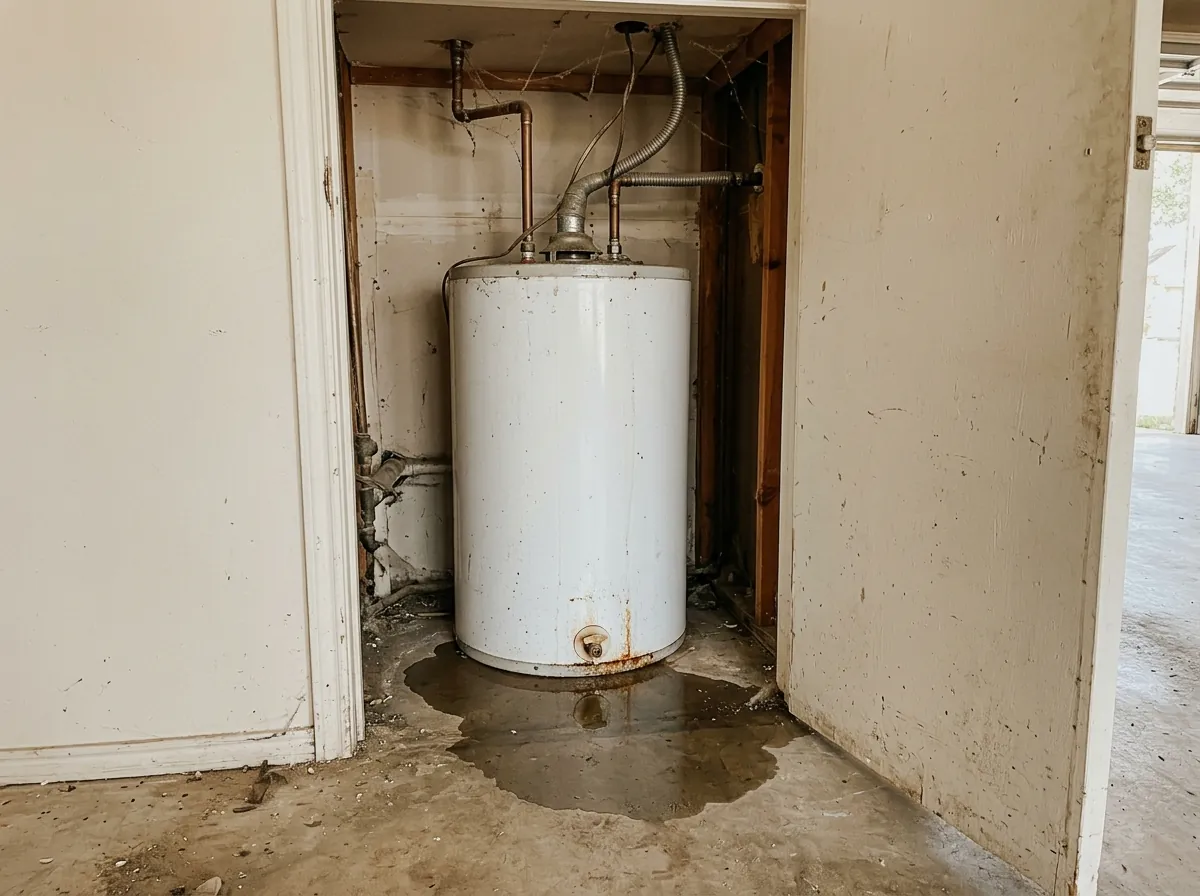
A water heater that let go in the attic, an AC unit dripping through the ceiling, or a washer hose that split? These are among the most common causes in Plano water damage requests. Get help now to reach a local restoration company that dries what got wet and documents it for your insurance. A licensed plumber or HVAC technician fixes the unit itself.
Get help now. The line answers 24/7.
Plano Water Damage Restoration is a referral service. When you call, we connect you with an independent local restoration company. We don’t do the work ourselves.
Water heater leaking? Do this first
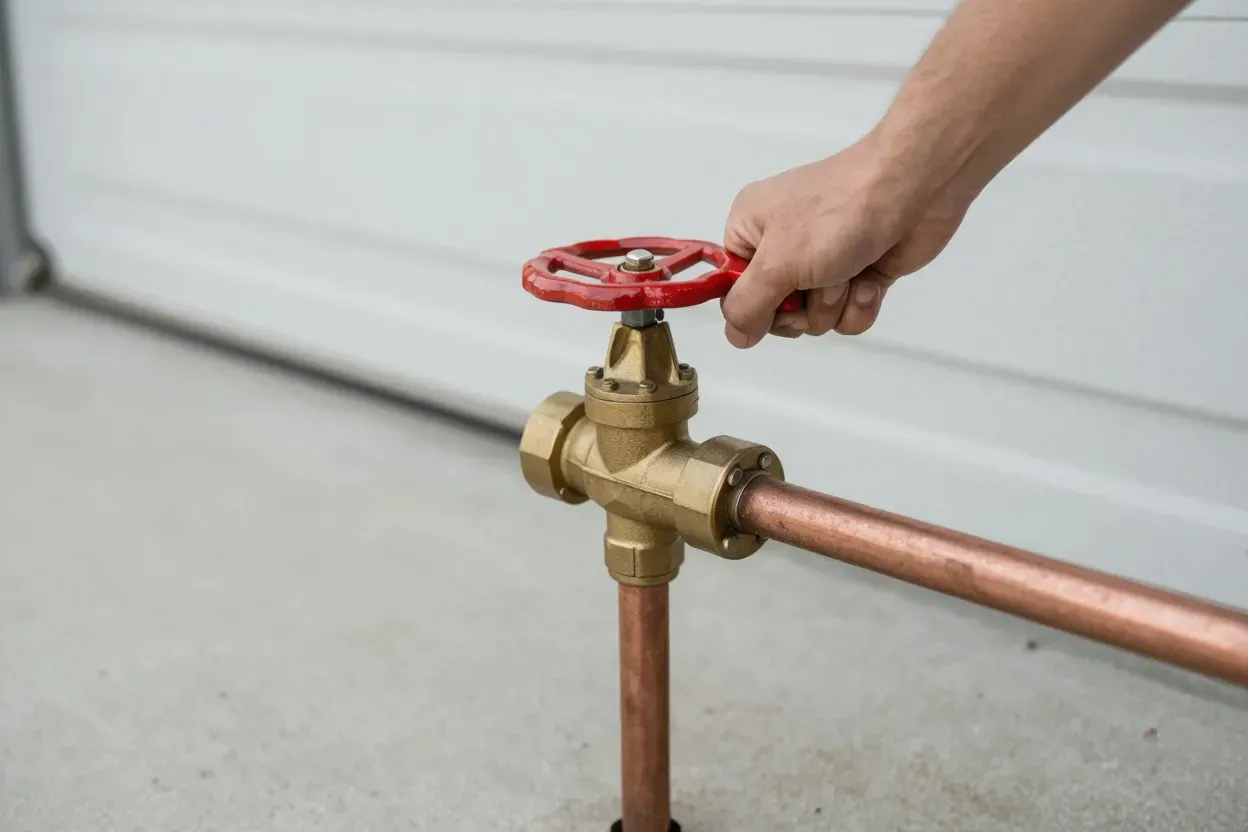
- Shut off the water to the tank. Close the cold-water valve on the pipe at the top of the heater. If you can’t find it or it won’t turn, close your home’s main shutoff.
- Turn off the energy. For a gas heater, turn the gas valve on the unit to “off.” For an electric heater, switch off its breaker. Smell gas? Leave the house and call 911 from outside.
- Watch out for hot water. Water from a failed tank can be scalding. Don’t reach into a pan of hot water.
- Take photos. Get the heater, the label with its age, the wet floor and any ceiling stains below.
- Get help now. Tell the company where the heater sits (attic, garage or closet) and which rooms are wet.
Your policy expects you to take reasonable steps to stop more damage, like shutting off the water (Texas Department of Insurance).
Why water heaters fail in Plano homes
Most tank water heaters last about 10 to 15 years, and tankless units about 20 (U.S. Department of Energy).
Plano’s median home was built in 1993, and about 4 in 10 homes were built before 1990 (U.S. Census ACS 2020–2024). About half of the homes in north-central Plano (75025) were built in the 1990s (median 1996), so original supply lines and fittings there are now 25 to 35 years old.
Water quality plays a part too. Plano buys its water from the North Texas Municipal Water District (NTMWD). It runs moderately hard to very hard, at about 96 to 200 parts per million (2025 Plano Water Quality Report). Hard water leaves mineral scale inside the tank over time. Ask your plumber whether flushing the tank or checking its anode rod makes sense for your heater.
When the heater is in the attic or garage
A heater in the attic leaks straight down into the ceiling and the rooms below. A heater in a garage closet can soak the drywall, baseboards and the next room over. Either way, the water spreads farther than it looks.
Check the drain pan under an attic heater now and then, and make sure its drain line isn’t blocked. A pan can’t help if its drain goes nowhere.
Repair or replace?
A plumber can tell you whether the leak is at a fitting or valve, or from the tank itself. A leaking fitting can often be fixed. A leaking tank usually means replacement.
Got a 16-year-old heater that still works? It’s already past the typical tank life. Replacing it on your schedule beats finding it in a pool of water. Plano requires a permit for water heater replacement (City of Plano Building Inspections). In Texas, plumbing work is licensed by the Texas State Board of Plumbing Examiners (TSBPE). A homeowner can do plumbing on their own homestead (Occupations Code §1301.051), but skipping the permit can cause problems later. Unpermitted work, like a DIY water heater swap, can lead to a denied claim (Roger Wakefield, Texas master plumber, 2026).
Plano’s Housing Rehabilitation Program lists water heaters among its emergency repairs. The program has income limits; for a 4-person household, the 2026 limit is $96,900 (City of Plano).
AC leaking water into the house?
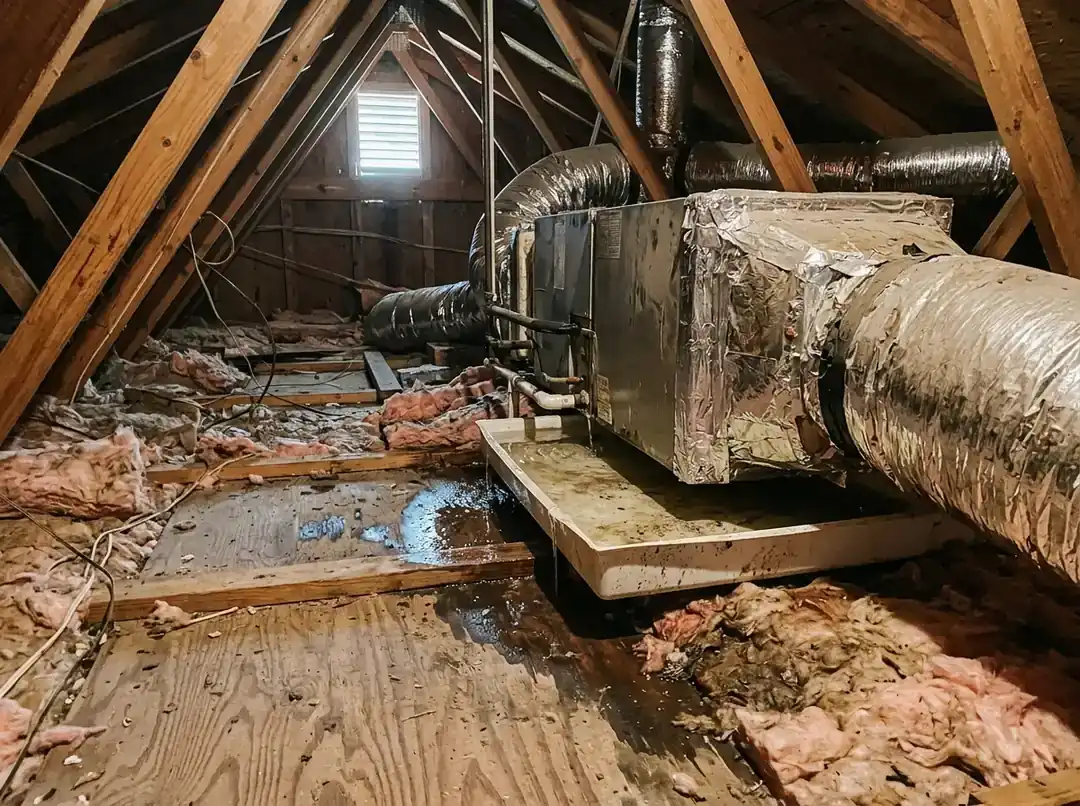
The most common cause of an indoor AC leak is a clogged condensate drain line, which makes the drain pan overflow (PickHVAC). Turn the AC off at the thermostat, then at its breaker, to stop more water.
Your AC pulls water out of the air as it cools. That water drips into a pan and runs out through a small drain line. When algae or dirt clogs the line, the pan fills and spills. With an air handler in the attic, the water lands on the ceiling insulation and drywall below.
These leaks are worst in summer. The DFW summer dew point averages about 70°F (National Weather Service). Humid air means more condensate, so AC drain leaks are most likely during the hot, humid months, roughly June through September.
Some systems have a float switch, a small safety switch that shuts the AC off when the pan fills. If your AC stopped cooling and the pan is full, the switch may have done its job. Don’t bypass it. Clearing the line with a wet/dry vac often helps (Direct Energy). An HVAC technician should find out why it clogged.
AC leaks often drip for days before anyone notices. If you see a stain on the ceiling under the air handler, call us for a moisture check.
Washer hoses, dishwashers and ice makers
Appliance supply lines are small, but they’re under constant water pressure. When one fails, it can run until someone shuts it off.
- Washing machine hoses: most manufacturers recommend replacing them every 3 to 5 years (HomeServe). Braided steel hoses wear out too. A failed hose in an upstairs laundry room comes through the ceiling below.
- Dishwashers: leaks often start at the supply line or drain hose under the cabinet. The first sign can be swollen flooring or a soft spot at the toe kick.
- Ice makers and refrigerators: water on the floor by the fridge can come from the ice maker supply line. Turn off the valve behind the fridge or under the sink.
Water from a washer or dishwasher overflow counts as Category 2 (gray) water under the IICRC S500 standard. It needs cleaning, not just drying.
A leak sensor near the water heater, washer and fridge warns you early. A smart shutoff valve on the main line can close the water by itself. Many insurers offer a premium discount for one (Roger Wakefield, 2026), so ask your agent.
Water coming through the ceiling? Stay safe first
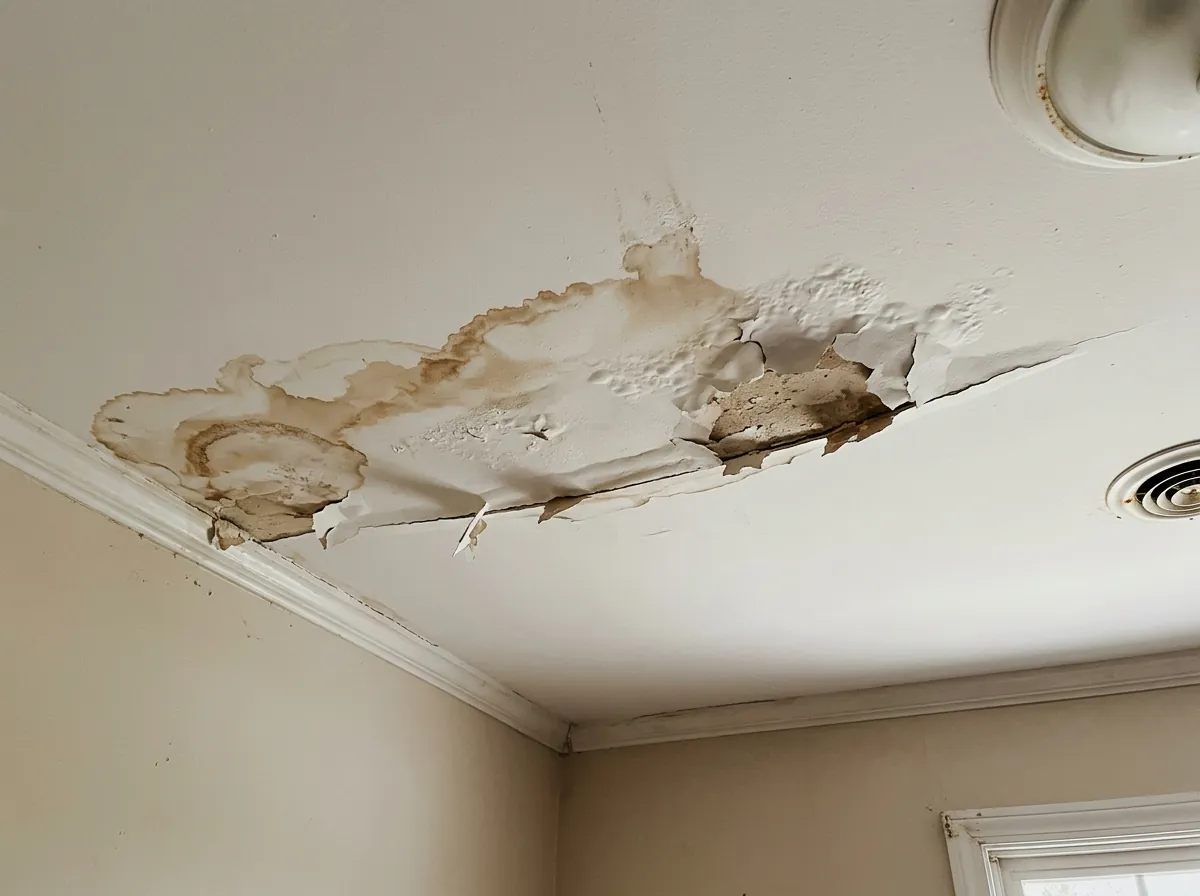
A sagging or bulging ceiling can be holding a lot of water, and it can come down without warning. Keep everyone out from under it.
- Move people, pets and belongings out of the room below.
- Turn off the breaker for that room if water is near a light fixture, fan or outlet.
- Don’t push on the bulge or stand on furniture under it.
- Put down buckets or tarps away from the sagging spot to catch drips.
Look for these signs: brown rings, bubbling or peeling paint, or a soft spot. In two-story homes, a ceiling stain may also point to an upstairs bath, toilet or shower leak.
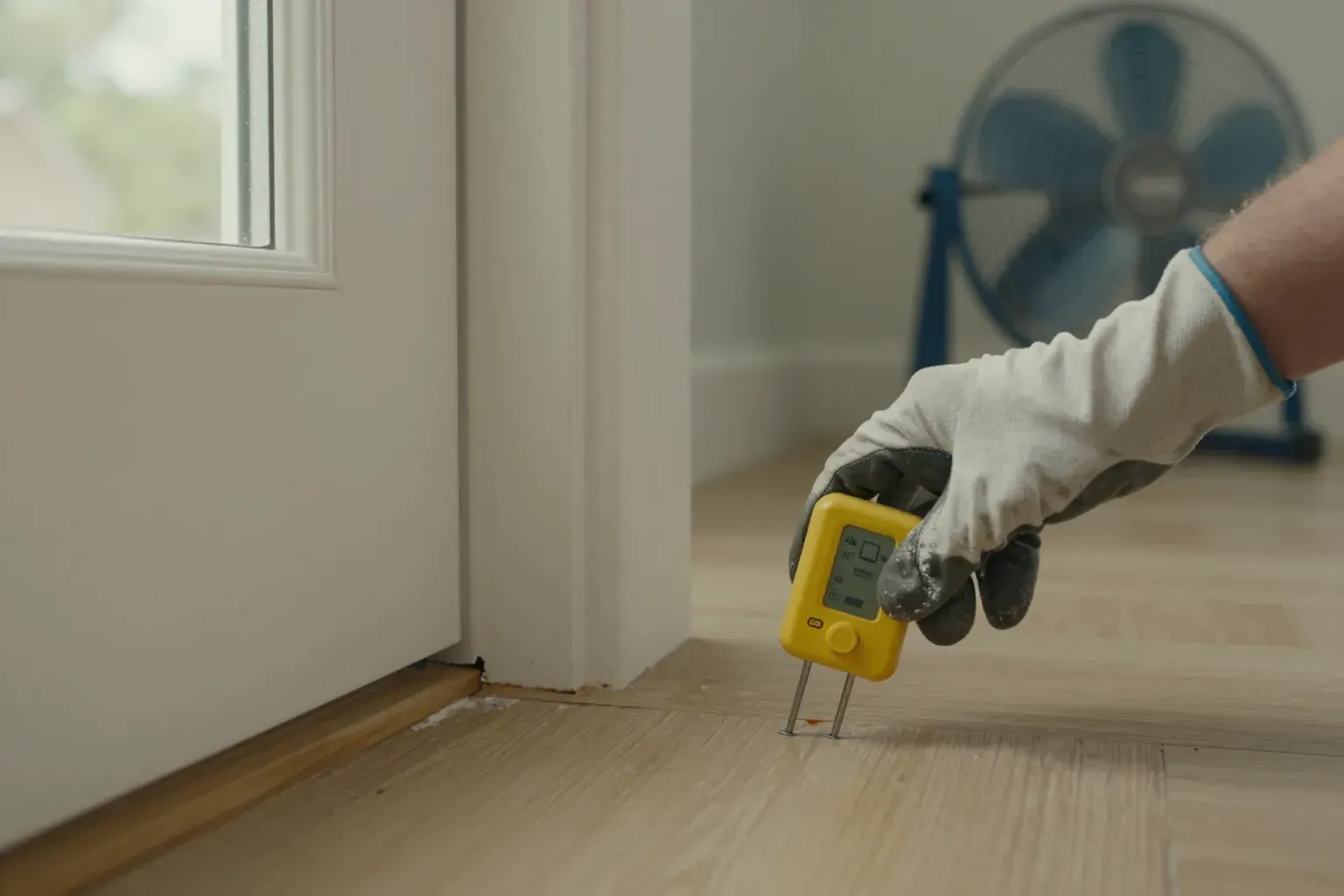
Once it’s safe, the restoration company finds how far the water spread with a moisture meter. Wet insulation above the ceiling usually comes out. Drywall that stayed firm can often dry in place. Drywall that is sagging or soaked through is replaced. More on how drying works: water extraction and drying.
Ceiling sagging or dripping right now? Shut off the water, clear the room, then call us.
Will insurance cover a water heater or AC leak?
Usually the water damage is covered if it was sudden and accidental, but the broken appliance itself usually isn’t. Damage from a slow leak that went on for weeks often isn’t covered (Texas Department of Insurance).
The Texas Department of Insurance gives a broken washer hose as an example of sudden water damage that most policies cover. A water heater that bursts falls in the same group. A heater that dripped into its pan for months may be called wear and tear. So may an AC drain that leaked slowly into the ceiling.
What helps your claim:
- Photos and the failed part from the day you found the leak.
- The plumber’s or HVAC technician’s report saying what failed.
- Moisture readings and dated photos showing how far the water spread.
Your adjuster decides what’s covered. The restoration company should document the damage and work with your adjuster. It isn’t a public adjuster, and Texas law doesn’t let a contractor act as one on a home it works on (Insurance Code §4102.163). Texas law also doesn’t allow a contractor to waive or absorb your deductible (Business & Commerce Code §27.02). How the costs break down: water damage restoration cost.
Who fixes the unit, and who dries the house?
A licensed plumber fixes or replaces the water heater and the supply lines. An HVAC technician fixes the AC drain and pan. The restoration company handles the water damage: extraction, drying, the moisture readings and the records.
Ask the plumber for a license number. You can look it up with the TSBPE. Plano also requires contractors to register with the City before working there, so ask for the City registration number too. Who does the work and how to check them: about us.
Frequently asked questions
Why are so many water heaters and AC units in the attic?
Many Plano homes sit on a concrete slab with no basement, so the attic or garage is where these units often go. That puts the leak risk above the ceiling. A drain pan, a clear drain line and a leak sensor lower it.
My tankless water heater might be leaking in the attic. What do I do tonight?
Close the water valves to the unit, turn off its gas or power, and put a bucket under any drip. Check the ceiling below for stains. If anything is wet, call us.
Can I just let a small AC leak dry on its own?
A small drip caught right away may dry with a fan. Water that soaked into ceiling drywall or insulation needs readings to confirm it’s dry. The EPA advises drying wet materials within 24 to 48 hours to prevent mold growth. See water extraction and drying.
Leak from a water heater or AC? Get help now
Shut off the water and power to the unit, take photos, then call. The line answers 24/7 for Plano and Richardson, and we connect you with an independent local restoration company.
Get help now