
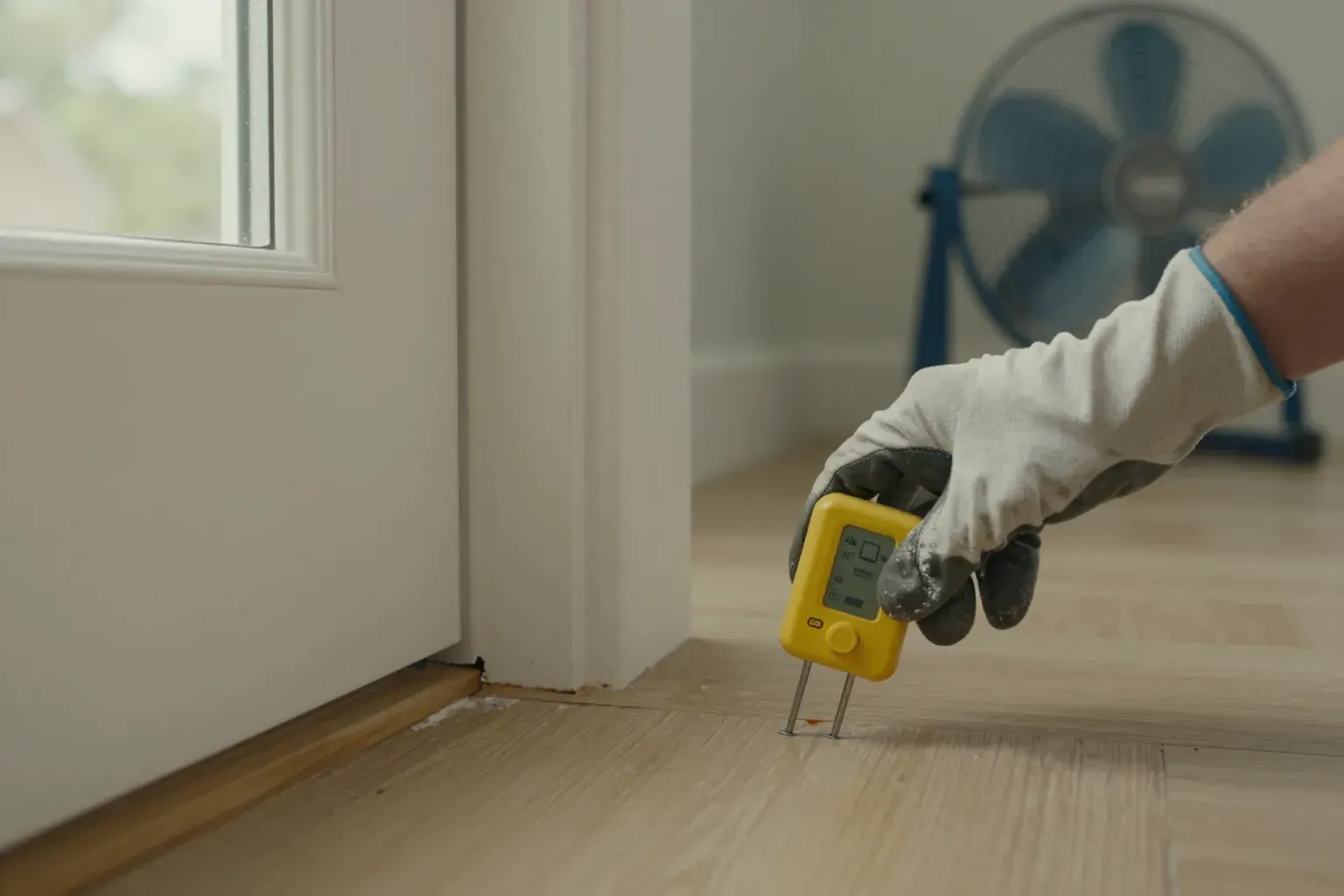
Water Damage Restoration Cost in Plano and DFW
Nationally, most homeowners pay between $1,364 and $6,301 for water damage restoration, and the average is about $3,833 (HomeAdvisor, 2025). HomeAdvisor also puts it at roughly $3.50 to $7.50 per square foot, depending on the water category.
Every number on this page comes from a named cost guide or public record, with its date. We haven’t found a reliable published average for Plano alone, so we don’t make one up.
Last reviewed [LAST_REVIEWED_DATE] by [REVIEWER_NAME], [REVIEWER_CREDENTIALS].
Need a price for your own home? Get help now and describe what got wet. We’ll connect you with a local restoration company, and its written estimate comes after it measures.
Plano Water Damage Restoration is a referral service. When you call, we connect you with an independent local restoration company. We don’t do the work ourselves.
What does water damage restoration cost, at a glance?
A small clean-water leak caught early can cost a few hundred dollars. A sewage backup across a whole floor can cost tens of thousands. Here are the published ranges, side by side.
| What’s priced | Typical range | Source (date) |
|---|---|---|
| Average job, all types | $3,833 average; most pay $1,364–$6,301 | HomeAdvisor (2025) |
| Per square foot, all types | $3.50–$7.50 | HomeAdvisor (2025) |
| Water extraction, Category 1 (clean water) | $3.75–$4.25 per sq ft | Fixr (Jan 2025) |
| Water extraction, Category 2 (gray water) | $4.10–$6.50 per sq ft | Fixr (Jan 2025) |
| Water extraction, Category 3 (black water) | $7.00–$7.50 per sq ft | Fixr (Jan 2025) |
| Class 1 damage (small area, little absorbed) | $150–$400 | Fixr (Jan 2025) |
| Class 2 damage | $500–$1,000 | Fixr (Jan 2025) |
| Class 3 damage | $1,000–$3,000 | Fixr (Jan 2025) |
| Class 4 damage (large area, major structural damage) | $20,000–$100,000 | Fixr (Jan 2025) |
| Drywall restoration | $1.50–$3 per sq ft | Fixr (Jan 2025) |
| Carpet restoration | $4.75–$10.50 per sq ft | Fixr (Jan 2025) |
| Hardwood restoration | $10–$15 per sq ft | Fixr (Jan 2025) |
| Labor | $70–$200 per hour | Fixr (Jan 2025) |
| Emergency call-out fee | $50–$200 | Fixr (Jan 2025) |
| Mold remediation, whole project | $1,500–$4,000 | Fixr (Jan 2025) |
These are national figures, not Plano quotes. Your price depends on the water type, how much got wet, what materials it reached, and how many days drying takes.
What changes the price the most?
Three things move the price most: the water category, the size of the wet area, and the materials it reached. Each one is explained below.
Clean, gray or black water
The restoration industry standard (ANSI/IICRC S500) sorts water by how dirty it is. Extracting clean water from a supply-line leak costs about $3.75 to $4.25 per square foot (Fixr, 2025). Extracting sewage costs about $7 to $7.50 per square foot (Fixr, 2025). Cleanup costs more on top of that, because everything sewage touches has to be cleaned, disinfected or thrown away.
How far the water spread: the damage class
The class describes how much water soaked into the building. A Class 1 job is a small area where little water was absorbed, and Fixr puts it at $150 to $400. Fixr’s most severe tier, Class 4, means a large area with significant structural damage, often needing full replacement. Those jobs run $20,000 to $100,000 (Fixr, 2025). In the IICRC standard, Class 4 also covers water soaked into dense materials like hardwood, plaster or concrete, which can be a much smaller job.
What got wet
Drywall is the cheapest common material to restore, at about $1.50 to $3 per square foot (Fixr, 2025). Carpet runs $4.75 to $10.50, and hardwood $10 to $15 (Fixr, 2025).
Your finishes matter here. Median home values in Plano range from about $371,000 in 75074 to $670,500 in 75093 (U.S. Census ACS 2020–2024). Higher-value homes are more likely to have costly finishes, such as hardwood, stone and custom cabinets. Those cost more to dry carefully and more to replace if they can’t be saved.
Can wet carpet be dried, or does the pad have to go?
Carpet soaked by clean water and dried quickly can often be saved. Pad holds much more water and is often replaced. Carpet and pad soaked by sewage are thrown out. Restoring carpet runs about $4.75 to $10.50 per square foot (Fixr, 2025).
Why does acting fast lower the cost?
Clean water doesn’t stay clean. As it sits, bacteria grow, and the water can be reclassified from Category 1 to Category 2. One cost guide says this happens within 24 to 48 hours, citing Angi (PushLeads, undated). The IICRC S500 itself sets no fixed clock. Restorers judge it on the job from time, temperature and what the water touched (Accuserve, 2025).
The price gap is real either way. On Fixr’s 2025 figures, clean water costs $3.75 to $4.25 per square foot and gray water up to $6.50. Mold adds more. The EPA advises drying wet materials within 24 to 48 hours to prevent mold growth, and mold remediation typically costs $1,500 to $4,000 (Fixr, 2025).
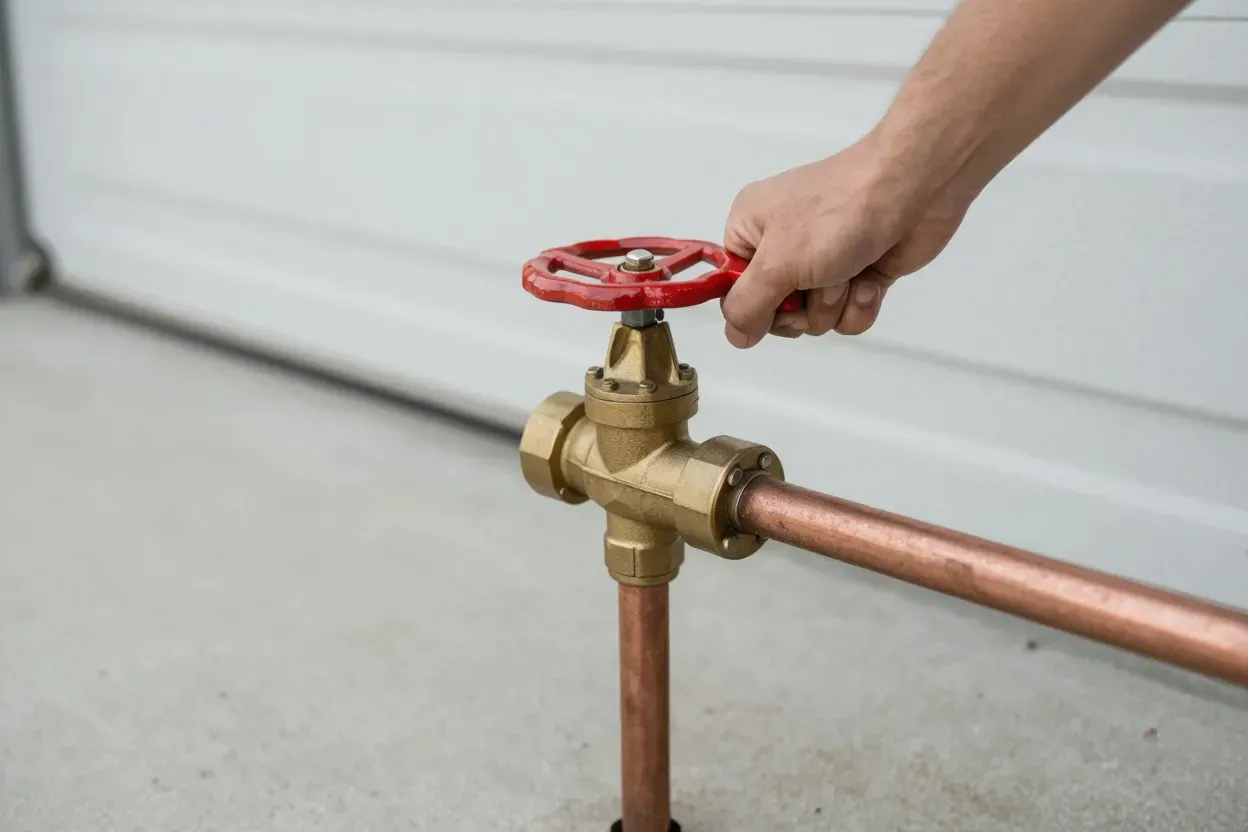
Water still spreading? Shut off the main valve, then call us. See emergency water extraction and drying for what the first visit involves.
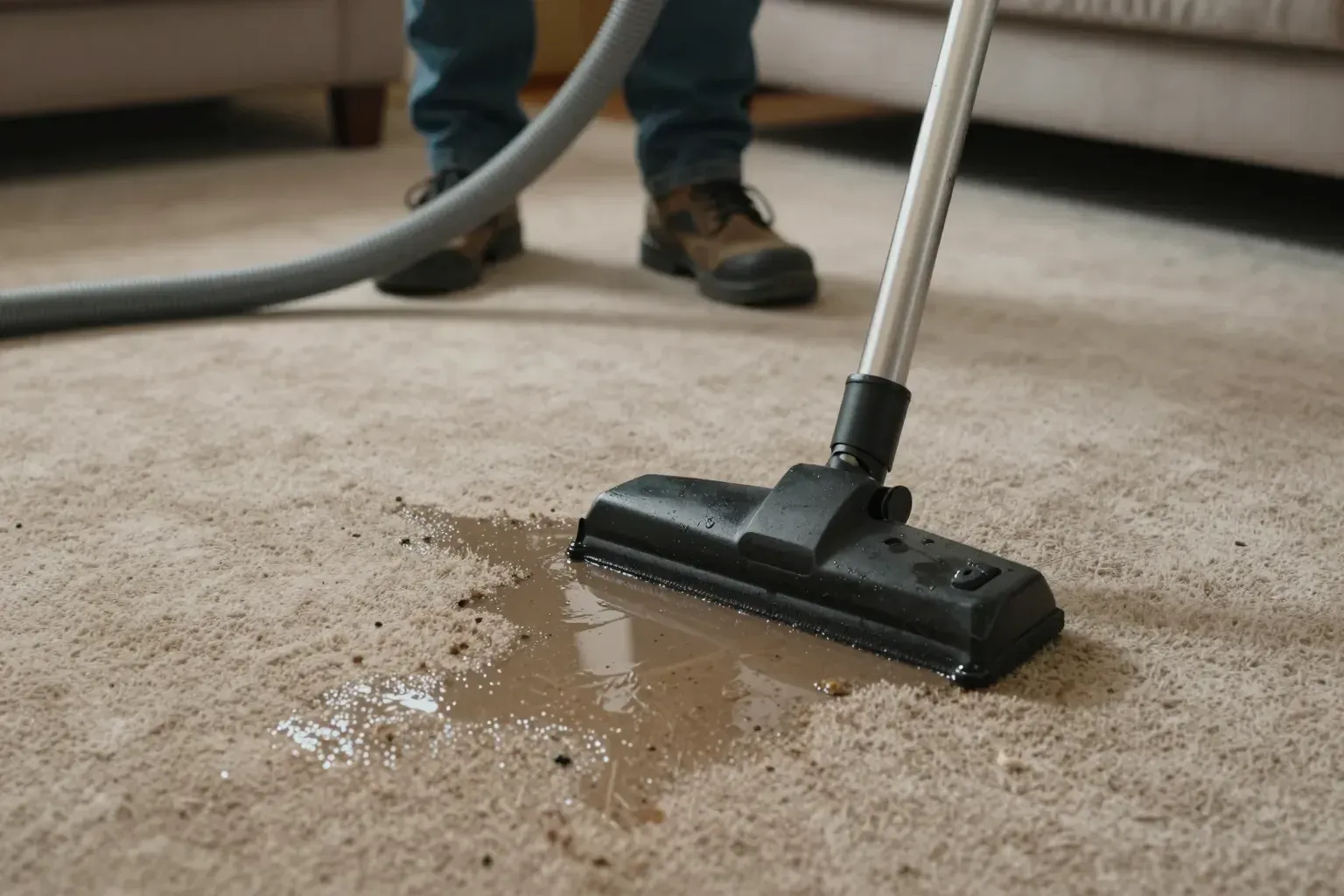
What does a water damage invoice look like?
Most insurance-paid water mitigation is estimated in Xactimate, the pricing software from Verisk that most insurers also use. Its price lists are set by region and updated monthly. If your bill is going to insurance, ask whether the estimate is written in Xactimate. Your adjuster can then compare it line by line.
A typical mitigation invoice has these line items:
- Emergency service or call-out. Fixr lists $50 to $200 (2025).
- Water extraction, usually priced per square foot of wet area.
- Removal of wet materials, such as carpet pad, baseboards or the bottom of drywall (a “flood cut”).
- Antimicrobial treatment, where the water category calls for it.
- Equipment, per unit per day. Each dehumidifier and each fan (air mover) is a separate line, times the number of days it runs.
- Electricity. Xactimate can calculate the cost of the power your equipment uses, from each unit’s estimated energy use and the electricity cost in the project’s price list, and add it as an additional charge (Xactware help docs).
- Monitoring visits, when a technician takes moisture readings.
Rebuild work, like new drywall, paint or flooring, is usually a separate estimate after drying.
How much does drying equipment cost per day?
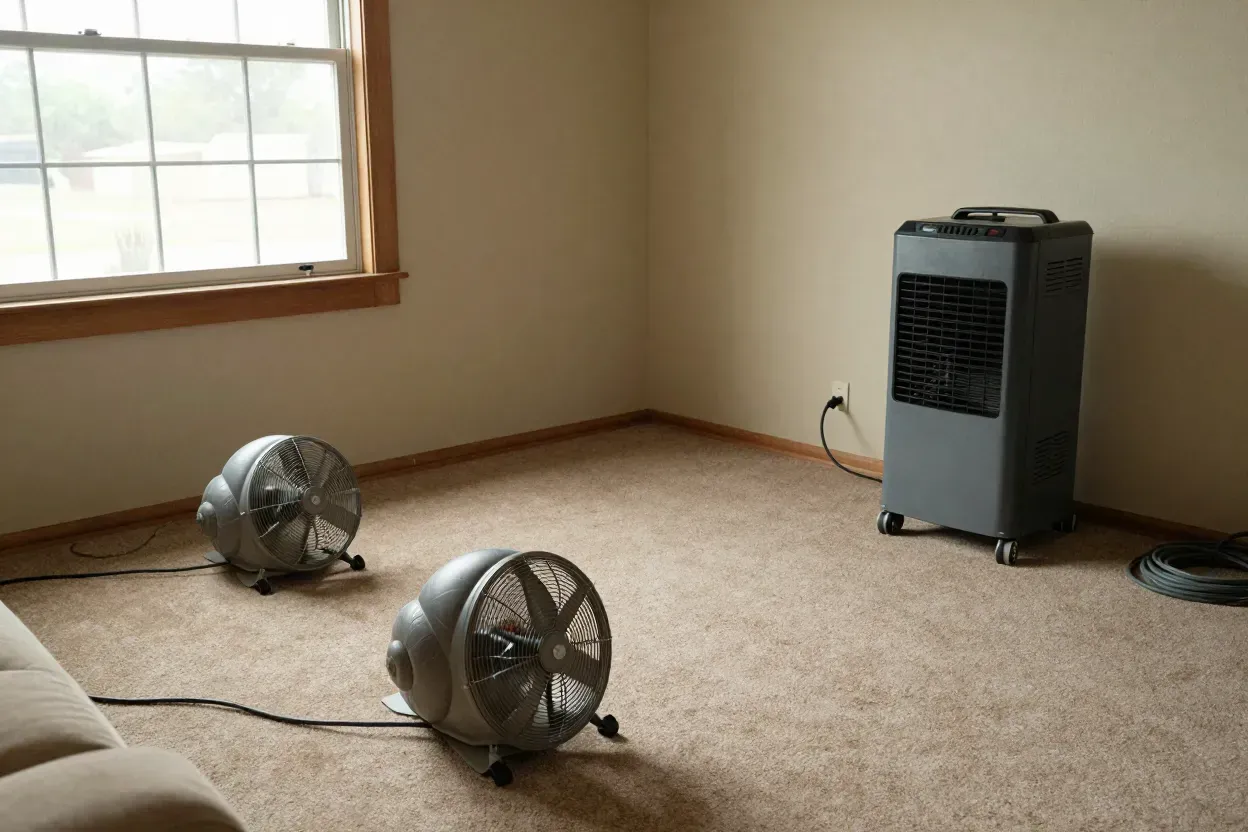
Drying equipment is billed per unit for each day it runs. As one example, a ServiceMaster franchise lists à la carte rental rates. An air mover is $35 a day, and a dehumidifier is $65 to $105 a day, depending on size. That’s one company’s rental list, not a restoration invoice or a market average. It says the rates don’t apply to full restoration jobs, and its date isn’t shown.
A typical room may have one dehumidifier and several fans. So the number of drying days moves the bill. That’s why equipment should come off when moisture readings show the materials are dry, not on a fixed schedule.
Thousands or tens of thousands?
Mitigation alone, meaning extraction and drying, usually lands in the low thousands. The full claim is often bigger once rebuild is included. Outside Texas (the data excludes Texas), the average homeowners claim for water damage and freezing was about $15,400 from 2019 to 2023 (Triple-I, citing ISO/Verisk).
What about Dallas–Fort Worth? We couldn’t verify an independent local average. One DFW restoration company’s own cost page puts typical jobs at $1,200 to $5,000. That’s a single company’s marketing figure, so treat it as a rough check, not a benchmark.
How does the deductible work, and can a contractor waive it?
You pay your deductible, and insurance pays the covered amount above it. Texas law doesn’t let a contractor waive, absorb or rebate it.
Under Texas Business and Commerce Code §27.02, a seller can’t advertise or promise to pay, waive or absorb your deductible without the insurer’s consent. It also can’t offer a rebate or credit that offsets it. Doing so is a Class B misdemeanor.
The same law covers your contract. Any contract of $1,000 or more expected to be paid partly from an insurance claim must include a deductible notice in at least 12-point bold type (Bus. & Com. Code §27.02(b)). If an offer sounds like “we’ll cover your deductible,” walk away. It’s illegal for them, and it can put your claim at risk.
A restoration company shouldn’t negotiate your claim either. Texas law bars a contractor from acting as a public adjuster on a property it works on (Insurance Code §4102.163). The company should document the loss and share it with your adjuster. The adjuster decides what’s covered.
Will insurance pay for a hotel if we have to leave?
It depends on your policy. Many home policies include additional living expenses (ALE) coverage for temporary housing when a covered loss makes the home unlivable (Texas Department of Insurance glossary). Ask your adjuster before you book, and keep every receipt. Whether you need to leave at all is covered in how we work.
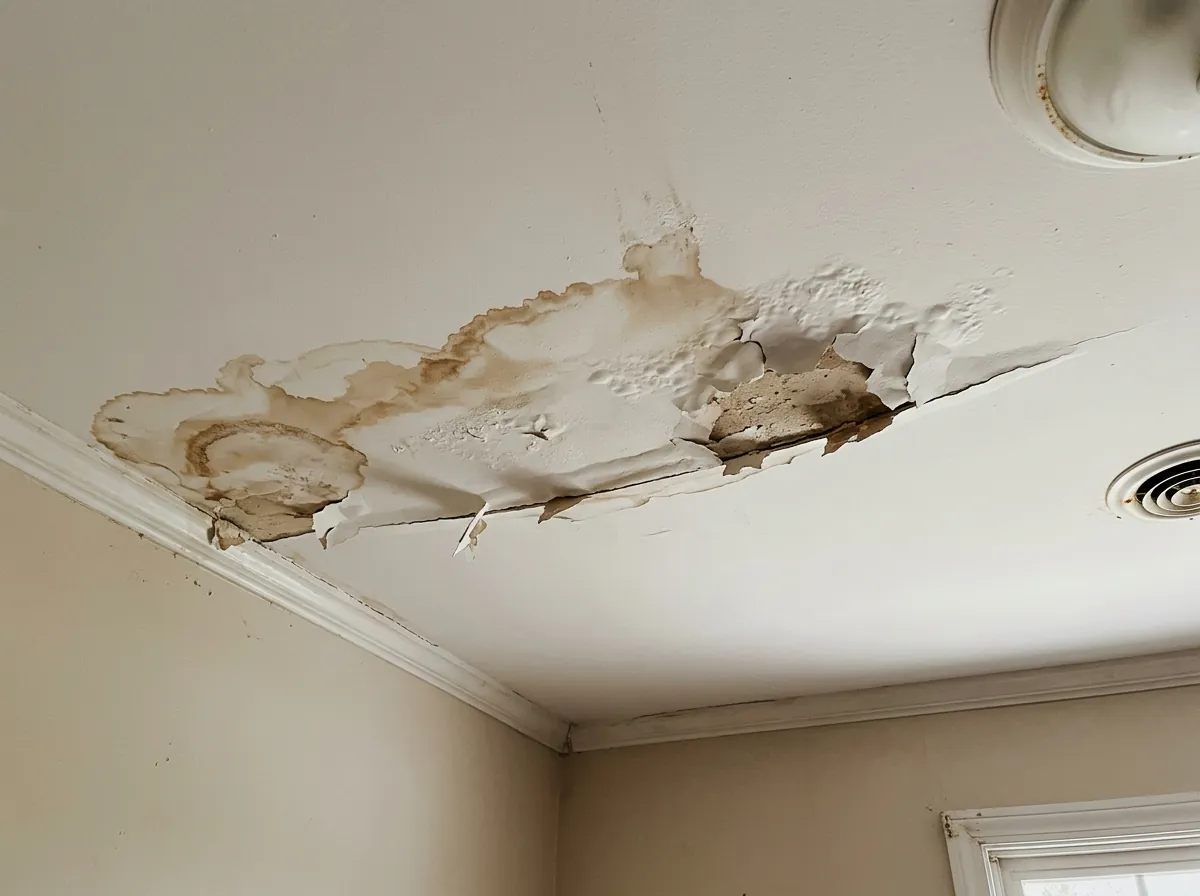
How to avoid overpaying
You don’t need to be an expert to keep a bill fair. Ask for these four things:
- A written estimate with line items before work goes past the emergency stage.
- The daily rate for each piece of equipment, and how many units are in each room.
- Daily moisture readings, written down and shared with you. They show when drying is done and when equipment should come off.
- A list of what was removed and why, with photos.
Read any work authorization before you sign it. Check that it isn’t an assignment of your insurance benefits. Our how we work page explains the difference in plain English.
What if you’re paying out of pocket?
Some jobs aren’t covered, or the bill is close to your deductible. In those cases, ask for the estimate first and decide what’s worth claiming. Ask the company which payment methods and financing it offers.
Can I just dry it myself?
A small spill on a hard floor, caught right away, you can often handle with towels, fans and a wet vac. Water inside walls, under flooring or in carpet pad is different. Without moisture readings, you can’t tell when it’s actually dry, and hidden moisture is where mold starts. Sewage or outside flood water needs professional cleaning. For specific causes, see burst pipes, water heater and AC leaks and flood and storm water.
Is there a charge for the first inspection?
Ask any company this before the visit. Fixr lists emergency call-out fees of $50 to $200 (2025). Get help now and ask what the first visit costs before a technician comes out.
Get a written estimate for your home
Get help now and we’ll connect you with a local restoration company. Tell it where the water came from, how long it ran and which rooms are wet. It should measure, then put the price in writing before drying goes past the emergency stage. The line answers 24/7.