
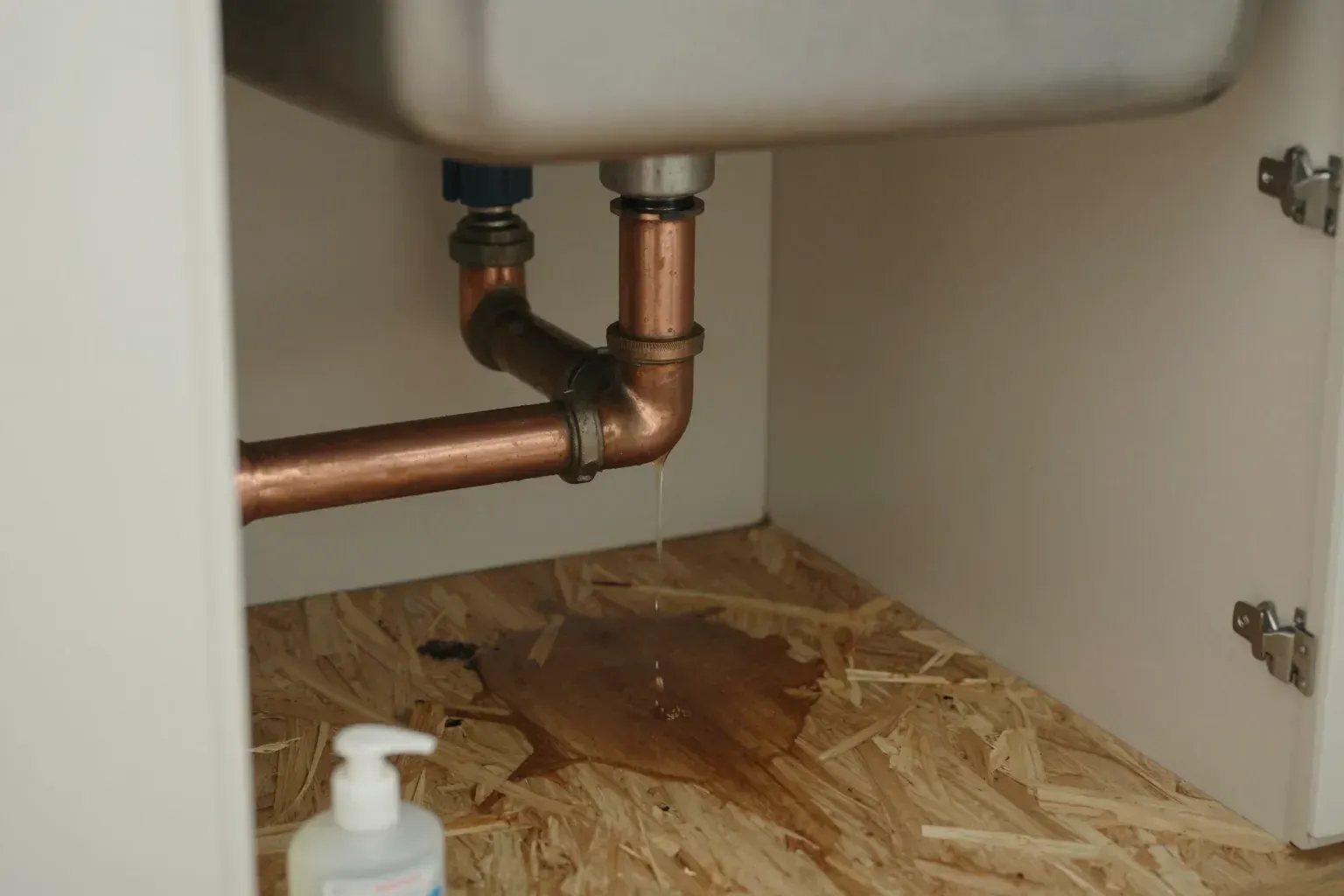
Burst Pipe Water Damage in Plano, TX
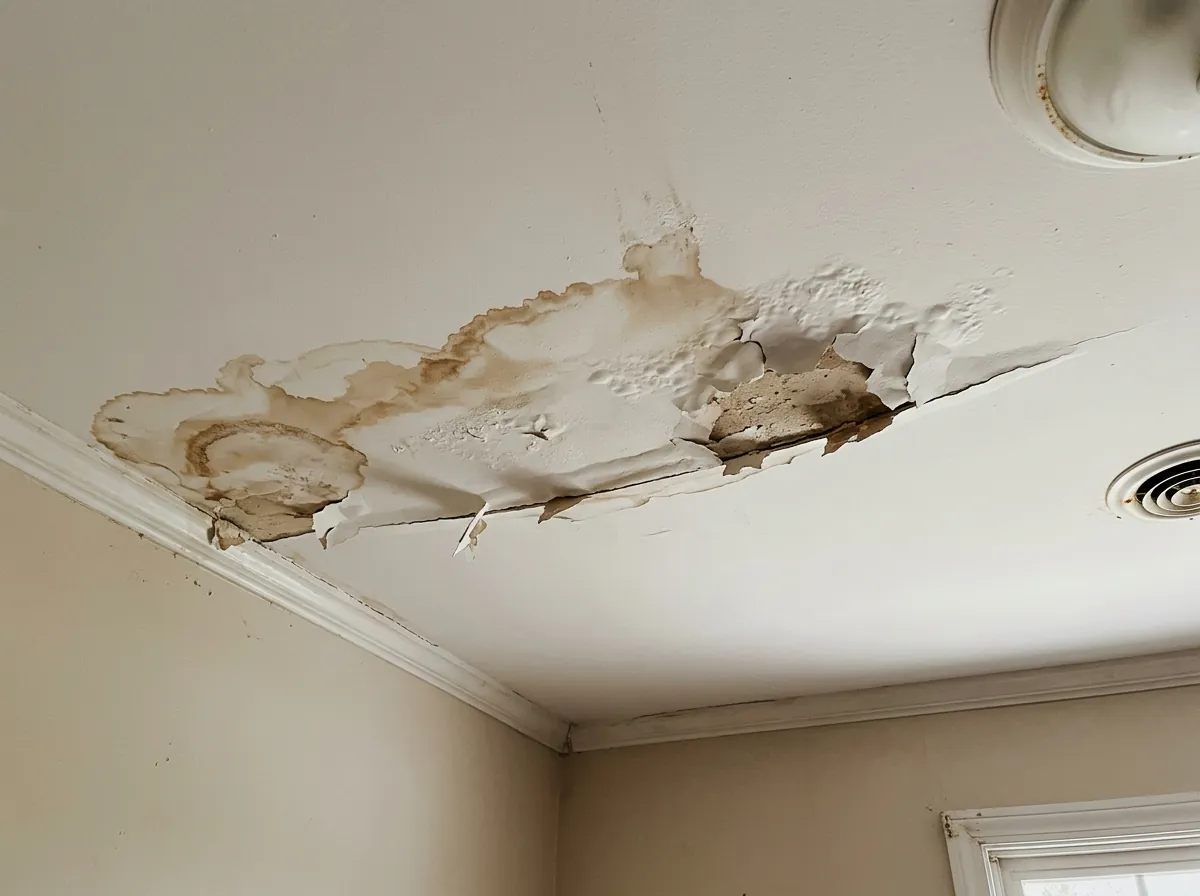
Water spraying from a wall, dripping through the ceiling or running across the floor after a freeze? Shut off the water first. Then call us to reach a local restoration company. That company removes the water, dries the house and records the damage for your insurance company.
Get help now. The line answers 24/7.
Plano Water Damage Restoration is a referral service. When you call, we connect you with an independent local restoration company. We don’t do the work ourselves.
Pipe burst? What do I do right now?
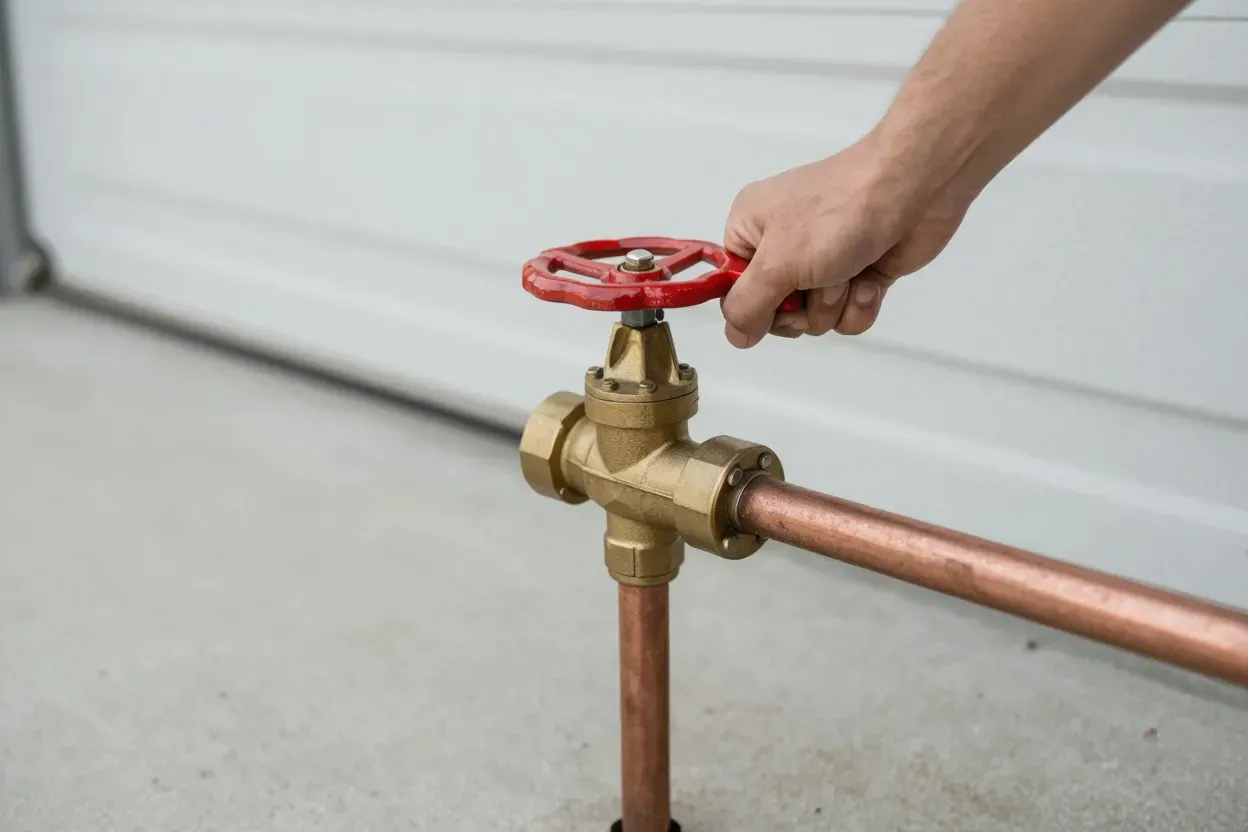
Turn off the main water valve before you do anything else, including mopping. Every minute the valve stays open, more water soaks into walls, carpet pad and subfloor.
- Turn off the main shutoff valve. In most Plano homes the main shutoff is in the City meter box near the curb, between the sidewalk and the street. You need a meter box key, sold at home improvement stores. Turn the valve a half turn clockwise until the arrow points away from the meter (City of Plano). Some homes also have a house-side valve, often in the garage. If you can’t find it, or it won’t close, go to step 2.
- Call the City of Plano if the leak is at the meter or the street, or your valve fails. Call (972) 769-4160 during business hours or (972) 727-1623 after hours (City of Plano water emergency lines).
- Stay clear of electricity. Don’t walk through water near outlets, cords or appliances. If water is coming through a ceiling light or reaching the breaker panel, keep away and call an electrician.
- Take photos before anything moves. Get wide shots of each wet room, close-ups of the broken pipe and pictures of damaged belongings. Keep the broken section of pipe if the plumber removes it. Your insurer may want to see it (Insurance Council of Texas via ABC13, 2021).
- Get help now. Tell the company where the pipe broke, roughly how long it ran and which rooms are wet.
Is a burst pipe a 911 call? Usually not. Use the City water lines above for the water itself. Call 911 if someone is hurt, if you see sparks or smoke, or if you smell gas.
It’s the middle of the night? Shut off the main, move valuables out of the wet area and call us. Mopping can wait.
My pipes are frozen but haven’t burst. What should I do?
Treat a frozen pipe as if it may already be cracked. Plumbers have warned that a pipe can split while it’s still frozen and only leak once it thaws (WFAA, February 2021).
- Know where your main shutoff is before the pipe thaws, so you can close it fast.
- Open the faucet on that line so melting water has somewhere to go.
- Warm the pipe gently, for example with a hair dryer or heating pad (Texas A&M AgriLife Extension). Never use an open flame.
- Open the cabinet doors under sinks on outside walls. The City of Plano gave that advice in January 2026, along with dripping faucets (Community Impact, January 2026).
If water starts spraying as the pipe warms, close the main and call us. Our extraction and drying page explains what happens next.
Why do burst pipes start leaking when they thaw?
Many burst-pipe floods start when the weather warms up, not at the coldest moment. Ice inside a pipe can split it, and the ice plugs the crack. Once it melts, full water pressure pushes through the split.
The February 2021 freeze showed this in Plano. The National Weather Service recorded 139 straight hours below freezing at DFW, ending at noon on February 19, with a low of −2°F on February 16. The City of Plano then took more than 300 emergency water shutoff calls from February 19 to 21, during the thaw (Community Impact, 2021-02-28).
Statewide, Texans filed 500,196 insurance claims for that storm by July 31, 2021 (Texas Department of Insurance data, via Spectrum News). After Uri, insurance claims backed up across DFW, and plumbers were booked for weeks (FOX 4; Texas Tribune, 2021). If a big freeze hits, call early and keep the main off until help arrives.
How often does Plano freeze hard enough to burst pipes?
At DFW Airport, the average first freeze is around November 22 and the average last freeze is around March 12 (National Weather Service, Fort Worth office). Hard freezes come back every few years:
- February 2021 (Winter Storm Uri): 139 hours below freezing at DFW, low of −2°F (NWS).
- December 2022: DFW hit 11°F, its coldest December reading since 1990, with burst pipes reported across the area over Christmas (WFAA).
- January 2024: about 89 hours in a row below freezing, with a low of 11°F (FOX 4).
- January 23–26, 2026: 58 hours in a row at or below freezing, 2.4 inches of snow and a record-low high of 21°F on January 25 (NWS). Plano was under an Extreme Cold Warning.
Holiday freezes are the riskiest. A pipe can burst in an empty house and run for days. If you travel between late November and mid-March, turn off the main before you leave.
Our Plano frozen pipe guide, coming soon, will cover prevention before the next freeze. Until then, the City of Plano posts freeze tips at plano.gov/WinterPrep.
Who fixes the pipe, and who dries the house?
They are usually two different trades. A licensed plumber repairs the pipe. A restoration company removes the water and dries the structure.
In Texas, plumbing work must be done by a plumber licensed by the Texas State Board of Plumbing Examiners (TSBPE), under Occupations Code chapter 1301. The one exception is homeowners working on their own homestead (§1301.051). Restoration crews aren’t plumbers unless they hold that license.
Here’s how a typical burst-pipe job splits:
- Plumber: finds the break, repairs or replaces the pipe, and pressure-tests the line. Ask for the plumber’s TSBPE license number.
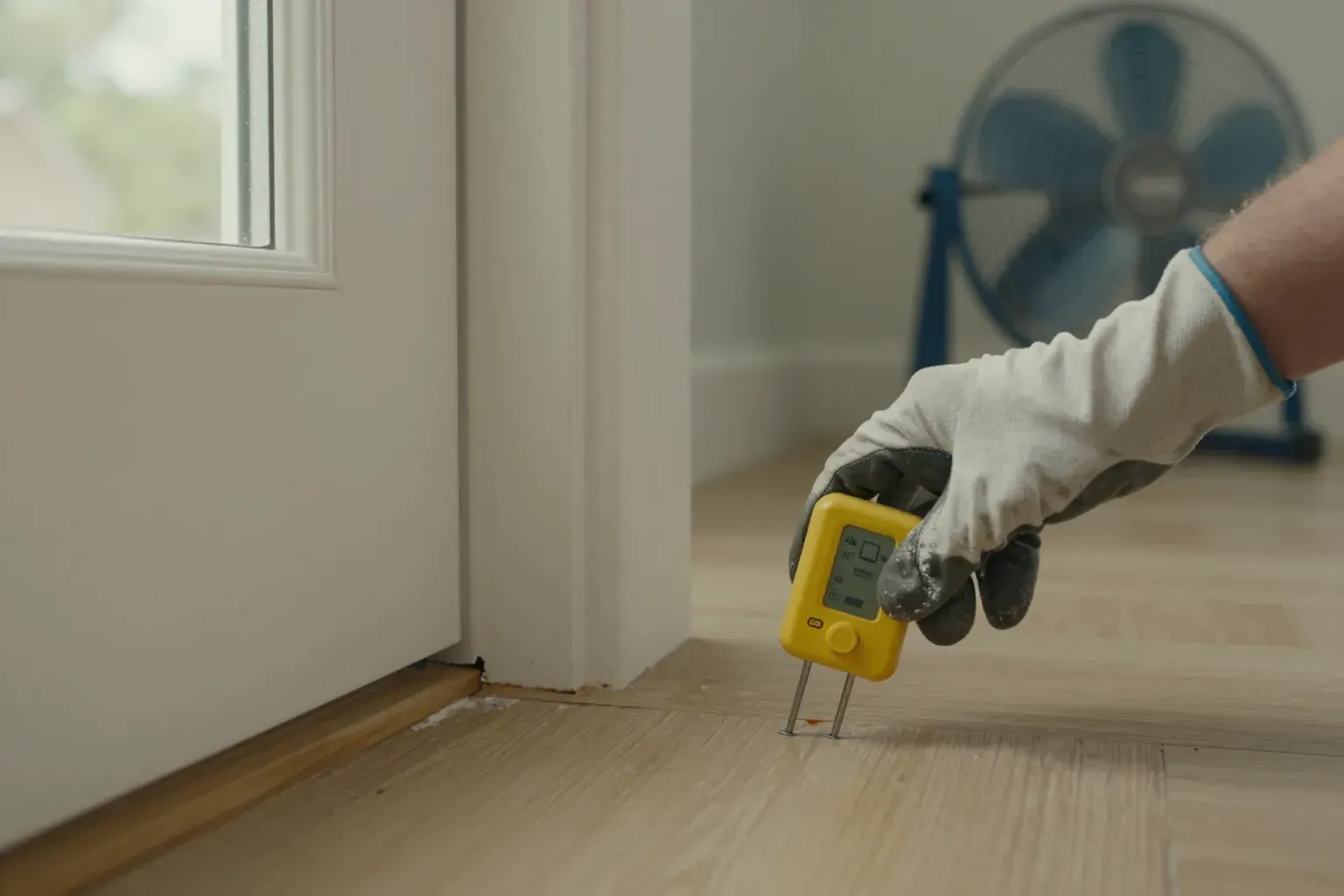
- Restoration company: extracts standing water, maps the wet area with moisture meters, sets up dehumidifiers and fans (air movers), and records daily readings.
- You: keep the photos, receipts and the broken pipe, and report the claim to your insurer.
A burst pipe inside a wall usually means opening some drywall. The plumber needs room to reach the pipe, and the wall cavity needs air to dry. A good restoration company cuts only as much as the moisture readings call for.
Do I need a permit?
Plumbing work needs a permit in Plano, and so do water heater and water line replacement. Cosmetic work such as painting, carpet, cabinets and trim does not (City of Plano, “When is a Permit Required?”). The licensed plumber normally pulls the plumbing permit. Contractors must also register with the City before working in Plano. Ask for the registration number.
Pipe fixed and floor still wet? Get help now. Drying should start the same visit the water stops.
Does homeowners insurance cover a burst pipe?
Usually yes. The Texas Department of Insurance says home policies generally cover sudden and accidental water damage, and a burst pipe is the classic example. A slow leak that went on for weeks is often excluded, and so is mold that grows from it.
Policies also expect you to take reasonable steps to stop more damage (TDI). Turning off the water and starting drying quickly are those steps. Waiting can cost you part of the claim.
A few things to know:
- The policy may pay for water damage to the house but not for the pipe repair itself. Check your policy, or ask your agent.
- Your adjuster decides what’s covered. Ask the restoration company for dated photos, daily moisture readings and a list of what was removed, for you and your adjuster.
- A restoration company shouldn’t negotiate your claim. Texas law bars a contractor from acting as a public adjuster on a job it works on (Insurance Code §4102.163).
- No company should offer to waive or absorb your deductible. Texas law doesn’t allow it (Business & Commerce Code §27.02).
For typical prices, see water damage restoration cost.
Older Plano homes and polybutylene pipe
Many central Plano homes were built in the 1980s. The median home in 75023 dates to 1985, and in 75075 to 1982 (U.S. Census ACS 2020–2024). Those years overlap a national class-action settlement over certain polybutylene pipe installed from 1978 to mid-1995 (Cox v. Shell). The claim deadline passed in 2009, so no settlement money is left.
Not every home from those years has polybutylene. If yours is from that era, ask the plumber what your supply lines are made of: copper, PEX or polybutylene. That answer helps you plan repairs and talk to your insurer.
A water main break in the street is a different problem. That’s City pipe, so call the City lines above, not a plumber.
What happens when the crew arrives
- Confirm the water is off and the area is safe to work in.
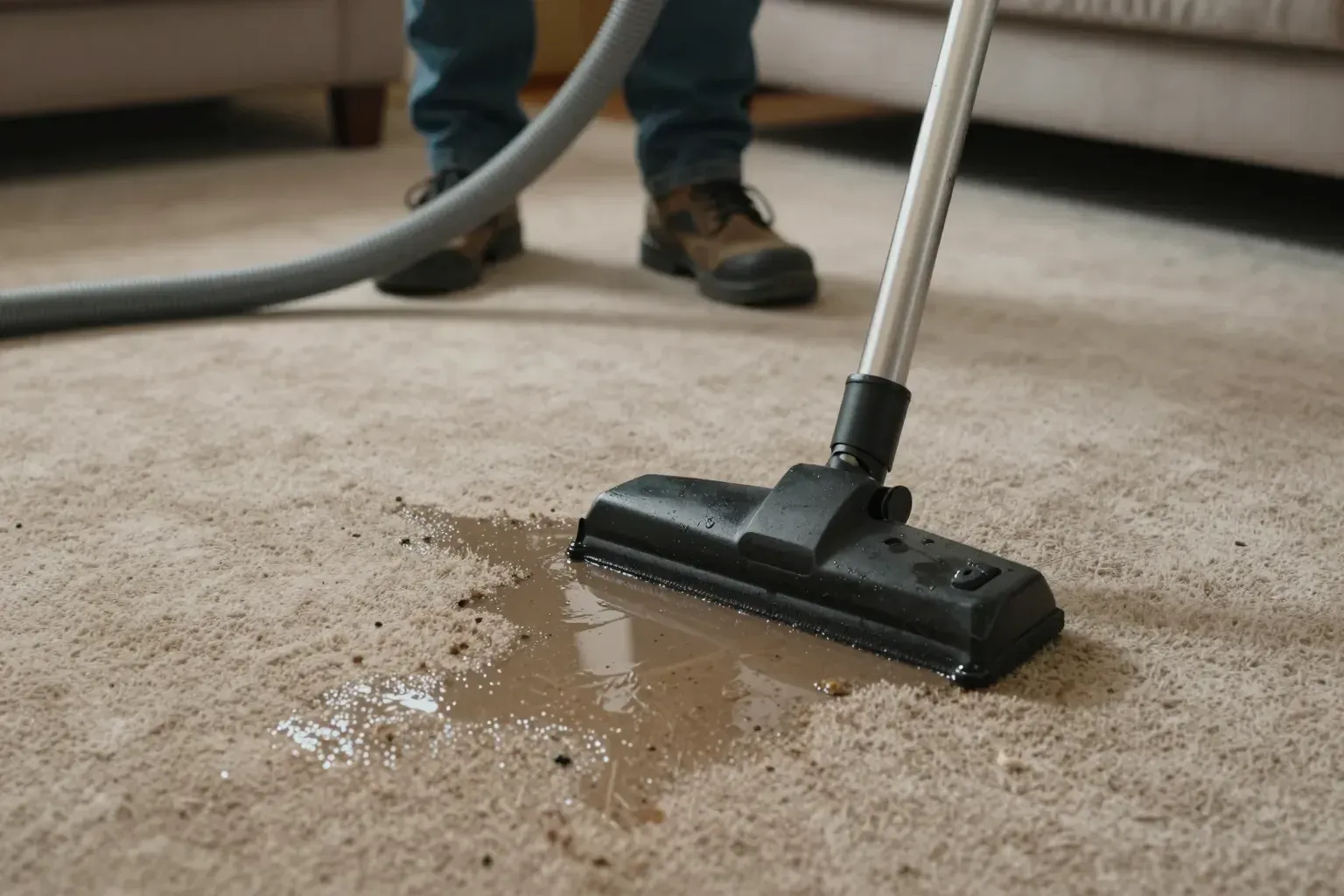
- Extract standing water from carpet, pad and hard floors.
- Map the moisture. Meters and a thermal camera show how far the water went under baseboards and into walls.
- Remove what can’t be dried, such as soaked pad or swollen drywall, and photograph it first.
- Set up drying equipment and come back daily to take readings. Equipment comes off when the readings reach the drying goal.
More on each step, and how billing works, is on how we work.
Pipe burst in Plano? Get help now
Shut off the main, take photos, then call. The line answers 24/7. During a freeze week, ask the company for an honest arrival time and what to do until then.
Get help now