
Plano, TX · Collin County
Water Damage Restoration in Plano, TX
Water on the floor, a stain spreading across the ceiling, or a water heater that just let go? Call (972) 433-0517 and we’ll connect you with a local restoration company. That company removes the water, dries your home and documents the damage for your insurance company.
Call (972) 433-0517. The line answers 24/7.
Plano Water Damage Restoration is a referral service. When you call, we connect you with an independent local restoration company. We don’t do the work ourselves.
Drying goal
- 1Every wet wall and floor gets measured
- 2Readings are re-checked every day
- 3Equipment comes off at the goal
Good drying ends at a measured goal, not a day count.
What we handle in Plano
Pick what happened
Water in your home right now? Do these 4 things first
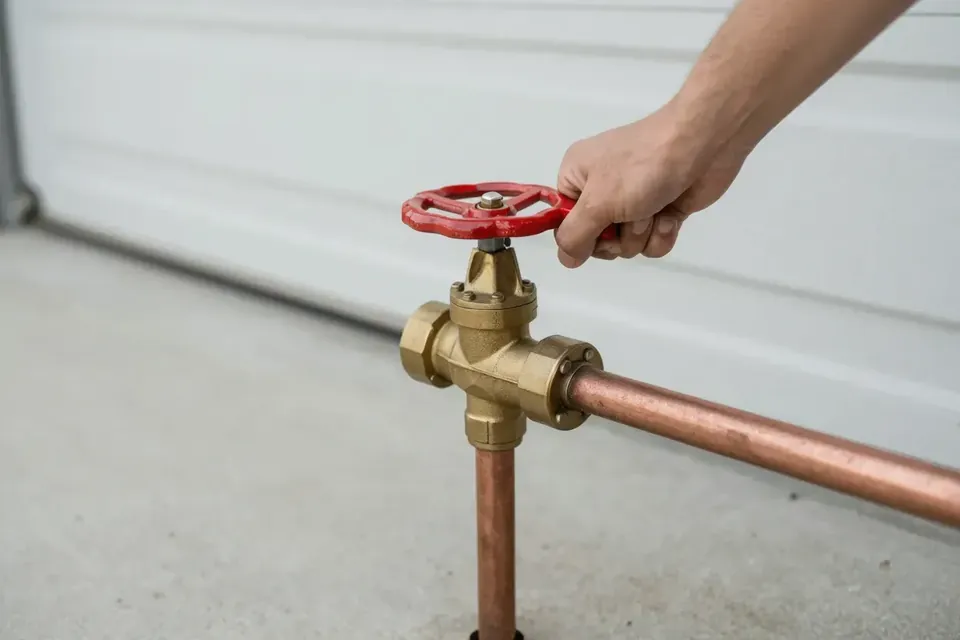
- Stop the water. Turn off your home’s main shutoff valve. Is the leak at the meter, the street or the City’s side of the line? Contact the City of Plano.
- Stay away from electricity. Don’t walk through standing water near outlets, cords or appliances. If water has reached the panel or outlets, leave the power to an electrician.
- Take photos before anything moves. Get wide shots of each room, close-ups of the source and any damaged belongings. Your insurer will ask for them.
- Call (972) 433-0517. Tell the company where the water came from, how long it ran and which rooms are wet. That tells them what equipment to bring.
If a pipe burst during a freeze, our burst pipe guide covers what to do while you wait.
Water damage in Plano: extraction, mitigation and repair
Some people just call it water restoration. Water damage restoration in Plano is usually three jobs, done in order:
- Water extraction: pumping and vacuuming out the standing water. See emergency water extraction.
- Water mitigation: drying the structure and removing what can’t be saved, so the damage stops spreading. That’s covered on the same extraction and drying page.
- Water damage repair: the rebuild of drywall, floors and cabinets once everything is dry. See water damage repair in Plano.
Storm or creek water is handled differently, because it counts as dirty water. See flood and storm damage restoration.
What happens on the first visit
The first visit sets the tone for the whole job: what gets removed, what can be saved and how long drying will take. Here’s what a proper first visit looks like, so you know what to expect.
Finding how far the water spread
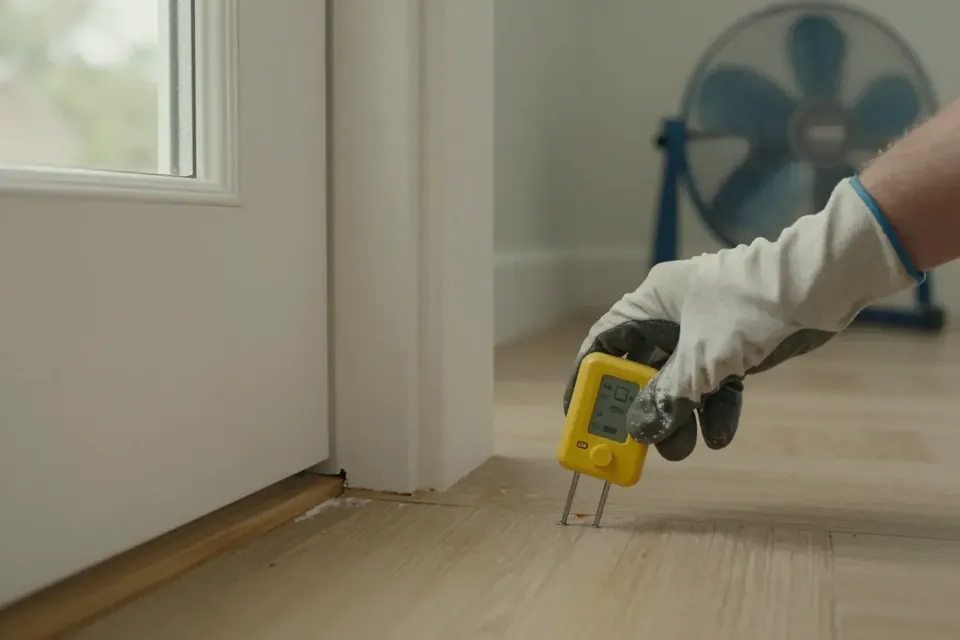
Water travels under baseboards, into wall cavities and along subfloors, so the wet area is almost always bigger than the puddle. The technician uses a moisture meter and, where useful, a thermal camera to map every wet wall and floor. You should get the readings, not a guess.
Removing the water
Standing water comes out first with extraction equipment. Taking the water out quickly is what keeps carpet, pad and drywall from soaking up more of it.
Structural drying, and when the equipment comes off
After extraction, the crew sets up dehumidifiers and air movers (the big fans) to pull moisture out of walls, floors and cabinets. Opening windows doesn’t do the job here. DFW’s average summer dew point is around 70°F (National Weather Service), so the outside air is already damp.
A good restoration company takes readings every day and writes them down. Equipment comes off when the readings show the materials have reached the drying goal, not on a fixed number of days. Many jobs take about 3 to 5 days. Hardwood, slab floors and cabinets can take longer. More on this in how long drying takes.
What you and your adjuster should get
Ask for dated photos, the moisture readings from every visit and a list of what was removed and why. You and your adjuster should see the same records the company keeps. Homeowners often complain that they never got these records.

What usually floods Plano homes
About 4 in 10 Plano homes were built before 1990 (U.S. Census ACS 2020–2024), so many have original supply lines and drain lines reaching the age when they wear out. These are the most common causes in Plano water damage requests.
Water heaters
Plano buys its water from the North Texas Municipal Water District. That water runs moderately hard to very hard, about 96 to 200 parts per million (2025 Plano Water Quality Report). Scale builds up in tank water heaters over the years. A tank in the attic or a garage closet can soak the ceiling and rooms below it within hours. See water heater and AC leaks.
AC drain lines
A clogged condensate line or an overflowing drain pan drips into the ceiling, often for days before anyone notices. These leaks peak in the hot, humid months. Same page: water heater and AC leaks.
Upstairs bathrooms and ceilings
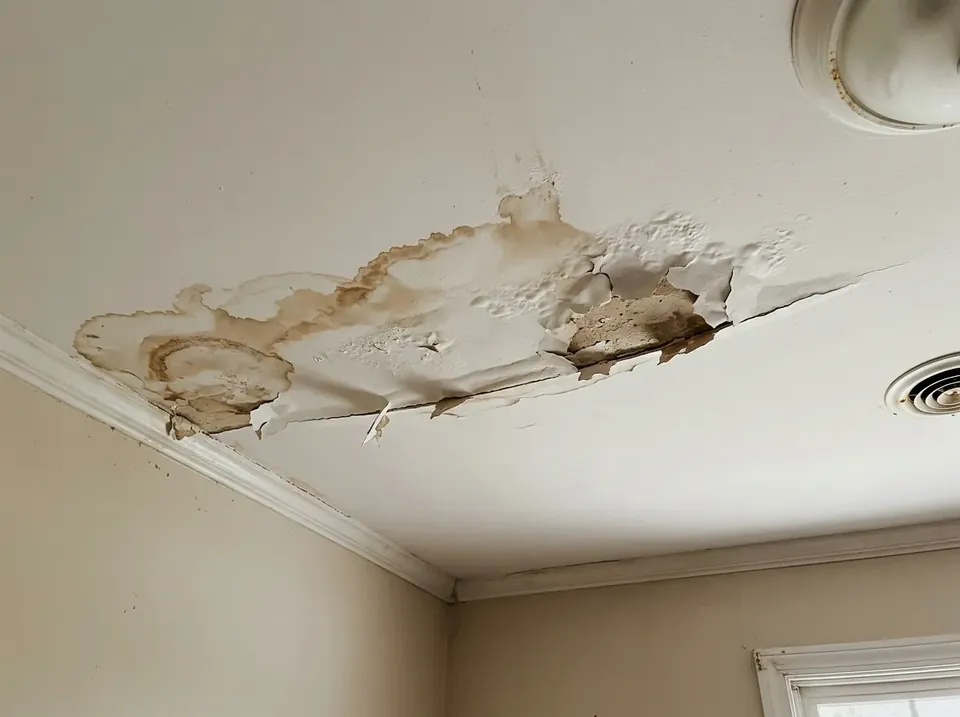
In two-story homes, a leak at an upstairs tub, toilet or shower usually shows up as a ceiling stain or bubbling paint in the room below. A sagging ceiling can hold a lot of water, so stay out from under it. See ceiling water damage.
Burst and frozen pipes
A frozen pipe often splits while it’s frozen, but the water usually doesn’t flow until it thaws, so that’s when the damage shows up. During the February 2021 freeze, the City of Plano logged more than 300 emergency water shutoff calls in three days. The most recent hard freeze, in January 2026, kept DFW at or below freezing for 58 hours straight (National Weather Service). The average freeze window at DFW Airport runs from about November 22 to March 12 (National Weather Service). See burst pipe water damage and our Plano frozen pipe guide.
Slab leaks
Many Plano homes sit on a concrete slab over Blackland Prairie clay, which swells when wet and shrinks when dry (USDA soil survey). That movement can stress pipes under the slab. Warning signs include a water bill that jumps for no reason, a warm spot on the floor, or a meter dial that keeps turning with every tap off. A licensed plumber fixes the pipe; the restoration company dries what got wet. See slab leak water damage.
Storm and creek water
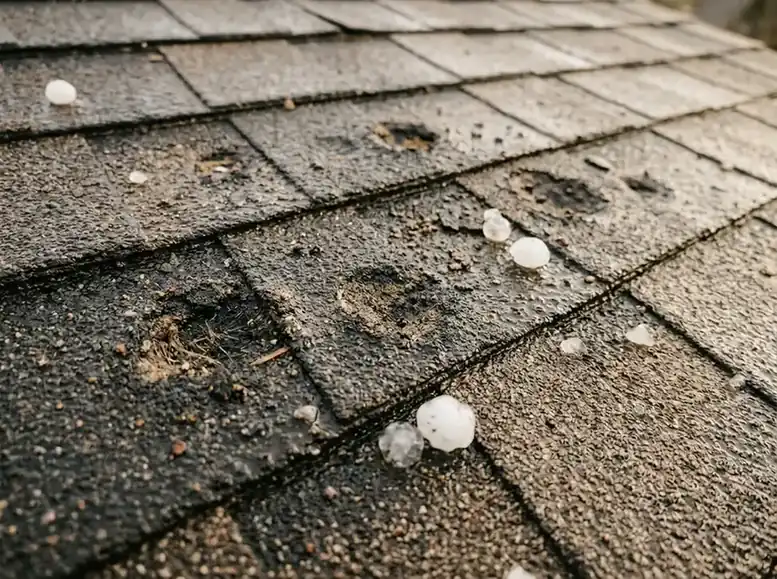
May and October are DFW’s wettest months (National Weather Service). Hail and wind can open a roof, and heavy rain can push water in through doors and low spots. The City of Plano notes that about 30% of flood claims come from outside the mapped flood zones. Standard home policies don’t cover flooding. See flood and storm water damage.
Sewage backups
A backed-up sewer line brings Category 3 water into the house, and it needs cleaning and disinfecting, not just drying. The City of Plano says that if a sewer backup happens inside your home, you’re responsible for the repair and cleanup. See sewage backup cleanup.
Is it clean water or dirty water?
It depends on where the water came from and what it touched, and that decides what can be dried and what has to go. The restoration industry standard (ANSI/IICRC S500) sorts water into three categories:
- Category 1, clean water: a broken supply line or a water heater tank.
- Category 2, gray water: water with contaminants, such as a washing machine or dishwasher overflow.
- Category 3, black water: sewage, or flood water from outside.
Water doesn’t stay in one category. Clean water that sits, or runs through dirty spaces, can become Category 2 or 3. Carpet pad soaked by Category 3 water is replaced, not dried. Time matters for another reason too: the EPA advises drying wet materials within 24 to 48 hours to prevent mold growth. Full explanation: water damage categories and classes.
Not sure what kind of water you have? Call (972) 433-0517 and describe the source to the company you’re connected with. They can tell you what to expect before they arrive.
How much does water damage restoration cost in Plano?
Nationally, most homeowners pay between about $1,364 and $6,301, and the average is around $3,833 (HomeAdvisor, 2025). Small clean-water jobs cost less. Sewage, hardwood or a whole floor costs more.
Three things set the price:
- The water category. Fixr puts water extraction at about $3.75 to $4.25 per square foot for clean water, $4.10 to $6.50 for gray water, and $7 to $7.50 for sewage (Fixr, 2025).
- How much got wet, and which materials. Hardwood and custom cabinets take longer to dry and cost more to replace. That matters in West Plano, where median home values in 75093 run about $670,500 (U.S. Census ACS 2020–2024).
- How many days of drying it takes. Equipment is usually billed per unit per day, often in Xactimate, the estimating software widely used by insurers.
Texas law doesn’t allow a contractor to advertise or promise to waive or absorb your insurance deductible. A written estimate should show the line items before work goes past the emergency stage. Full breakdown with sources: water damage restoration cost.
Will homeowners insurance cover it?
Usually yes, if the damage was sudden and accidental, like a burst pipe or a failed water heater. Damage from a slow leak that went on for weeks often isn’t covered, and flood water needs separate flood insurance (Texas Department of Insurance).
Your adjuster decides what’s covered. What helps your claim is clear proof of what happened and when: photos, moisture readings and a record of what was removed. Ask the restoration company to provide all three.
Texas law sets deadlines for your insurer. The insurer has 15 days after you notify it to acknowledge the claim and start investigating (Texas Insurance Code §542.055). It then has 15 business days after receiving everything it asked for to accept or reject the claim (§542.056). It can take up to 45 more days if it tells you in writing why it needs more time.
A restoration company isn’t your public adjuster. Texas law bars a contractor from acting as a public adjuster on a property where it does the work (Insurance Code §4102.163). So the company should document the loss and work with your adjuster. It shouldn’t negotiate your claim. More in the Texas water damage insurance guide.
Before you sign anything
You’ll usually be asked to sign a work authorization so drying can start. That’s normal. Read it first, and ask these questions:
- Is it a work authorization or an assignment of benefits? A work authorization lets the company start work. Assigning your insurance benefits hands your claim money to the company. These are very different.
- Who pays if insurance covers less than the bill?
- What’s the daily rate for each piece of equipment?
You choose who does the work, even if your insurer suggests a company. Be careful with anyone who promises to “handle your claim” or “cover your deductible”, or who offers to both test for and remove mold. Our guide to hiring a restoration company has the full checklist.
Mold after a leak: what Texas law requires
Not every leak leads to mold. Fast, thorough drying is the surest way to prevent it. When mold does grow, Texas treats removing it as licensed work:
- Mold remediation of 25 contiguous square feet or more generally requires a license from the Texas Department of Licensing and Regulation (TDLR) (Occupations Code §1958.102).
- The same company can’t both assess and remove mold on the same project (Texas Occupations Code §1958.155). A separate licensed assessor writes the plan and checks the result (TDLR rules, 16 TAC Chapter 78).
- Since September 1, 2025, mold remediation workers must hold their own TDLR license or registration (Senate Bill 1255).
Ask any mold company for its TDLR license number, and check it on TDLR’s license search. See mold remediation and Texas mold law explained.
Smell something musty after a leak? Call (972) 433-0517 for a moisture check before you open walls.
How water damage differs across Plano neighborhoods
Plano’s housing varies a lot from one side of town to the other, and so do the water problems.
South-central and central Plano (75075 and 75023) has the oldest homes in the city, with median build years of 1982 and 1985. Many of these homes still have original drain lines under the slab and plumbing from the 1980s, so slab leaks and drain-line backups are more likely.
About half of the homes in north-central Plano (75025) were built in the 1990s, with a median build year of 1996. Many are now 25 to 35 years old, the age when original supply lines and fittings wear out.
In Legacy and far north Plano (75024), about 62% of households rent, and more than half of homes are in buildings of five or more units. Leaks there often start in the unit above. That raises the question of whose insurance pays: the tenant’s, the landlord’s or the HOA’s. If you rent, tell your landlord in writing first.
West Plano around Willow Bend (75093) has the highest home values in the city. Hardwood, stone and custom cabinets need careful drying and good records for the claim.
East Plano (75074) mixes older homes near downtown with newer apartments. Far east Plano (75094) is mostly newer homes, where appliance and fixture leaks are a more likely cause than worn-out pipes.
Areas we cover around Plano
Our phone line takes calls from across Plano, from Downtown and East Plano to Legacy, Willow Bend and the Sam Rayburn Tollway (SH-121) edge.
Plano ZIP codes this site covers: 75023, 75024, 75025, 75026, 75074, 75075, 75086, 75093, 75094.
- Richardson: some of the oldest homes near Plano, with about 44% built before 1980.
- Frisco: some of the newest homes nearby, with about 82% built in 2000 or later, so builder warranties often still apply.
- Allen: most homes date from 1990 to 2009, the age when water heaters and supply lines wear out.
- Murphy and Wylie: newer homes next to the regional water plant, and Murphy is replacing about 5,300 old copper service lines.
All cities and response routes: service areas.
Who does the work, and how to check
This website is run by Mateo Ari. The site is a referral service, not a restoration contractor. When you call, you’re connected with an independent local restoration company. That company does the work, writes your estimate and is responsible for the job.
Before anyone starts work, ask the company for these and check each one.
- IICRC Certified Firm status. You can look up a firm on the IICRC Global Locator.
- TDLR mold remediation license number, if mold is involved. You can look this up on TDLR’s license search.
- A licensed plumber for pipe repairs. In Texas, plumbing is licensed by the Texas State Board of Plumbing Examiners.
- City of Plano contractor registration. Plano requires contractors to register before working in the city, and plumbing work, water heater replacement and foundation repair need permits (City of Plano Building Inspections).
- Proof of liability insurance. Ask for a certificate of insurance.
- The standard they follow. ANSI/IICRC S500 is the water damage restoration standard.
- Any guarantee, in writing.
What a restoration company shouldn’t do: negotiate your insurance claim, offer to waive or absorb a deductible, or test and remove mold on the same job. How calling works and what a proper job looks like: how we work. Who runs this site: about us.
Frequently asked questions
Longer answers, with sources, are in our water damage guides. More questions are answered on our water damage FAQ page.
Do I need to move out while my home dries?
For a clean-water leak in one part of the house, many families stay home during drying. Expect loud equipment running day and night and some rooms off-limits. Sewage, flood water or exposed wiring are reasons to stay somewhere else until the area is safe. How we work explains what to expect day to day.
Can wet carpet pad be saved?
Pad soaked by clean water and dried quickly can sometimes be saved, though soaked pad holds a lot of water and is often replaced. Pad soaked by gray water is usually replaced, and carpet and pad soaked by sewage are thrown out. See water extraction and drying.
How long does drying take?
Many homes dry in about 3 to 5 days. Hardwood, slab floors and cabinets can add time. Readings, not the calendar, decide when it’s done. See how long drying takes.
Do I have to use the company my insurance company recommends?
Usually not. The Texas Department of Insurance says homeowners and dwelling policyholders may have their home repaired by the person of their choice (TDI Bulletin B-0017-17; 28 TAC §5.9970). Check your policy for a managed-repair clause. Our hiring guide lists what to check.
Can I dry it myself?
A small spill on a hard floor, caught right away, you can usually handle with towels, fans and a wet vac. Water in walls, under flooring or in carpet pad needs moisture readings to confirm it’s dry. Anything from sewage or outside flooding needs professional cleaning. See what to do right after water damage.
Who pays when the leak came from the unit above me?
It depends on where the leak started and whose policy covers that part of the building, so it may be your landlord’s, the upstairs owner’s or the HOA’s. If you rent, tell your landlord in writing right away. Our guide to who pays for water damage covers how this usually works.
How fast can mold grow after a leak?
The EPA advises drying wet materials within 24 to 48 hours to prevent mold growth. That’s why fast extraction matters. See mold remediation.
What if the City’s water main or sewer line caused the damage?
Damage inside your home is generally the owner’s responsibility, according to the City of Plano. If you believe a City line caused it, the City requires a written claim within 6 months of the incident (City of Plano Risk Management). Keep your photos and invoices. See sewage backup cleanup.
Water in your home? Call (972) 433-0517
Shut off the main valve, take photos, then call. The line answers 24/7. We connect callers in Plano, Richardson and nearby cities with an independent local restoration company.
Call (972) 433-0517