
Texas Mold Law: Mold Testing vs Mold Remediation
In Texas, mold testing and mold removal are two separate licensed jobs. A licensed mold assessor inspects and writes the plan. A licensed mold remediation contractor does the cleanup. The same company can’t do both on one project (Texas Occupations Code §1958.155).
This guide explains who needs a license, what each step looks like and how to check a license before you sign anything. It’s general information, not legal advice.
Plano Water Damage Restoration is a referral service. When you call (972) 433-0517, we connect you with an independent local company. We don’t test for mold or remove it ourselves.
Do I need a license for mold remediation or assessment in Texas?
Anyone you pay to test or remove mold usually needs a license from the Texas Department of Licensing and Regulation (TDLR). The rules sit in Texas Occupations Code chapter 1958 and in TDLR’s rules at 16 Texas Administrative Code chapter 78.
There are a few exceptions, all in Occupations Code §1958.102:
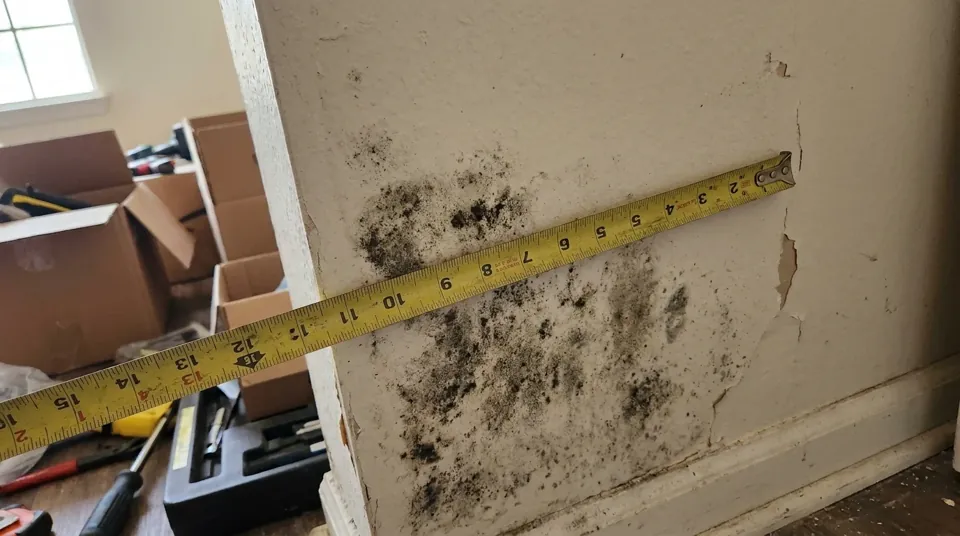
- Small jobs. Remediation of mold covering less than 25 contiguous square feet doesn’t need a license. That’s an area about 5 feet by 5 feet.
- Your own home. An owner can do assessment or remediation on a home they own with fewer than 10 dwelling units. This doesn’t cover anyone doing mold work for the public.
Once a hired company is cleaning 25 square feet or more, the TDLR mold license rules apply. The company must also notify TDLR at least five calendar days before that remediation starts (16 TAC §78.110). In an emergency, such as fresh water damage, the notice can come by the next working day (16 TAC §78.110).
What changed in 2025 (SB 1255)
Senate Bill 1255 took effect on September 1, 2025. It repealed §1958.102(b), which had let unlicensed employees do mold work under a licensed supervisor. TDLR told licensees that those workers now need their own mold license or registration (TDLR Mold Monitor, July 2025).
In practice, ask whether every person on the crew holds a TDLR mold credential, not just the owner. Under 16 TAC §78.70, credentialed workers must keep their TDLR card or certificate at the job site.
Why can’t one company test and remove mold on the same job?
Texas law bans it to prevent a conflict of interest. A license holder “may not perform both mold assessment and mold remediation on the same project” (Occupations Code §1958.155).
The same section goes further. One person can’t own part of both the assessment company and the remediation company on a project. Companies must also report their owners to TDLR.
The reason is simple. The person who decides how much mold there is shouldn’t profit from removing it. An independent mold assessor has no reason to make the job bigger.
That’s why “free mold inspection” offers from a remediation company deserve a second look. A free visual look is not illegal. But on a licensed project, that same company can’t also be your assessor. For more red flags, see how to hire a restoration company.
How a licensed mold project works, step by step
A licensed Texas mold job follows a set order. Each step produces a paper you should keep.
- You get the Consumer Mold Information Sheet. The licensee must give you TDLR’s Consumer Mold Information Sheet early. That means at first contact or one calendar day before mold work starts, whichever comes first. In an emergency, it’s due by the next calendar day (16 TAC §78.70).
- The assessor inspects and writes the protocol. The licensed mold assessment consultant writes a mold remediation protocol. It lists the rooms, the materials to clean or remove, the methods and the protective gear. You get it at least one day before remediation starts (16 TAC §78.100).
- The remediation contractor writes a work plan. The contractor’s work plan must meet the protocol’s requirements. It goes to you at least one day before prep work begins (16 TAC §78.120).
- The remediation contractor does the work. That usually means plastic containment, HEPA air filtration and removal of moldy materials. Many companies follow the industry standard ANSI/IICRC S520, now in its 2024 edition.
- The assessor comes back for clearance testing. A licensed assessment consultant does a post-remediation assessment. It uses visual, procedural and analytical checks, and it checks whether the cause of the mold was fixed where feasible (16 TAC §78.140).
- You get a certificate. The remediation license holder must give you a certificate of mold remediation within 10 days of finishing. It includes the assessor’s statement (Occupations Code §1958.154).
Every report, bid, contract and bill must show TDLR’s name, website, mailing address and phone number for complaints (16 TAC §78.70). If those details are missing, ask why.
Keep the certificate if you might sell
If you sell the home, the buyer gets a copy of each certificate from the past five years. Texas law puts that duty on the seller (Occupations Code §1958.154). Store the certificate with your insurance and repair records.
I had a leak in the past. Is a mold test worth it?
Often, no. If you can see mold, the U.S. Environmental Protection Agency says sampling is usually unnecessary. The mold needs cleaning either way, and the leak has to be fixed (EPA, “A Brief Guide to Mold, Moisture and Your Home”).
A test is more useful in a few situations:
- You smell a musty odor but can’t find the source.
- The leak was inside a wall, under a floor or above a ceiling, and the area was never opened.
- You’re buying or selling a home and want an independent report.
- A large job was just cleaned and you need clearance testing to prove it’s done.
The EPA also says wet materials should be dried within 24 to 48 hours to help prevent mold. If an old leak was dried fast and nothing smells or shows stains, a test may add little.
If you do test, hire an independent licensed assessor, not the company that would do the removal. That keeps the result honest.
Leak still wet? Drying it now does more to prevent mold than any test. Call (972) 433-0517 to reach a local company for water extraction and drying.
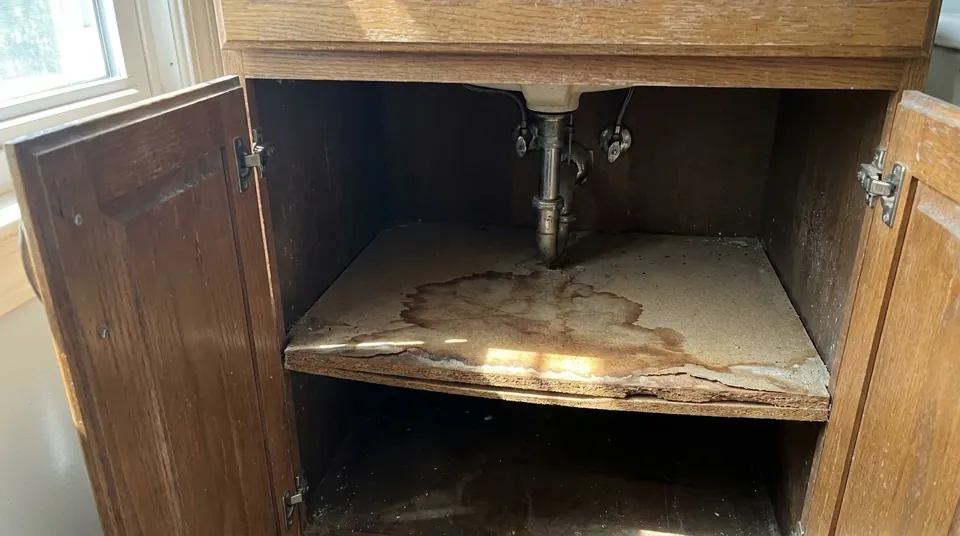
How do I check a Texas mold license?
Use TDLR’s free license search. Search by name or license number, and choose the mold license type. The search lists active licenses only, so a missing name is a warning sign.
Check three things before you sign:
- The license type matches the job. An assessment consultant license is for testing and protocols. A remediation contractor license is for cleanup.
- The license is current, not expired or suspended.
- The assessor and remediator are different companies with no shared owners.
Ask each company for its license number in writing. A company that won’t share it is a company to skip.
Does insurance pay for mold?
Sometimes, and usually only in part. The Texas Department of Insurance says home policies generally cover sudden water damage, but often exclude gradual leaks and the mold that comes from them. Check your policy for a separate mold limit or mold exclusion.
Your adjuster decides what’s covered. Keep the protocol, the work plan, the clearance report and the certificate. Those papers show what was done and why. Our Texas water damage insurance guide explains claims, deductibles and deadlines.
Need a licensed mold remediation company in Plano?
See mold remediation in Plano for signs, costs and what the cleanup involves. To reach a local company, call (972) 433-0517. The line answers 24/7. Ask for its TDLR license number, and plan on a separate assessor for testing.