
Preventing Water Damage in Plano Homes
A lot of home water damage starts at a few parts: the water heater, the AC drain line, washer hoses, supply lines under sinks, and the roof and gutters. Each can be checked in minutes, and many fixes are cheap. This guide puts those checks in the order a Plano year brings them, from AC season to freeze season.
It matters for insurance, too. Home policies usually cover sudden water damage, like a burst pipe, but often not a slow leak that went on for weeks (Texas Department of Insurance).
Plano Water Damage Restoration is a referral service. When you call, we connect you with an independent local restoration company. We don’t do the work ourselves.
Leak already started? Shut off the main valve, then call (972) 433-0517. The line answers 24/7.
How do I prevent water damage in my home?
Check the few parts that fail most, on a schedule, and know where your main shutoff is. Here is a simple Plano calendar. The sections below explain each item.
| When | What to check |
|---|---|
| Spring (March–May) | AC condensate drain line before cooling season. Flush the water heater (hard water means twice a year). Roof and ceilings after hail or heavy storms. Gutters and downspouts. |
| Summer (June–September) | AC drain pan and float switch during peak humidity. Even watering around the foundation in dry spells. |
| Fall (October–November) | Flush the water heater again. Drain hoses and shut off the sprinkler system before the first freeze. |
| Winter (December–February) | Freeze-day steps from our frozen pipe guide. |
| Any time | Washer hoses (replace about every 5 years). Under-sink and appliance supply lines. A water meter leak test. |
Do the shutoff check first, whatever the season. In most Plano homes the main valve is in the City meter box near the curb, between the sidewalk and the street. You turn it with a meter box key, sold at home improvement stores (City of Plano, “How to Shut Off Water to Your Home”). Buy the key before you need it.
How does Plano’s hard water affect my water heater?
Hard water leaves minerals that settle in the bottom of a tank water heater. Rheem recommends flushing a tank once a year, or every 6 months if you have hard water. A. O. Smith says sediment buildup increases the risk of leaks.
Plano’s water is hard enough to count. The City’s 2025 water quality report shows total hardness of 96 to 200 parts per million in water from NTMWD’s Wylie plant, and 96 to 144 from its Leonard plant. On the USGS scale, that runs from moderately hard to very hard. Plano buys its water from the North Texas Municipal Water District, so Allen, Frisco and Richardson have similar water.
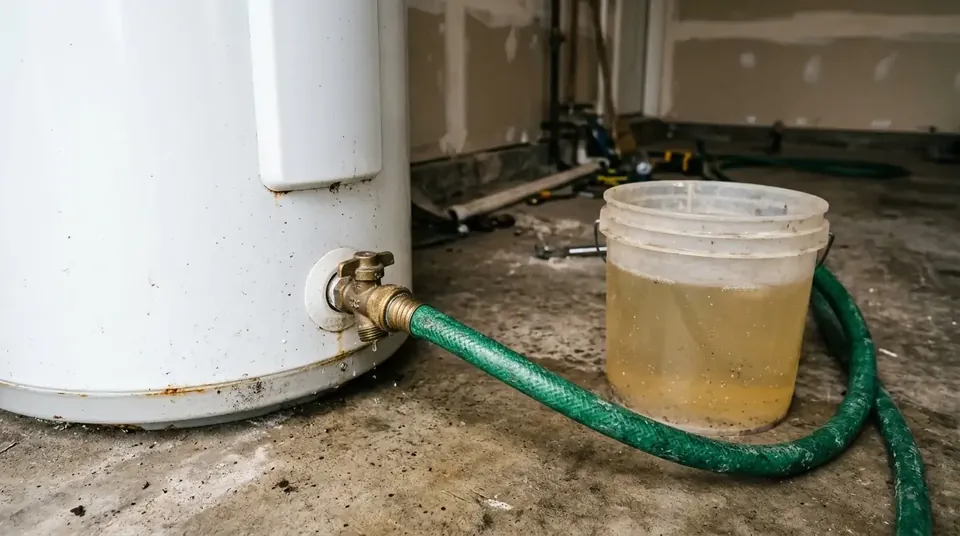
A yearly water heater check:
- Flush the tank by draining it through the drain valve near the bottom, following the maker’s directions.
- Check the anode rod. It draws corrosion away from the tank lining. Rheem says to check it yearly and replace it if it’s corroded or coated with sediment.
- Test the relief valve. Rheem says to lift the temperature and pressure (T&P) valve handle briefly and check that water flows out the discharge pipe. Replace the valve if it won’t release or keeps leaking. The water is scalding hot, so a plumber can do this for you.
- Look under the tank for pooling water or rust (EPA WaterSense).
Water heaters in attics and upstairs closets can do the most damage when they fail. The plumbing code requires a drain pan under a tank water heater wherever a leak would cause damage (International Residential Code P2801.6). Plano adopted the 2024 code in 2025 and left that rule in place. One local exception: a replacement water heater doesn’t need a new pan drain if the old one had none. Check now and then that any pan drain line isn’t blocked.
Tank water heaters last about 10 to 15 years (U.S. Department of Energy). Replacing a water heater in Plano needs a permit (City of Plano, “When is a Permit Required?”). Signs of a failing tank are on our water heater and AC leak page.
How do I keep my AC drain line from leaking?
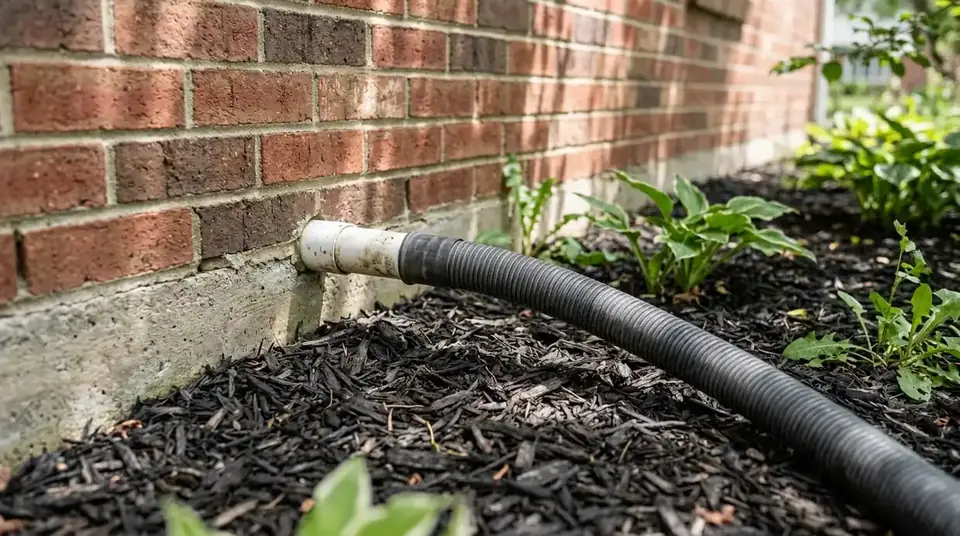
Check the condensate drain line in spring, before cooling season. ENERGY STAR says to check and inspect the condensate drain, and warns that a plugged drain can cause water damage in the house. It recommends checking the cooling system in the spring.
Plano summers make this matter. The DFW summer dew point averages about 70°F (National Weather Service). Humid air means your AC pulls more water out of the air, so the drain line carries the most water from June through August.
- Clear the line. A wet/dry vacuum on the drain line often pulls out a clog (Direct Energy).
- Look at the pan. An attic unit usually sits over a second pan, or has an overflow line or a safety switch. If the pan holds water, the main drain may be clogged.
- Don’t bypass a float switch. A float switch is a small safety switch that shuts the AC off when water rises in the pan. If your AC stopped cooling and the pan is full, the switch may have done its job.
Plano’s 2024 building code amendments say a water level switch may be used in place of a second drain only with the building official’s prior approval. So if an HVAC technician suggests changing how your unit drains, ask whether it needs a permit. A dripping ceiling under the air handler is covered on our ceiling water damage page.
When should I replace washing machine hoses?
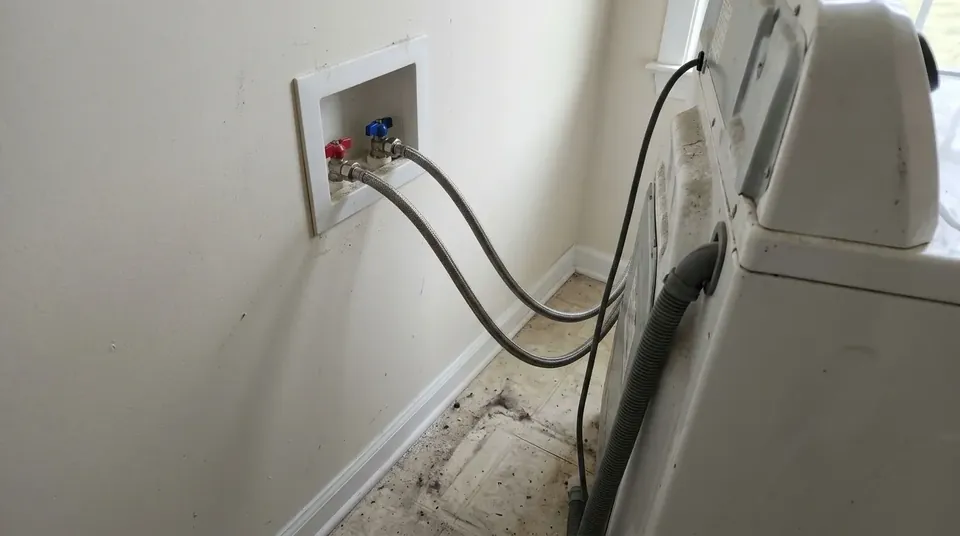
About every 5 years. Whirlpool’s guidance says to replace inlet hoses after 5 years of use to reduce the risk of hose failure. Replace them sooner if you see bulges, kinks, cuts or leaks. Whirlpool also suggests writing the replacement date on the hose label.
Braided stainless hoses wear out too, so the 5-year rule applies to them as well.
If you’ll be away for a while, turn off the two supply valves behind the washer. Whirlpool recommends this to avoid flooding from a pressure surge. It takes a few seconds.
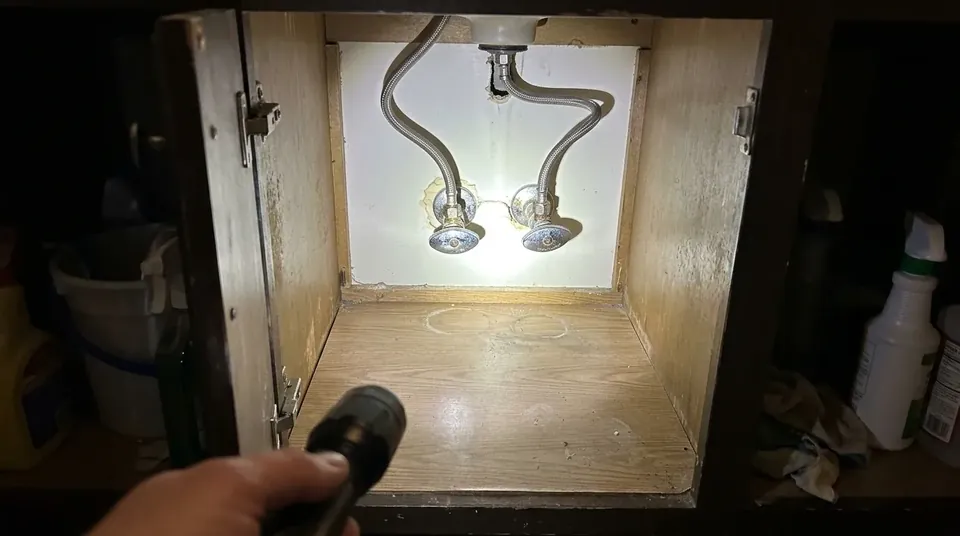
What should I check under sinks and behind appliances?
Look for pooling water, rust around joints, and stains or soft spots near each place water connects. The EPA’s WaterSense leak checklist covers these spots:
- Under kitchen and bathroom sinks: pooling water under the pipes and rust around joints.
- Dishwashers and refrigerators with ice makers: pooling water underneath, which could mean a supply line leak.
- Toilets: the shutoff valve and the connection behind the toilet (DOE Building America Solution Center).
- Walls, ceilings and floors: signs of moisture or mold.
To test a toilet, put a few drops of food coloring in the tank. If any color shows up in the bowl after 10 minutes, you have a leak, often a worn flapper (EPA WaterSense). That leak wastes water but stays in the bowl. The supply line and shutoff valve are what can flood a floor.
We found no maker or government interval for replacing toilet, ice maker or dishwasher lines. A simple habit is to look at all of them on the day you check the washer hoses.
Are water leak sensors and automatic shutoff valves worth it?
They can’t stop a pipe from failing, but they can shorten how long a leak runs. A water leak sensor is a small alarm you set on the floor near a water heater, washer or sink. Many send an alert to your phone. An automatic shutoff valve goes further and closes the water when it detects a leak.
The Department of Energy’s Building America Solution Center says devices that automatically shut off the water may significantly reduce water loss. A 2020 LexisNexis study of homes with one brand of automatic shutoff found water claims fell 96% in the year after installation. Over the same time, claims in similar homes without one rose about 10%. That’s a single study tied to one product, so treat the number with care.
Some insurers give a discount for connected leak sensors. Ask your agent whether yours does, and which devices qualify. Our glossary explains other terms you may see.
How do gutters, grading and watering protect a slab foundation?
Keep water moving away from the house, and keep the soil around a slab evenly moist. Plano sits on clay soil that swells when wet and shrinks when dry. A USDA soil description for the area rates its shrink-swell potential “very high” (USDA NRCS).
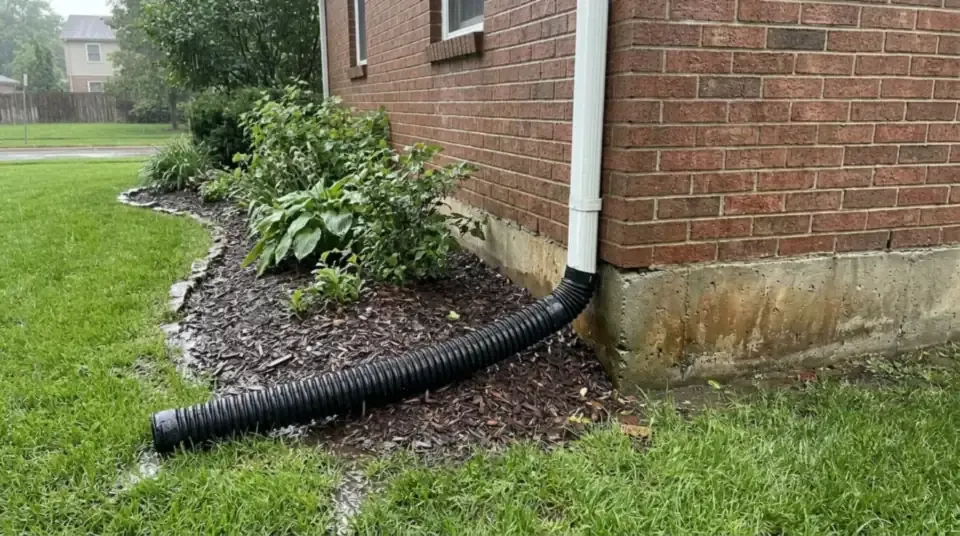
Grading and gutters. The building code calls for the ground to fall at least 6 inches within the first 10 feet from the foundation (IRC R401.3). On expansive soil, roof water must discharge at least 5 feet from the foundation, or into an approved drainage system (IRC R801.3). Clean gutters in spring and fall, and extend any downspout that empties next to the slab.
Even watering. The Dallas County Master Gardeners, a Texas A&M AgriLife Extension program, say “consistent, moderate watering is the goal.” Too much water under a house, from plumbing leaks or poor drainage, can make clay soil heave. Too little can also cause movement. If you use drip irrigation, place it at least six inches from the foundation.
Plano’s watering rules. Under the City’s spring and summer watering guidelines, foundations may be watered for up to two hours any day by a hand-held hose or soaker hose (City of Plano, April 2026). Sprinklers have set days. Check the City’s current rules before you water in winter.
If you already see new cracks or a door that sticks after a leak, read our slab leak page before anyone starts foundation work.
What should I check after a hailstorm?
Look for new stains on ceilings and around skylights, then have a roofer inspect the roof. North Texas sees more tornadoes in April and May than in all other months combined (NWS records, via NBC DFW). May is also DFW’s wettest month (National Weather Service). A roof damaged in a storm may not leak until the next heavy rain.
From the ground, look for missing shingles, dented vents and granules piled at the downspouts. Don’t climb onto a wet or damaged roof. If water is already coming in, see flood and storm water damage.
Getting your Plano home ready for winter
Do the freeze prep in October or early November. DFW’s average first freeze is around November 22 (National Weather Service).
- Disconnect and drain garden hoses, and cover outside faucets.
- Shut off and drain the sprinkler system.
- Insulate pipes in the attic, the garage and along outside walls.
- Find and test the main shutoff, and keep the meter key by the door.
The full list, including what to do the day a hard freeze hits and before you leave town, is in our Plano frozen pipe guide.
Does insurance cover a leak I could have prevented?
Often not. The Texas Department of Insurance says home policies generally cover sudden and accidental water damage, and usually exclude gradual leaks and the mold they cause.
So the checks on this page protect your coverage as well as your house. Keep receipts and dates for water heater service, hose changes and AC drain cleaning. If you ever file a claim, they show you kept up with maintenance. Our Texas water damage insurance guide explains how claims are decided.
Do I still need a restoration company if I have a maintenance team?
For prevention and repairs, a good maintenance team or handyman is the right call. They replace hoses, clear drain lines and fix the leak at its source. Once water has soaked into drywall, insulation, subfloor or carpet pad, drying is a different job.
That job needs moisture mapping, commercial dehumidifiers and fans, and daily readings until the materials are dry. It also produces the records an adjuster will ask for. Property managers often use both: the maintenance team stops and fixes the leak, and a restoration company checks and dries what got wet. Our drying time guide explains how dryness is measured.
What can I do to limit the damage once a leak starts?
Shut off the water first, then move fast on the rest. The EPA advises drying water-damaged areas and items within 24 to 48 hours to prevent mold growth.
- Turn off the main or the valve at the fixture.
- Turn off power to wet areas at the breaker, if you can do it safely.
- Photograph everything before you move or throw anything out.
- Move belongings out of the wet area and lift furniture off wet carpet.
- Call (972) 433-0517 if water has spread past what towels can handle.
Our checklist for what to do right after water damage covers each step in detail.
Water damage in your Plano home? Call (972) 433-0517
Shut off the main, take photos, then call. The line answers 24/7. We connect you with an independent local restoration company.
Call (972) 433-0517