
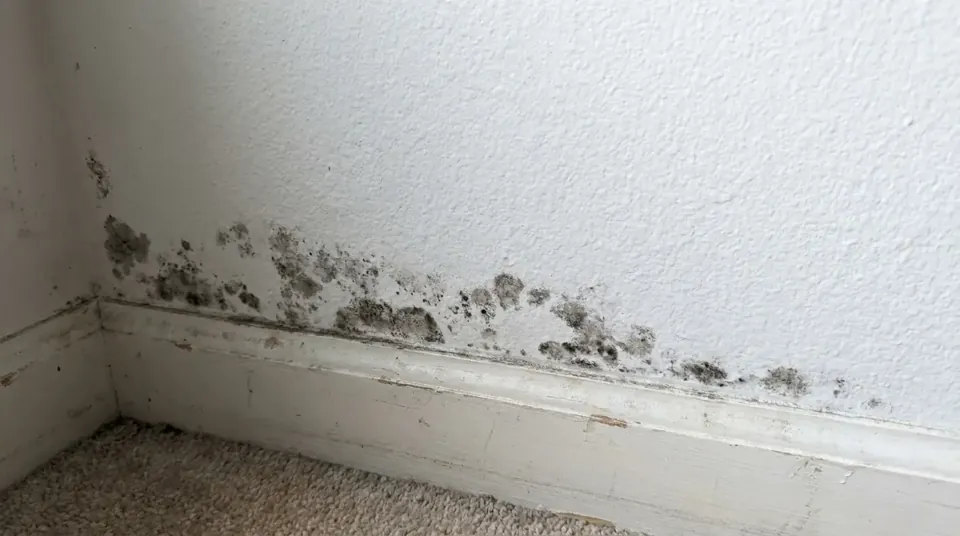
Mold Remediation in Plano, TX
Found mold after a leak? A small patch you can often clean yourself. A larger area usually needs a professional, and 25 square feet or more needs a company licensed by the Texas Department of Licensing and Regulation (TDLR). The water problem behind it has to be fixed first, or the mold comes back.
Call (972) 433-0517. The line answers 24/7.
Plano Water Damage Restoration is a referral service. When you call, we connect you with an independent local company. We don’t do the work ourselves.
Do I need professional mold remediation?
Not always. If the moldy area is under about 10 square feet, you can usually clean it yourself. That’s roughly a 3-by-3-foot patch (EPA, “Mold Cleanup in Your Home”).
Texas draws its own line at 25 square feet. Mold remediation of 25 contiguous square feet or more generally requires a TDLR license (Occupations Code §1958.102). Owners working on their own home have an exemption, but that doesn’t make a big job safe to do alone.
Call a professional when:
- the mold covers more than about 10 square feet, or keeps coming back
- the mold followed sewage or floodwater, which is dirty water (Category 3)
- you smell mold but can’t see it, which often means it’s inside a wall, floor or ceiling
- you think the mold is in your AC system or ducts
- someone in the home has asthma, allergies or a weak immune system
Not sure yet? Read the sections below first. If the musty smell won’t go away, call (972) 433-0517 and ask to be connected with a company that can check for moisture.
How fast does mold grow after water damage?
Mold can start within 24 to 48 hours on materials that stay wet (FEMA). Dry wet materials within 24 to 48 hours of a leak, and in most cases mold won’t grow (EPA, “A Brief Guide to Mold, Moisture and Your Home”).
Plano’s summers make this harder. DFW’s average summer dew point is around 70°F (National Weather Service), so the outside air is already damp. Opening windows in July rarely dries a wet wall. Closed-house drying with dehumidifiers works better.
Drying fast is the cheapest mold prevention there is. Our extraction and drying page explains how a house gets dried and checked. Our guide to how long drying takes covers the timeline.
Could mold grow while I wait for help? It can, if things stay wet for days. Remove soaked rugs and cushions from the wet area. Run your own fans and a dehumidifier if you have them, and keep the AC running if it isn’t the source of the leak and you don’t suspect mold in it.

How can I tell if there’s mold behind a wall or floor?
A musty smell is often the first sign. Mold inside a wall or under flooring can smell long before you see it. Other signs:
- a stain on drywall or a ceiling that keeps growing
- paint that bubbles or peels
- baseboards or flooring that swell, cup or feel soft
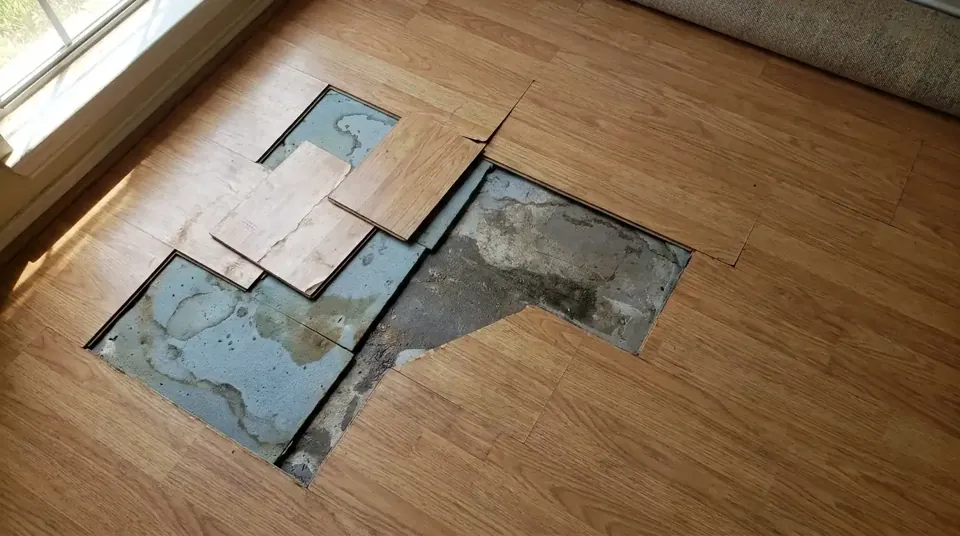
- vinyl or laminate that lifts, with a damp smell underneath
Water under laminate or vinyl can stay trapped for a long time, because the flooring slows drying. The same goes for a roof leak above insulation. A stain doesn’t always mean mold, but it does mean the material got wet. More on stains overhead: ceiling water damage.
You can’t confirm hidden mold by looking from the outside. A moisture meter or thermal camera shows where it’s still wet. If walls have to be opened, a licensed mold assessor can take samples and say how far the growth goes.
I still smell mustiness after the water was removed. Was it dried wrong?
Maybe. The EPA says a cleanup isn’t finished while visible mold or moldy odors remain. A lingering smell often means wet material was left behind, such as pad, insulation or the bottom of a wall. Ask for moisture readings in the area before anything gets painted or rebuilt.
Can I clean up mold myself?
For a small area, yes. Fix the water source first, then clean, then dry. Our checklist for what to do right after water damage covers the first steps. The EPA gives a few rules worth following:
- Don’t paint or caulk over mold. Paint over moldy surfaces is likely to peel (EPA).
- Throw out moldy porous materials if they can’t be cleaned. The EPA says ceiling tiles and carpet may have to be discarded.
- Don’t run the HVAC system if you know or suspect it’s contaminated with mold. It can spread mold through the house (EPA).
- Protect yourself. Wear gloves, eye protection and a well-fitted N-95 respirator while you clean (EPA mold cleanup guide for homeowners).
Should I replace moldy drywall or clean it?
Replace it. Drywall is porous, so mold grows into the paper and gypsum, not just on the surface. Cut out the moldy section and some clean material around it, and let the wall cavity dry before closing it up. Hard surfaces like tile, metal and sealed wood can usually be cleaned instead.
If the mold area is bigger than you’re comfortable with, stop and call (972) 433-0517.
Who tests for mold and who removes it in Texas?
Two different licensed companies. In Texas, the same company can’t do both the mold assessment and the remediation on the same project (Occupations Code §1958.155).
Here’s how the job splits:
- Mold assessor: inspects, takes samples if needed and writes the remediation plan (protocol). TDLR rules require a licensed assessor to write it (16 TAC Chapter 78).
- Mold remediation company: removes the mold by following that plan.
- Assessor again: comes back after the work for a clearance check, often called post-remediation testing.
Since September 1, 2025, mold remediation workers must hold their own TDLR license or registration (Senate Bill 1255). Ask any mold company for its license number and check it on TDLR’s license search.
When the work passes, the licensed remediator must give the owner a certificate of mold remediation within 10 days (Occupations Code §1958.154). Keep it. If you sell the home, Texas law requires you to give the buyer copies of certificates issued in the previous five years.
Be careful with any company that offers “free mold inspection” and removal as a package. That setup is the conflict Texas law is designed to prevent. The full rules are in our Texas mold law guide.
What happens during mold remediation?
The remediation company follows the assessor’s plan. The current industry standard for this work is ANSI/IICRC S520, now in its 2024 fourth edition (IICRC). A typical job looks like this:
- Stop the moisture. The leak gets fixed and the area gets dried first. Mold removed from a wet wall grows back.
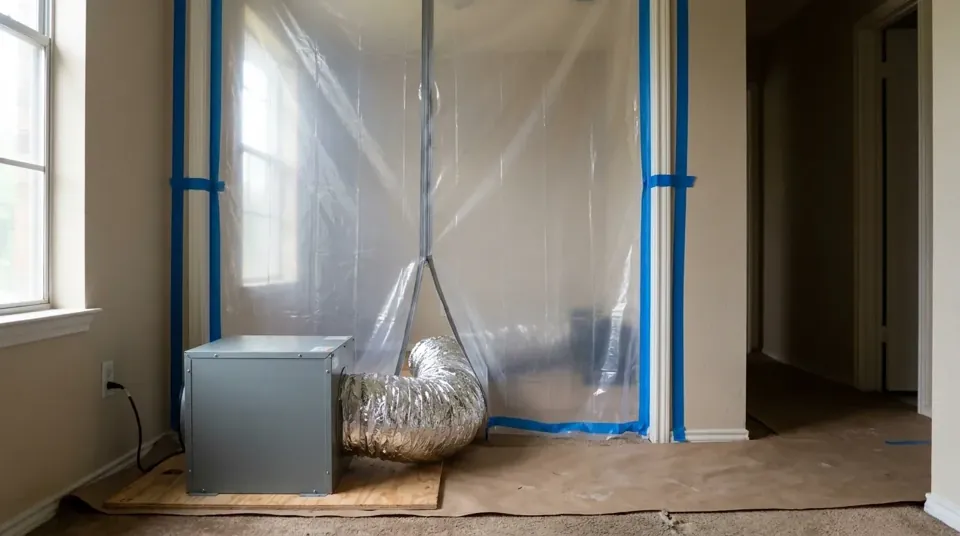
- Set up containment. Plastic sheeting (a poly barrier) seals the work area from the rest of the house.
- Run negative air. HEPA air scrubbers filter the air and keep spores from drifting into clean rooms.
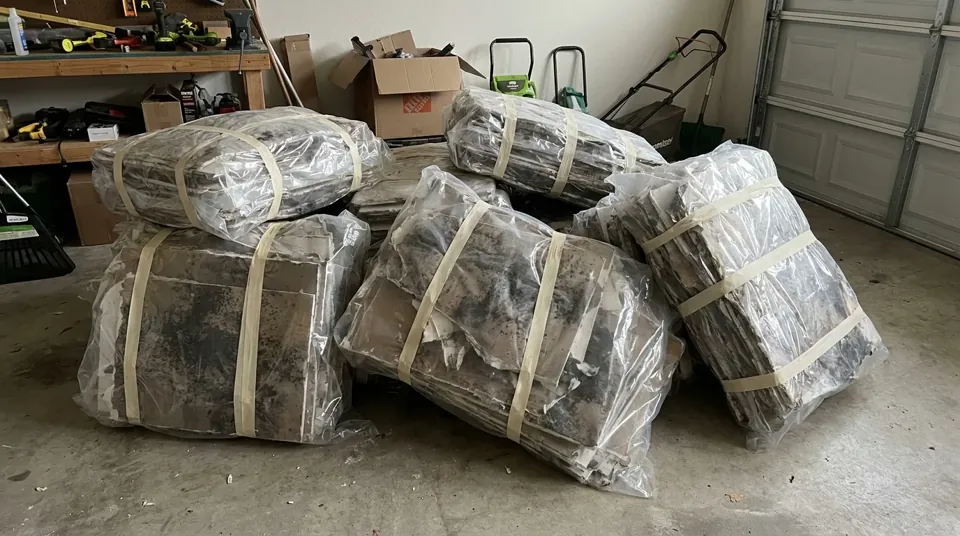
- Remove what can’t be cleaned. Moldy drywall, insulation, carpet and pad are bagged and taken out.
- Clean what stays. Framing and hard surfaces are HEPA-vacuumed and cleaned. Some plans also call for an antimicrobial treatment.
- Clearance. The independent assessor checks the area before containment comes down and rebuild starts.
Odor removal usually happens as part of the cleaning. If the smell remains after clearance, ask why.
Is mold removal the same as mold remediation?
Yes, in everyday use. “Mold removal” is what many people search for. “Remediation” is the word Texas law and the IICRC S520 standard use, because the job is more than wiping mold off a wall. It covers containment, removing what can’t be cleaned and fixing the moisture so the mold doesn’t come back. Whatever a company calls it, the same Texas license rules apply. See who tests and who removes it.
How much does mold remediation cost?
Mold remediation typically costs $1,500 to $4,000 for a whole project (Fixr, January 2025). The price depends on how much material comes out, how hard the area is to reach, and how many days containment and air scrubbers run.
The assessment is a separate bill, since a separate company does it. Rebuild work, like new drywall and paint, is often priced separately too. Ask for a written estimate that lists each part. Our water damage restoration cost guide shows how invoices are built.
Does homeowners insurance cover mold in Texas?
Sometimes. The Texas Department of Insurance says mold can be covered when it comes from a sudden, accidental water leak that the policy covers. Mold from a slow leak that went on for weeks usually isn’t.
Many Texas policies also limit mold. The Texas Attorney General notes that many homeowners policies don’t cover mold remediation, and the ones that do generally cap it. Look in your policy for a mold limit, exclusion or endorsement.
A few practical points:
- Report the water damage quickly. Waiting can turn a covered leak into a “gradual” one.
- Take dated photos of the leak and the mold before anything is removed.
- Your adjuster decides what’s covered. A remediation company may document the job for you, but it can’t negotiate your claim (Insurance Code §4102.163).
- Mold and water claims show up in insurance claim databases. The Texas Attorney General warns they can make renewing or buying a policy harder.
More detail is in our Texas water damage insurance guide.
What should Texas tenants know about mold?
Tell your landlord in writing as soon as you see mold or a leak. TDLR’s consumer guidance suggests following any conversation with a letter, sent by certified mail with a return receipt, as proof.
TDLR can’t order a landlord to test for mold or remove it. Repairs in rentals fall mainly under Chapter 92 of the Texas Property Code and your lease. Owners of rental property with fewer than 10 units can do their own mold work without a license. At larger complexes, mold jobs of 25 contiguous square feet or more need a licensed company (Occupations Code §1958.102).
Renters insurance usually covers your belongings, not the building. Who pays for what in a rental is covered in our guide to who pays for water damage.
Mold after a leak in Plano? Call (972) 433-0517
Fix the water first, then deal with the mold. If the area is bigger than a small patch, or you can only smell it, call (972) 433-0517. We’ll connect you with an independent local company. Before any mold work starts, ask for its TDLR license number and check it on TDLR’s license search. The line answers 24/7.