
Slab Leak Water Damage in Plano, TX
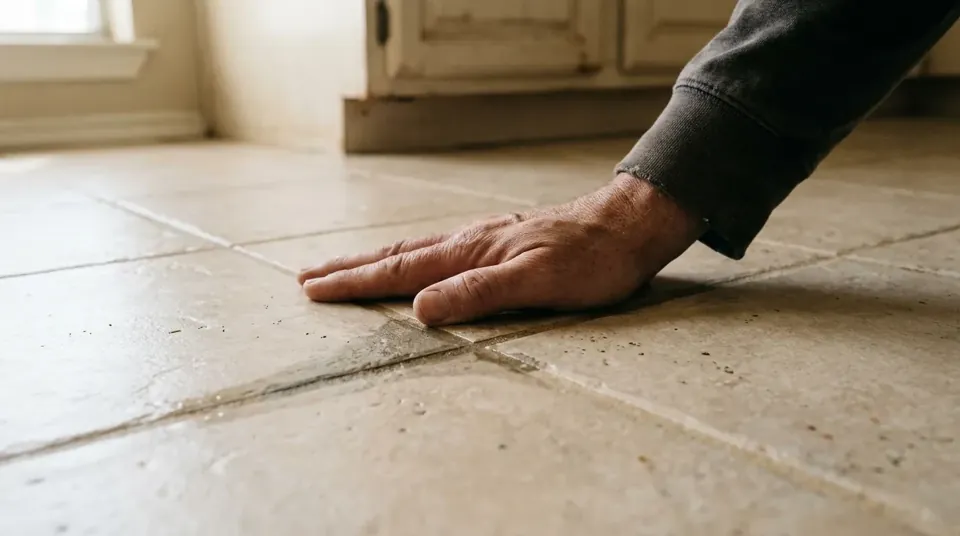
A slab leak is a leak in a water or drain pipe under your home’s concrete slab. You might notice a water bill that jumps, a warm spot on the floor or damp carpet with no clear source. A licensed plumber finds and fixes the pipe. A restoration company dries the floors and walls that got wet.
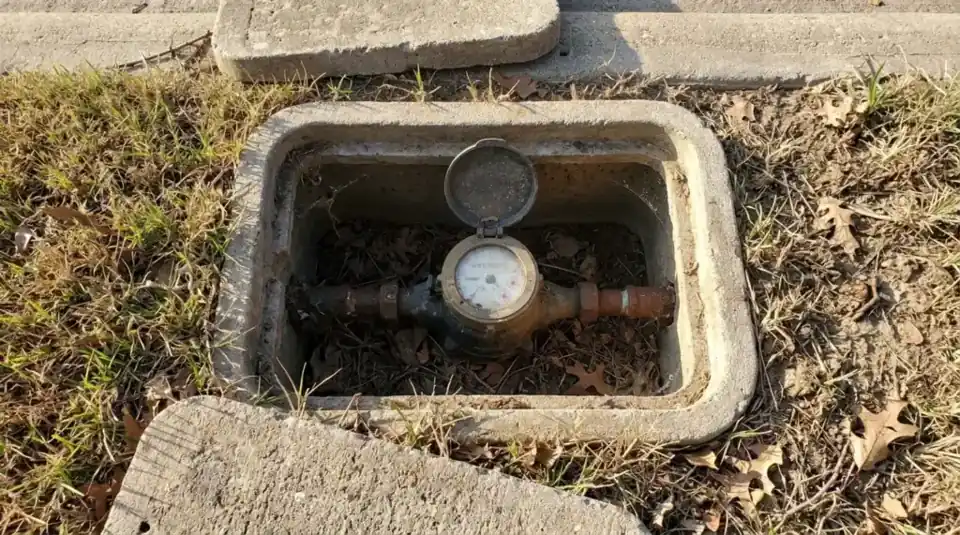
Not sure it’s a leak? Check your water meter first. The steps are below. If the dial keeps moving with every tap off and floors are wet, call (972) 433-0517. The line answers 24/7.
Plano Water Damage Restoration is a referral service. When you call, we connect you with an independent local restoration company. We don’t do the work ourselves, and we don’t find or repair leaks.
What is a slab leak, and what causes it?
A slab leak is a leak in a pipe that runs under or inside a home’s concrete slab. It can be a pressurized water supply line or a drain line. Most slab leaks stay hidden until water shows up on the floor or on the water bill.
Several things can wear these pipes out:
- Age. Many central Plano homes are 40 years old or more. The median home in 75075 was built in 1982, and in 75023 in 1985 (U.S. Census ACS 2020–2024).
- Pipe type. Older homes may have copper or polybutylene supply lines and cast iron drain lines. Newer homes often use PEX. Ask a plumber what yours are.
- Moving soil. The Houston Black clay common in the Blackland Prairies has “high shrink-swell potential.” It cracks up to 4 inches wide when dry (USDA NRCS soil survey). That movement can put stress on pipes under a slab.
Cast iron drain pipe usually lasts about 35 to 50 years (Foundation Performance Association, 2005). About 40% of Plano homes were built before 1990 (U.S. Census ACS 2020–2024). So homes here that still have their original cast iron drain lines may be near or past that age.
What are the signs of a slab leak?
Common signs include a higher water bill with no change in use, and the sound of running water when everything is off. Fixr also lists warm or cold spots on the floor (Fixr, 2025).
Watch for these signs:
- A water bill that jumps for no clear reason.
- Running or hissing water when no tap, toilet or appliance is on.
- A warm spot on a tile or wood floor. A leaking hot water line can heat the slab above it.
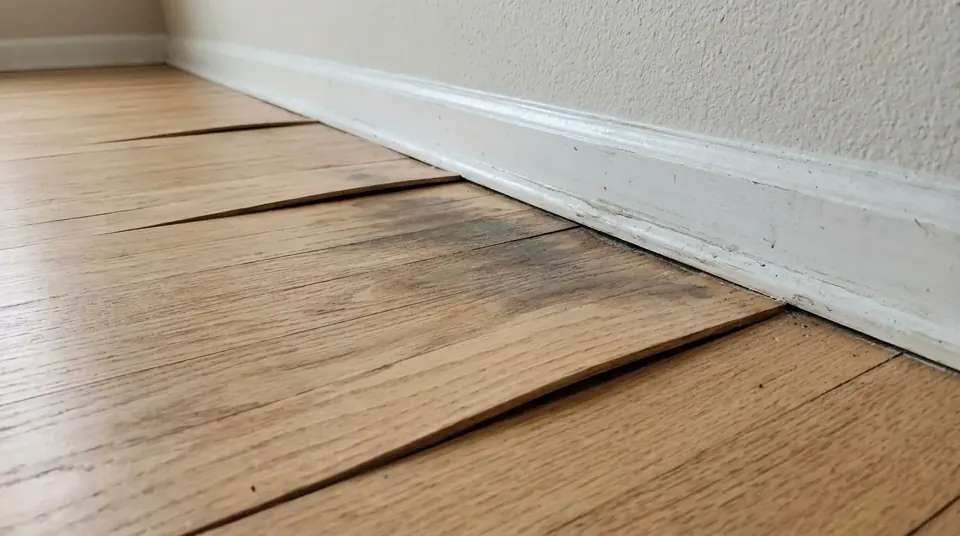
- Damp carpet, swelling baseboards or cupping wood floors with no leak in sight.
- A musty smell in rooms built on the slab.
- New cracks in the floor or slab, or a raised spot in the floor.
- Lower water pressure across the house.
- Puddles or unusually green grass near the foundation.
These signs don’t prove a slab leak. A running toilet or an irrigation leak can raise a water bill too. The meter test below helps you tell the difference.
How do plumbers find a leak under a slab?
Plumbers find slab leaks with pressure tests and listening gear before they open any floor. A good plumber pins down the spot first, so the slab is broken in one place, not several.
Common methods include:
- Pressure testing. The plumber isolates hot and cold lines and checks which one loses pressure.
- Acoustic listening. Microphones pick up the sound of water escaping under the concrete (Baker Brothers Plumbing, YouTube, 2016).
- A thermal camera. It can show a warm area over a leaking hot water line.
- A drain test or camera. For drain lines, the plumber may plug the line and fill it with water to see if the level drops. A Richardson master plumber notes a camera alone can’t tell a crack from a scrape (Roger Wakefield Plumbing Education, YouTube).
A restoration company uses some of the same tools for a different job. It maps how far the water spread with moisture meters and a thermal camera. That tells it what needs drying, not where the pipe broke.
Who fixes a slab leak: a plumber or a carpenter?
Call a licensed plumber first. In Texas, plumbing work must be done by a plumber licensed by the Texas State Board of Plumbing Examiners (TSBPE), under Occupations Code chapter 1301. One exception is a homeowner working on their own homestead (§1301.051).
A slab leak job usually splits like this:
- Plumber: finds the leak, repairs or reroutes the pipe and passes the City inspection. Ask for the Responsible Master Plumber’s license number. Master plumber license numbers start with “M”, and you can check them on TSBPE’s license search (TSBPE).
- Restoration company: dries the slab, walls and floors, and documents the damage for your insurer.
- Flooring or rebuild contractor: replaces the flooring, baseboards or drywall that couldn’t be saved.
- Foundation engineer: needed only if the foundation moved. See the foundation section below.
What does Plano require for a slab leak repair?
Replacing a water or sewer line needs a permit in Plano (City of Plano, “When is a Permit Required?”). The licensed plumber normally pulls it. Contractors must also register with the City before working in Plano.
For under-slab line replacement, the City’s inspection checklist asks the plumber for three things (City of Plano Building Inspections, FM624RY062, 2025):
- Photos of all the work.
- A letter describing the work, signed and dated by the Responsible Master Plumber, with the master’s license number.
- A simple drawing of where and how the under-slab pipe was run.
Ask for copies of all three. They help with an insurance claim and when you sell the house.
What are the repair options: break the slab, tunnel or reroute?
The main ways to reach a slab leak are to break through the slab, tunnel under the house or reroute the line above the slab. Some pipes can also be lined from inside (Fixr, 2025). The plumber picks the method after finding the leak.
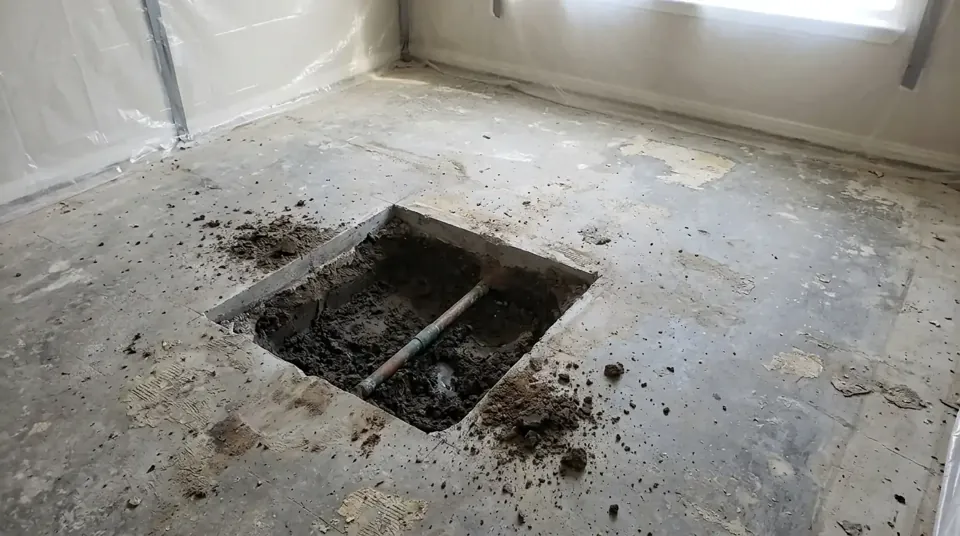
- Break through the slab (direct access). The plumber cuts the floor over the leak, repairs the pipe and patches the concrete. Flooring in that spot has to come up.
- Tunnel under the slab. The crew digs from outside and reaches the pipe from below. Floors inside stay intact.
- Reroute the line. The plumber leaves the old pipe in place and runs a new line through the attic or walls. Ask about it if the old pipes have leaked before.
- Pipe lining. A liner is placed inside the existing pipe. It works for some pipes, not all.
Ask the plumber why they chose a method, and get the price in writing first. Fixing one leak doesn’t stop the next old pipe from failing, so ask how old the rest of the lines are.
How much does slab leak repair cost?
Slab leak repair usually costs about $1,000 to $4,000, with an average near $2,500 (Fixr, May 2025). Finding the leak costs about $100 to $400 on its own.
The method changes the price a lot (Fixr, May 2025):
| Repair method | National cost range |
|---|---|
| Leak detection | $100 to $400 |
| Breaking the slab for direct access | $500 to $3,000 |
| Tunneling under the house | $900 to $2,000 |
| Pipe lining | $500 to $2,000 |
| Rerouting lines, usually through the attic | $4,000 to $15,000 |
These are national cost-guide figures, not Plano quotes. A local plumber’s written estimate is the number to trust.
Drying and repairs are a separate bill. They depend on how far the water spread and what flooring you have. Our water damage restoration cost guide explains how drying is priced.
Can a slab leak damage my foundation in North Texas?
It can. Engineers modeled a water line leak under a slab on expansive clay. They showed how a leak changes soil moisture and can make the slab move. They also looked at its potential to cause structural distress in the house above (El-Garhy and Wray, ASCE, 2006).
Plano sits on Blackland Prairie clay that swells when wet and shrinks when dry (USDA NRCS). A leak adds water to one part of that soil and not the rest. Uneven swelling can push part of the slab up, which may crack floors, walls or door frames.
Not every crack means a leak, and not every leak moves a foundation. If you see new cracks after a slab leak, ask for a foundation engineer’s opinion before any foundation work.
In Plano, a foundation repair permit needs drawings and an engineer’s letter sealed by a Texas-registered engineer. The plans must show where the piers or footings go (City of Plano Building Inspections, FM624RY013).
A plumber says my slab leak is losing hundreds of gallons an hour. Where does all that water go?
Much of it may not soak in. USDA soil scientists say water enters Houston Black clay “rapidly when it is dry and cracked, and very slowly when it is moist” (USDA NRCS). So leak water may show up as damp floors, wet baseboards or soggy spots in the yard instead (Fixr, 2025).
Close the main shutoff right away and keep it closed except when you need water. Then get the leak fixed and the house checked for moisture.
How do I choose a foundation repair company?
Start with an independent engineer’s report, then get bids from companies that follow it. In Plano, the repair needs a permit with plans sealed by a Texas-registered engineer (City of Plano). Ask each company who the engineer is and whether they’ll pull the permit.
We don’t rank or recommend foundation companies. A few things to check:
- That the company is registered with the City of Plano.
- That the bid matches the engineer’s pier plan.
- What the warranty covers, in writing, and whether it transfers when you sell.

Does homeowners insurance cover a slab leak?
Often the water damage is covered and the pipe repair isn’t. The Texas Department of Insurance says home policies generally cover sudden and accidental water damage. A leak that went on over time is generally excluded, and so is the mold it causes (TDI).
Slab leaks are hard because they are hidden. An insurer may argue the leak ran for months. That’s why the signs matter. A DFW master plumber described a University Park case where an insurer denied a $75,000 claim. It pointed to months of high water use and a warm spot the owner had ignored (Roger Wakefield Plumbing Education, YouTube, 2026).
Policies differ, so ask your agent these questions:
- Does my policy pay to reach the leak, such as breaking the slab or opening a wall?
- Does it pay for the pipe repair itself, or only the resulting water damage?
- Does it cover foundation damage caused by a plumbing leak? Is that an add-on (endorsement) I’d need to buy?
- Do I have water backup coverage for drain lines?
Does insurance pay for slab leak detection and repair?
Not always. Many policies pay for the water damage but not to fix the worn-out pipe that caused it. Cost guides warn that coverage varies, and that claims made after repairs are often denied (Fixr, 2025). So call your insurer before work starts, if you can.
Report the claim promptly, and keep the plumber’s written report. It should say what failed and, if possible, for how long.
Is a leak in the wall treated differently from one under the slab?
It can be. Coverage often turns on whether the leak was sudden or gradual, not on where the pipe is. A drip inside a wall that rotted the framing over months is usually treated as gradual (TDI). A pipe that breaks suddenly under the slab may be covered as sudden. Your adjuster decides, based on the evidence.
My insurer won’t replace my hardwood floors. What can I do?
Ask for the reason in writing. Texas law requires an insurer that rejects a claim to tell you in writing and give its reasons (Insurance Code §542.056). Then compare its estimate with a written estimate from a flooring contractor.
A restoration company can document moisture readings and damage. It can’t argue your claim for you. Texas law bars a contractor from acting as a public adjuster on a job it works on (Insurance Code §4102.163). For free help, call the TDI Consumer Help Line at 800-252-3439. Our Texas water damage insurance guide covers deadlines, sudden vs gradual damage and public adjusters.
Leak found and floors wet? Call (972) 433-0517. Drying can start once the plumber has the water stopped or isolated.
What happens to my floors and walls after a slab leak?
A slab leak soaks the concrete from below, so floors over it stay wet longer than after a surface spill. Wet materials should dry within 24 to 48 hours to prevent mold (EPA). A restoration company sets up drying once the leak is stopped.
What gets saved depends on the floor:
- Carpet and pad. The pad usually comes out if it’s soaked. The carpet can sometimes be dried and relaid.
- Wood floors. Cupping wood may need to come up so the slab can dry. Sometimes it can be dried in place.
- Tile. Tile often stays, but water can sit in the slab underneath for a while.
- Baseboards and drywall. The bottom of the wall may be cut out if moisture wicked up.
The type of water matters too. A clean supply line is usually Category 1 water. A drain line leak is dirty water and may be Category 3, which needs cleaning, not just drying. See water damage categories and classes, or our sewage cleanup page for drain leaks.
Concrete dries slowly, so slab jobs often take longer than the 3 to 5 days many homes need (ServiceMaster Restore water damage FAQ). Daily moisture readings, not the calendar, decide when the equipment comes off. Our guide to how long drying takes explains what slows it down. The first visit is covered on our extraction and drying page, and the rebuild on water damage repair.
Buying an older Plano home? Test the plumbing first
Ask for a plumbing leak test before you buy, not just a visual inspection. A Richardson master plumber recommends testing both the water lines and the drain lines under the slab for home buyers. He has seen slab leak repairs there top $50,000 (Roger Wakefield Plumbing Education, YouTube, 2019).
A water line test checks whether pressure holds with the meter valve closed. A drain test plugs the line and fills it with water. Ask whether the inspector or a plumber will do each test.
If a test finds a problem, who pays for it is usually something you negotiate before closing. Our guide to who pays for water damage covers inspection findings, rentals and condos.
Help for income-qualified Plano homeowners
The City of Plano’s Housing Rehabilitation Program can help income-qualified homeowners with sewer line replacement and foundation repair (City of Plano, 2026). Check the City’s site for current income limits and how to apply.
Slab leak in Plano? Call (972) 433-0517
Check the meter. If the dial moves, close the main shutoff and call a licensed plumber. If floors, baseboards or walls are wet, call (972) 433-0517. The line answers 24/7 and connects you with an independent local restoration company for drying. See all the areas we serve, including Richardson and Murphy-Wylie.