
Water Damage Glossary
Restoration crews, adjusters and Texas law use a lot of words most people never need until water is on the floor. This glossary explains them in plain English. Each entry links to the guide that covers the topic in full.
Terms are grouped by where you’ll run into them: the damage itself, the work, the equipment, the materials, the money and the rules.
Plano Water Damage Restoration is a referral service. When you call, we connect you with an independent local restoration company. We don’t do the work ourselves.
Water in your home right now? Shut off the main valve, then call (972) 433-0517. The line answers 24/7.
What do the water damage words on my estimate mean?
Most describe how dirty the water was or how much soaked in. The two words people mix up most are category and class. The category is about contamination. The class is about how much water there is to dry out.
Category 1 water (clean water)
Water from a sanitary source, such as a broken supply line or a sink overflow with no contaminants. It doesn’t pose a substantial risk if it touches skin. It can turn into Category 2 or 3 if it sits. See water damage categories and classes.
Category 2 water (gray water)
Water with significant contamination that could make people sick, such as a washing machine overflow or a toilet bowl overflow with urine but no feces. Carpet pad usually has to be replaced. See what each category changes.
Category 3 water (black water)
Grossly contaminated water, such as sewage or flood water rising from a creek or street. Sewage counts as Category 3 even when it looks clear. It needs cleaning and disinfecting, not just drying. See sewage backup cleanup.
Damage class (Class 1 to 4)
A rating of how much water soaked in. Classes 1 to 3 depend on how much of a room’s floor, walls and ceiling are wet. Class 4 means water is held deep in dense materials like hardwood, plaster or concrete. The class sets how much drying equipment is needed. See the four classes of water damage.
Standing water
Water pooled on a floor or in a room. It has to be pumped or extracted before drying can start. See emergency water extraction and drying.
Hidden leak
A leak you can’t see, inside a wall, under a floor or above a ceiling. Common signs are a musty smell, bubbling paint, a stain that grows or a water bill that jumps. See ceiling water damage.
Secondary damage
The extra, preventable damage that shows up when the first water problem isn’t dried quickly and fully. Examples are swelling, warping and mold. See how long drying takes.
Structural damage
Damage to the parts that hold the house up or close it in: framing, subfloor, slab, walls. It usually means repair work after drying. See water damage repair and rebuild.
Warped or cupped floor
Wood floor boards whose edges rise higher than their centers after they soak up water. Wood gives up water slowly, so wet hardwood needs careful drying and daily readings. See drying hardwood floors.
Swollen cabinets and baseboards
Particle board and MDF swell and crumble once they soak up water. Swelling at the toe kick is often the first sign of a hidden dishwasher or sink leak. See repairs after water damage.
Ceiling stain or sagging ceiling
A brown ring or soft, bulging spot on a ceiling means water is above it. A sagging ceiling can hold a lot of water. Keep people out from under it. See ceiling water damage.
Peeling or bubbling paint
Paint that blisters or peels on a wall or ceiling is a common sign of water behind it. See ceiling water damage.
Warm spot on the floor
A warm patch on a tile or concrete floor can mean a hot water line is leaking under the slab. See slab leak water damage.
High water bill
A bill that jumps with no change in use is a common sign of a hidden leak. You can check by watching the water meter with every tap closed. See slab leak signs.
Musty odor
An earthy, damp smell. It often means something has stayed wet long enough for mold to start. See mold remediation.
Visible mold
Mold growth you can see on drywall, wood, carpet backing or other materials. The EPA advises drying water-damaged areas within 24 to 48 hours to prevent mold growth. See mold remediation.
24 to 48 hour mold window
The EPA’s advice to dry water-damaged areas and items within 24 to 48 hours to prevent mold growth. It’s the reason drying should start fast. See what to do right after water damage.
Indoor air quality and health risk
Mold and dirty water can affect the air inside a home. People who are older, pregnant, very young or have weak immune systems should stay out of the affected area during cleanup. See sewage backup cleanup.
What causes water damage? Terms for the source
These are the names for where the water came from. The source matters for the category, for insurance and for who fixes what.
Burst or frozen pipe
A water pipe that splits, often after water freezes inside it. A licensed plumber fixes the pipe. A restoration company dries the house. See burst pipe water damage.
Winter freeze
A hard freeze that bursts pipes. Recent DFW examples are February 2021 (Winter Storm Uri), December 2022, January 2024 and January 2026. See the Plano frozen pipe guide.
Slab leak
A leak in a water or drain line under a home’s concrete slab foundation. Signs include a warm spot on the floor, wet carpet with no visible source or a jump in the water bill. See slab leak water damage.
Water heater failure
A leaking or burst tank, a failed fitting or a relief valve that discharges. In Plano, many water heaters sit in the attic or garage, so a leak can come through a ceiling. See water heater and AC leak damage.
AC condensate drain line
The small pipe that carries water away from your air conditioner. When it clogs, the drain pan overflows and can leak into the ceiling below. See AC leaks.
Washing machine hose
The supply hoses behind a washer. A split hose can release water fast until someone shuts the valve. See washer hose leaks.
Dishwasher or ice maker leak
A leak from the supply line or drain hose of a dishwasher, or from a refrigerator’s ice maker line. These often leak slowly under cabinets. See appliance leaks.
Toilet overflow
Water spilling from a toilet. Overflow from the tank, or from a bowl with nothing in it, is clean water. A bowl with urine is Category 2. If feces spilled out, it’s usually treated as Category 3. See sewage backup cleanup.
Upstairs bathroom leak
A leak from a tub, shower, toilet or supply line on the floor above. It usually shows up as a ceiling stain below. See ceiling water damage.
Roof leak
Water coming in through damaged shingles, flashing or vents, often after hail or wind. A roofer fixes the roof. See flood and storm water damage.
Hail and severe storms
North Texas storms that can damage roofs and windows and let water in. See flood and storm water damage.
Flooding and storm water
Water that rises into a home from outside, from heavy rain, a creek or a street. It’s Category 3 water. Home policies usually exclude it. See flood damage restoration.
Heavy rain season
In DFW, May is the wettest month and October is second (National Weather Service). See flood and storm water damage.
Sewer backup
Sewage that comes up through a drain, toilet or tub because a sewer line is blocked. It’s Category 3 water. The City of Plano says that if a sewer backup happens inside your home, you’re responsible for the repair and cleanup. See sewage backup cleanup.
Water main break
A break in a City water main under a street. The City repairs its own main. Who pays for damage to your home depends on the cause. See who pays for water damage.
Foundation movement
A slab that shifts as the clay soil under it swells and shrinks. It can stress the pipes under the slab. A leak can also wet the soil and make the slab move. See slab leak water damage.
Holiday travel leaks
Leaks that start while a home sits empty. A pipe that bursts while you’re away can run for days. See leaving town during freeze season.
What do restoration companies do? Terms for the work
Water damage restoration
Removing the water, drying the building, cleaning what the water touched and repairing it to its pre-loss condition. See water damage restoration in Plano.
Water mitigation
The emergency stage: stopping more damage by removing water and drying the structure. Repairs come after. See how the work is done.
Water extraction
Pulling water out of carpet, pad and hard floors with a truck-mounted or portable extractor. See emergency water extraction and drying.
Structural drying
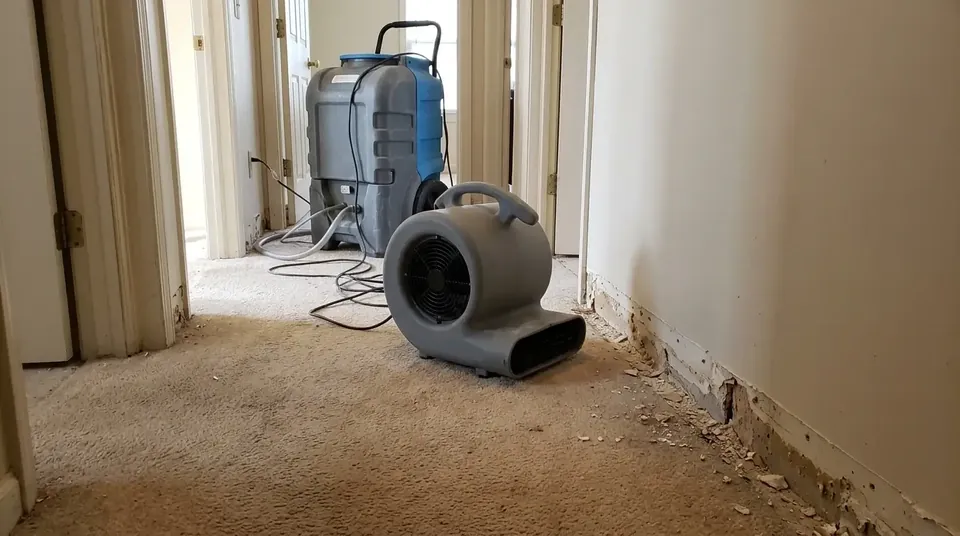
Drying walls, floors, framing and cabinets with dehumidifiers and air movers, with readings every day. See how long drying takes.
Emergency service (24/7)
Restoration help that answers after hours. A fast start limits secondary damage. See emergency water extraction and drying.
Moisture mapping
Checking walls, floors and cabinets with a moisture meter and marking where readings are high. It shows how far the water spread. See how the work is done.
Flood cut
Cutting the wall in a straight line above the highest wet reading, so the wall cavity can dry. The cut part is replaced during repairs. See what happens on the first visit.
Drying goal (dry standard)
The reading a wet material has to reach before drying ends. It’s usually taken from a dry, unaffected area of the same material in your home. See how you know a home is dry.
Drying time
Most homes dry in about 3 to 5 days with commercial equipment. Hardwood, slab floors and cabinets can take longer. See how long water damage takes to dry.
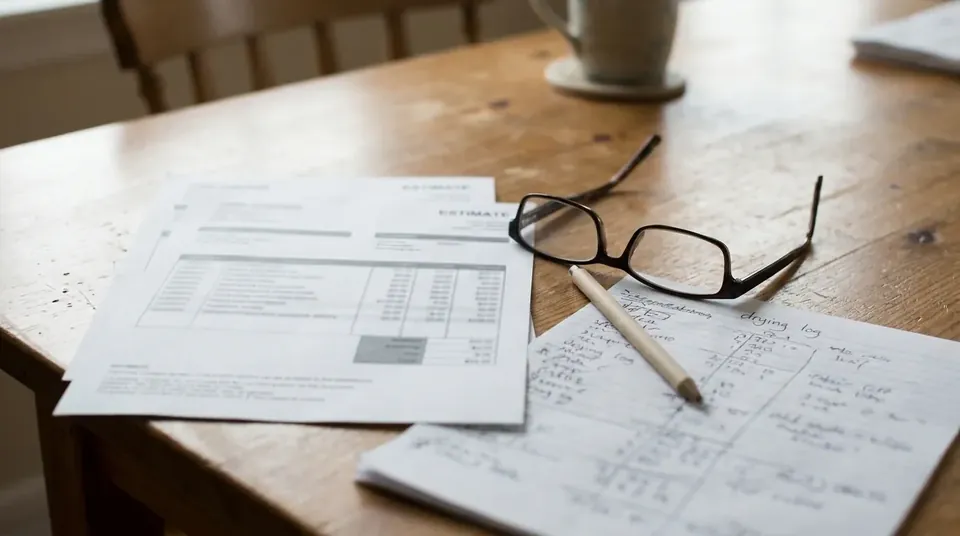
Documentation and drying logs
Dated photos, moisture readings and a daily log of the drying. You and your adjuster both use them. See how the work is done.
Pre-loss condition
How the home was before the water damage. Repairs aim to return it to that state. See water damage repair.
Reconstruction or rebuild
The repair work after drying: new drywall, paint, floors, cabinets and trim. See water damage repair and rebuild.
Drywall repair
Replacing or patching wet drywall once the wall cavity is dry. See water damage repair.
Carpet drying or replacement
Clean water caught fast often means carpet can be dried in place. Gray water usually means a new pad. Black water usually means both go. See saving carpet and pad.
Contents pack-out
Moving belongings out of the home to clean, dry and store them during the work. Not every company offers it. See water damage repair.
Leak detection
Finding a hidden leak with tools like pressure tests, acoustic listening devices and thermal cameras. A plumber usually does this for slab leaks. See slab leak water damage.
Sewage cleanup
Removing Category 3 water, taking out what can’t be cleaned, and cleaning and disinfecting the area. See sewage backup cleanup.
Odor removal
Getting rid of the smell left after water, sewage or mold. Lasting odor usually means something is still wet or contaminated. See sewage backup cleanup.
Mold remediation
Removing mold and cleaning the area under a written plan. In Texas, most paid jobs of 25 square feet or more need a licensed company. See mold remediation.
Mold testing or assessment
An inspection by a licensed mold assessor, who writes the cleanup plan. In Texas, the assessor can’t also remove the mold on the same project. See Texas mold law.
Clearance testing
A check after cleanup to confirm the work is done. In Texas mold jobs, a licensed assessor does a post-remediation assessment. See Texas mold law.
DIY vs professional
A small, clean leak caught fast can often be dried at home. Large, dirty or long-running leaks usually need commercial equipment. See what to do right after water damage.
What equipment is used to dry a house?
Air mover (fan)
A strong fan, often snail-shaped, that blows air across wet floors and walls to speed up evaporation. See how drying works.
Dehumidifier (LGR)
A machine that pulls water out of the air. Restoration crews often use LGR (low grain refrigerant) dehumidifiers. See how long drying takes.
Moisture meter
A handheld tool that measures how wet a material is. Daily readings show when drying is done. See how you know a home is dry.
Thermal imaging camera
A camera that shows temperature differences. Wet areas often show up cooler. It points to where to check with a moisture meter, but it doesn’t measure moisture itself. See emergency water extraction and drying.
Truck-mounted extractor or wet vac
Machines that suck water out of carpet, pad and hard floors. A truck-mounted unit is much stronger than a shop vac. See water extraction.
HEPA air scrubber and negative air
A machine that filters the air through a HEPA filter. Set up to push air out of the work area, it creates negative air, which helps keep dust and germs from spreading to clean rooms. See mold remediation.
Containment
Plastic sheeting that seals off a work area during mold or sewage cleanup. See mold remediation.
Antimicrobial
A product that controls germs or mold growth on surfaces. Category 1 water normally needs none. Dirtier water may call for one, applied by its label. See why the water category matters.
Psychrometry, relative humidity and GPP
Psychrometry is the science of moisture in air. GPP stands for grains per pound, a measure of how much water the air holds. A good drying log shows the GPP inside the drying area dropping, and the material readings falling day by day. See what drying log readings mean.
Main shutoff valve
The valve that turns off water to the whole house. In most Plano homes it’s in the City meter box near the curb. Find it before you need it. See what to do right after water damage.
Water leak sensor and smart shutoff
A leak sensor is a small alarm you set on the floor near a water heater, washer or sink. A smart shutoff valve goes further and closes the main when it detects a leak. See preventing water damage.
What materials get wet, and what can be saved?
Drywall
The gypsum board on most walls and ceilings. It wicks water upward. Wet drywall is often cut out above the wet line so the wall can dry. See water damage repair.
Insulation
Wet insulation in walls and ceilings holds water and dries slowly. It’s often removed and replaced. See ceiling water damage.
Carpet and pad
The pad under carpet soaks up water like a sponge. Whether carpet and pad can be saved depends on the water category and how fast drying starts. See saving carpet and pad.
Subfloor
The wood or concrete layer under the finished floor. Water that soaks through to the subfloor has to be dried before new flooring goes down. See emergency water extraction and drying.
Baseboards
The trim along the bottom of walls. Crews often pull baseboards to reach and dry the wall behind them. See water damage repair.
Hardwood floor
Solid wood gives up water slowly, so wet hardwood can take longer to dry than carpet. See drying hardwood floors.
Laminate, LVP and tile
Laminate and vinyl plank trap water underneath. In Category 2 or 3 losses, floors like these over a wood subfloor are usually removed so the subfloor can be cleaned and dried. See emergency water extraction and drying.
Cabinets
Cabinets trap water underneath, behind the toe kick and inside the box. Drying them in place usually means removing the toe kicks. See water damage repair.
Concrete slab
The concrete foundation many Plano homes sit on. Concrete holds water and dries slowly, so a soaked slab can make it a Class 4 drying job. See the four classes of water damage.
Furniture and belongings
Your contents. Photograph them before you move or throw anything out. Some can be cleaned and dried. See water damage repair.
PEX, copper and polybutylene pipe
Common kinds of water supply pipe. Certain polybutylene pipe installed from 1978 to mid-1995 was the subject of a national class-action settlement. Ask a licensed plumber what your lines are made of. See burst pipe water damage.
Cast-iron drain
An older type of drain and sewer pipe, common in homes from the 1960s and 1970s. It can corrode and crack under the slab. See slab leak water damage.
Asbestos
A mineral used in some older building materials. If you suspect a material has asbestos, the EPA says don’t touch it. A trained and accredited asbestos professional should take samples before tear-out. See water damage repair.
Insurance and money terms
These are the words on a policy, a claim letter or a bill. A restoration company can document the damage for you and your adjuster. It can’t negotiate your claim.
Homeowners insurance claim
Your request to your insurer to pay for a covered loss. Home policies in Texas generally cover sudden and accidental water damage. See the Texas water damage insurance guide.
Sudden and accidental vs gradual
A burst pipe is sudden. A drip that rotted a cabinet floor over months is gradual. Home policies usually cover the first and often exclude the second (Texas Department of Insurance). See what Texas home policies cover.
Insurance adjuster
The person your insurer sends to look at the damage and decide what the policy pays. See working with the adjuster.
Public adjuster
A licensed adjuster you hire, for a fee, to work on your side of a claim. In Texas, a contractor can’t act as a public adjuster on a home it works on (Insurance Code §4102.163). See public adjusters in Texas.
Insurance agent
The person who sold you the policy. Ask your agent what your policy and endorsements include. See the Texas insurance guide.
Deductible
The part of a covered loss you pay before insurance pays. Texas law bars a contractor from waiving or paying your deductible without your insurer’s consent (Business & Commerce Code §27.02). See the deductible rule.
Sewer backup endorsement
Extra coverage you can add to a home policy for water that backs up through sewers or drains. Many policies exclude or limit backups without it. See sewage backup cleanup.
Flood insurance (NFIP)
A separate policy for rising water from outside, through FEMA’s National Flood Insurance Program or a private insurer. NFIP policies usually start after a 30-day waiting period. See flood damage restoration.
ALE (additional living expenses)
Coverage for some hotel and living costs if a covered loss makes your home unlivable. See ALE in the insurance guide.
HO-6 and condo or HOA master policy
An HO-6 is a condo owner’s policy for belongings and the parts of the unit that are yours. The association’s master policy covers the shared building. See who pays for water damage.
Renter and landlord responsibility
The landlord’s policy pays for the structure. A renter’s own insurance covers their belongings. See who pays for water damage.
Mold coverage limit
Many Texas policies don’t cover mold remediation, and the ones that do generally cap it (Texas Attorney General). Check your policy for a separate mold limit or exclusion. See mold and insurance.
Preferred vendor
A company on your insurer’s program list. You can use one, but you have the right to choose the contractor who repairs your home (TDI). See preferred vendors in the insurance guide.
Estimate and invoice
The estimate is the price before work; the invoice is the bill after. Drying equipment is usually billed per unit per day. See water damage restoration cost.
Xactimate
The estimating software many insurers and restoration companies use to price water damage jobs. See how a restoration bill is built.
Work authorization
A form that lets a company start work on your home. Read it before you sign. See how to hire a restoration company.
AOB (assignment of benefits)
A document that hands some of your insurance rights, often the payments, to the company. It’s different from a work authorization. See work authorization vs AOB.
Rules, licenses and who’s who
IICRC
The Institute of Inspection Cleaning and Restoration Certification. It writes the industry standards and certifies technicians and firms. An IICRC Certified Firm employs one or more certified technicians. See how to hire a restoration company.
ANSI/IICRC S500
The industry standard for water damage restoration, now in its 5th edition from 2021. It defines the water categories and damage classes. See water damage categories and classes.
ANSI/IICRC S520
The industry standard for mold remediation, now in its 2024 fourth edition. See Texas mold law.
WRT, ASD and AMRT
IICRC courses. WRT (Water Damage Restoration Technician) is the entry course. ASD (Applied Structural Drying) and AMRT (Applied Microbial Remediation Technician) go further. See checking credentials.
TDLR mold license
A mold license from the Texas Department of Licensing and Regulation. Anyone you pay to test or remove mold usually needs one. You can check a license on TDLR’s free license search. See Texas mold law.
Mold assessor
A licensed mold assessment consultant who inspects, writes the cleanup plan and does the clearance check. Choose one who is independent of the removal company. See Texas mold law.
Texas Occupations Code chapter 1958 and 16 TAC chapter 78
The Texas mold law and TDLR’s mold rules. §1958.155 says a license holder “may not perform both mold assessment and mold remediation on the same project.” See Texas mold law.
Texas Insurance Code §4102.163
The law that bars a contractor from acting as a public adjuster on a property it works on. A restoration company can document your loss, but it can’t negotiate your claim. See the Texas insurance guide.
Texas Insurance Code chapter 542
The prompt-payment law for insurance claims. It sets deadlines for your insurer to acknowledge, decide and pay a claim. See claim deadlines in Texas.
Texas Business & Commerce Code §27.02
The law that bars a contractor from offering to waive, absorb or pay your insurance deductible without the insurer’s consent. See how to hire a restoration company.
Texas Property Code §92.052
A Texas landlord law. The landlord must make a diligent effort to repair a condition that materially affects the physical health or safety of an ordinary tenant. That applies once the tenant gives notice and is current on rent. See who pays for water damage.
Texas Department of Insurance (TDI)
The state agency that regulates insurance in Texas and publishes consumer guides on water damage coverage. See the Texas insurance guide.
Texas Attorney General
The state office that takes consumer complaints. Door-to-door sellers who push you to sign on the spot are a common Attorney General warning. See red flags when hiring.
TSBPE plumbing license
A plumbing license from the Texas State Board of Plumbing Examiners. Ask a plumber for the license number and check it on the TSBPE site. See burst pipe water damage.
City of Plano permits
Plano doesn’t require a permit for cosmetic work like painting or carpet. Plumbing work, water heaters and water or sewer line replacement need one. See water damage repair.
City of Plano
The city government. It looks after its own water and sewer mains and the City-controlled meter box at the curb. Pipes on your property are generally yours. If you believe a City line caused damage, the City requires a written claim within 6 months of the incident. See who pays for water damage.
NTMWD
The North Texas Municipal Water District, which sells treated water to Plano and its neighbors. The water is moderately hard to very hard, which builds scale in water heaters. See water heater leaks.
EPA
The U.S. Environmental Protection Agency. Its mold guidance is the source of the 24 to 48 hour drying advice. See mold remediation.
FEMA
The federal agency that runs the National Flood Insurance Program and disaster aid. See flood damage restoration.
NWS
The National Weather Service. Its Fort Worth office issues freeze and storm warnings for Collin County. See the Plano frozen pipe guide.
FTC review rule
The FTC’s Consumer Reviews and Testimonials Rule, in effect since October 21, 2024. It bans fake reviews and testimonials. See about this site.
Restoration contractor
The company that extracts water, dries the home and often does the repairs. See how to hire a restoration company.
Plumber
The licensed tradesperson who finds and fixes the leak in the pipe. The restoration company dries what the water reached. See burst pipe water damage.
Roofer
The contractor who repairs roof damage after hail or wind. See flood and storm water damage.
HVAC technician
The technician who repairs air conditioners, including clogged condensate drains and failed float switches. See AC leaks.
Foundation engineer
A licensed engineer who checks whether a slab has moved. Ask for one’s opinion before foundation work after a slab leak. See slab leak water damage.
Can’t find a term? Call (972) 433-0517
If a word on your estimate, drying log or claim letter isn’t here, ask the company to explain it in writing. For water in your home right now, shut off the main and call. The line answers 24/7. We connect you with an independent local restoration company.